
Table of Contents
Chemical exfoliants containing salicylic, glycolic, or lactic acid dissolve dead skin cells and free trapped hairs faster than physical scrubs.
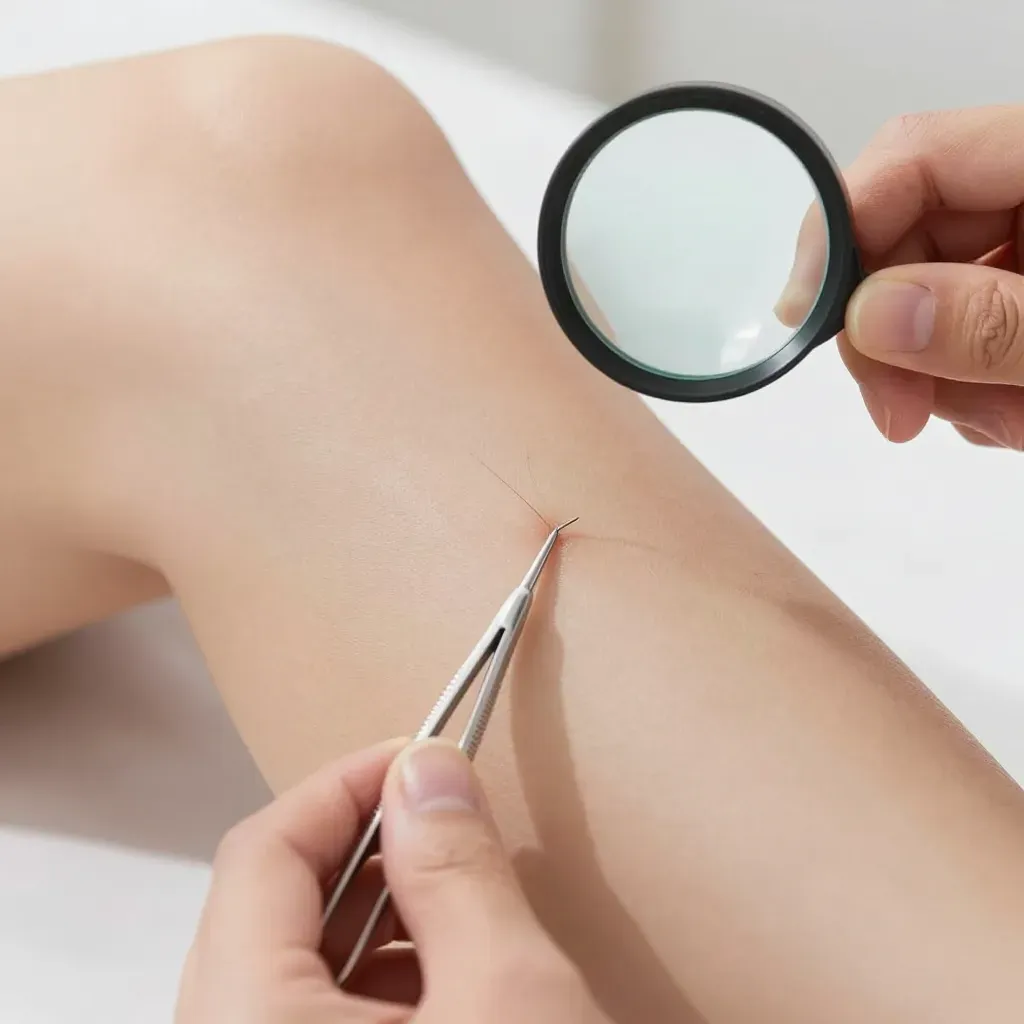
Extract visible hair loops manually using sterile needle and tweezer kits only when hairs sit right beneath thin skin layers.
Apply anti-inflammatory creams with hydrocortisone, tea tree oil, or niacinamide immediately after removal to reduce redness and prevent hyperpigmentation.
Prevent recurrence by shaving with hair growth direction using single-blade razors and waxing with proper technique.
Choose professional laser hair removal for chronic monthly recurrences, painful cysts, or coarse curly hair that home products cannot fix permanently.
Question | Answer |
|---|---|
What removes ingrown hairs fastest? | Chemical exfoliants with salicylic, glycolic, or lactic acid dissolve trapped hairs within 3 to 7 days. |
When should I manually extract an ingrown hair? | Only extract hairs with visible loops sitting right beneath the surface using sterile needle and tweezer kits. |
How do I reduce redness after ingrown hair removal? | Apply hydrocortisone 1%, tea tree oil, or niacinamide immediately after extraction to stop inflammation fast. |
What shaving technique prevents ingrown hairs? | Shave with hair growth direction using single-blade safety razors and never stretch skin tight during shaving. |
When should I choose laser over home products? | Upgrade to professional laser treatment for monthly recurring ingrowns, painful cysts, or coarse curly hair types. |
Choose chemical exfoliants that dissolve trapped hairs fast
Chemical exfoliants are the fastest ingrown hair removal products. They dissolve dead skin cells trapping hairs beneath the surface. They outperform physical scrubs because acids penetrate pores directly and break protein bonds holding cells together. Look for salicylic acid, glycolic acid, or lactic acid as active ingredients on product labels.
Top acids for ingrown hair removal
Acid | Strength | Best for |
|---|---|---|
Salicylic acid | 2% | Oily skin, deep clogs |
Glycolic acid | 5-10% | Surface bumps, dark spots |
Lactic acid | 5-12% | Sensitive skin areas |
Salicylic acid is oil-soluble. It dives deep into follicles and dissolves sebum blocking the hair exit. Glycolic acid exfoliates the surface layer aggressively. It frees hairs caught in dry skin and fades post-inflammatory hyperpigmentation fast. Lactic acid hydrates while it exfoliates. This makes it ideal for bikini lines and underarms where skin chafes easily.
Product formats that work
- Exfoliating pads: Pre-soaked and travel-friendly. Swipe directly on bumps morning or night.
- Spot treatments: High concentration formulas for single stubborn ingrowns.
- Body washes: Daily prevention for high-friction areas prone to razor burn.
- Serums: Lightweight liquids that layer under moisturizer without leaving residue.
Apply acids to clean, dry skin only. Start with every other day application to avoid irritation. Always follow with sunscreen on exposed areas since acids increase photosensitivity significantly. Stop use 48 hours before waxing or shaving to prevent chemical burns on compromised skin barriers.
Results appear within 3-7 days for surface ingrowns. Deep cysts may need 2 weeks of consistent application. Pair chemical exfoliants with warm compresses to speed up hair release and reduce inflammation faster than acids alone.
Extract visible ingrowns safely with sterile needle and tweezer kits
Some ingrown hairs sit right beneath the surface with visible loops. These respond to mechanical extraction better than acids alone. Professional-grade ingrown hair removal tools include sterilized needles, pointed tweezers, and loop extractors designed to lift hairs without breaking skin.
Essential tools in extraction kits
Tool | Function | Risk if misused |
|---|---|---|
Sharp needle | Pierce skin covering hair tip | Scarring, infection |
Pointed tweezers | Grasp and pull hair loop | Breaking hair below surface |
Loop extractor | Press and roll hair outward | Bruising surrounding tissue |
Never extract deep, painful bumps or cysts. These require professional cyst removal to avoid infection and permanent scarring. Only extract hairs clearly visible as loops or dark spots directly under thin skin layers.
Sanitization protocol
- Wash hands with antibacterial soap for 30 seconds
- Clean target area with alcohol wipe or iodine
- Disinfect tools by soaking in 70% isopropyl alcohol for 5 minutes
- Flame-sterilize needles until red-hot, then cool
- Apply antibiotic ointment immediately after extraction
Soak a washcloth in hot water and press against the bump for 5 minutes before extraction. This softens skin and brings the hair closer to the surface. Insert the needle parallel to the skin surface, never downward. Lift just enough to release the hair tip. Use tweezers to pull the hair straight out in the direction of growth. Do not pluck the root if you want the hair to continue growing outward.
Stop immediately if you see pus, blood, or feel resistance. Apply soothing moisturizer or hydrocortisone cream to reduce inflammation. Skip shaving or waxing that area for 72 hours post-extraction to prevent re-entrapment.
Apply anti-inflammatory creams to reduce redness after removal
Skin trauma from extraction triggers inflammation. Blood rushes to the follicle causing redness and swelling that peaks within 24 hours. Anti-inflammatory creams stop this response fast. They prevent dark marks and scarring. Apply immediately after hair release to calm the area before swelling worsens.
Key anti-inflammatory ingredients
Ingredient | Action | Best for |
|---|---|---|
Hydrocortisone 1% | Stops swelling fast | Fresh extractions, itchy bumps |
Tea tree oil | Kills bacteria, reduces redness | Preventing infection |
Niacinamide 4-5% | Calms redness, repairs skin | Daily use, sensitive skin |
Aloe vera | Soothes burns, hydrates | Irritated, raw skin |
Use pure aloe vera gel for immediate cooling without clogging pores. It contains natural hormones that reduce swelling at the source. For severe redness, hydrocortisone cream works faster but limit use to 3 days to avoid skin thinning. Dark skin tones face higher risk of hyperpigmentation from inflammation. Prioritize niacinamide-based products to block melanin transfer while calming redness.
Application protocol
- Wait 10 minutes after extraction to let the opening close
- Apply thin layer with clean fingertips, not cotton pads
- Pat gently, do not rub to avoid tearing skin
- Reapply 2-3 times daily for first 48 hours
- Switch to barrier-repair moisturizer on day 3
Avoid products with alcohol or fragrance immediately post-extraction. These irritate open follicles and worsen redness. Skip makeup over treated areas for 24 hours to prevent contamination. If redness persists beyond 72 hours or spreads outward, stop home treatment and see a dermatologist.
Prevent recurrence with proper shaving and waxing techniques
Wrong hair removal causes 90% of recurring ingrowns. Shaving cuts hair below skin level. When hair grows flat or curly, it pierces the follicle wall sideways. Waxing pulls hair against growth direction. This fractures shafts that regrow beneath the surface.
Shaving protocol that stops ingrowns
- Shave with hair growth direction, never against
- Use single-blade safety razors instead of multi-bl cartridges
- Replace blades every 5-7 shaves to prevent dragging
- Apply shave oil or gel, never dry shave
- Avoid stretching skin tight while shaving
Multi-blade razors lift and cut hair below the surface line. This guarantees regrowth issues for coarse or curly hair types. Single blades cut at skin level only. See proper shaving techniques for sensitive areas to adjust pressure for bikini lines and underarms.
Waxing rules to prevent entrapment
Step | Action | Mistake to avoid |
|---|---|---|
Length | Wait until hair is 1/4 inch long | Waxing too short causes breakage |
Direction | Apply wax with growth, pull against | Pulling with growth leaves broken roots |
Aftercare | Exfoliate 48 hours post-wax | Immediate exfoliation tears fresh skin |
Clothing | Wear loose cotton for 24 hours | Tight synthetic traps sweat and bacteria |
Exfoliate 24 hours before hair removal to free trapped cells. Skip exfoliation for 48 hours after to let skin barrier recover. Apply lightweight, non-comedogenic moisturizer daily to keep skin supple. Hard wax works better than strips for coarse bikini hair. It grips hair without adhering to skin, reducing breakage that leads to post-wax irritation.
Consider laser hair removal alternatives if you get chronic ingrowns despite technique changes. Laser destroys the follicle entirely and eliminates the hair that causes the problem.
Identify when professional laser treatment outperforms home products
Home products fail when ingrowns become chronic. If you treat the same spot monthly for over six months, the follicle is permanently damaged. Professional laser destroys the follicle entirely. This stops the cycle of inflammation and scarring that topical products cannot fix.
When to upgrade to professional treatment
Symptom | Home product result | Laser solution |
|---|---|---|
Monthly recurrence | Temporary relief only | Permanent reduction after 6-8 sessions |
Hyperpigmentation | Fades slowly over months | Stops new pigment triggers immediately |
Painful cysts | Cannot treat safely | Eliminates source hair completely |
Coarse curly hair | High recurrence rate | Destroys thick shafts permanently |
Laser works best on dark hair against light skin. The beam targets melanin in the shaft. Newer devices treat darker skin tones safely using Nd:YAG wavelengths. See the best laser hair removal machines to understand technology differences between diode and alexandrite systems.
Cost versus lifelong product spending
- Brazilian laser averages $300-500 per session
- Home acid products cost $20-40 monthly forever
- Break-even point hits at 12-18 months
- Time savings: zero daily exfoliation routine post-treatment
Check Brazilian laser hair removal pricing in your area. Men with coarse facial or body hair benefit significantly from men's Brazilian laser protocols designed for thicker shafts. Stop wasting money on temporary fixes when permanent solutions exist.