
Table of Contents
Satisfying ingrown hair removal videos trigger dopamine and ASMR responses through visual closure and audio cues.
Your brain rewards problem-solving completion while mirror neurons create shared relief sensations.
DIY extraction requires sterile technique and warm compresses but risks staph infection without proper tools.
Seek medical help for deep ingrowns or if you have diabetes or immune issues.
Prevent recurrence through proper shaving, chemical exfoliation, or permanent laser hair removal.
Question | Answer |
|---|---|
Why do people find ingrown hair removal videos addictive? | They trigger dopamine release through problem-solving completion and activate mirror neurons that create shared relief sensations. |
Is DIY ingrown hair extraction safe? | Only with sterile tools and warm compresses, but deep ingrowns require professional intervention to avoid serious infection. |
When should I see a doctor for an ingrown hair? | Seek immediate care for spreading redness, warmth, pus, fever, or if you have diabetes or compromised immunity. |
How can I prevent ingrown hairs permanently? | Laser hair removal and electrolysis destroy follicles completely while proper shaving technique and chemical exfoliation offer temporary relief. |
What ASMR elements make extraction videos popular? | Close-up visual precision, tweezer clicks, and skin stretching sounds trigger tingling sensations that promote relaxation. |
Why your brain craves these satisfying videos
Satisfying ingrown hair removal videos trigger dopamine release in your brain's reward centers.
Neuroscientific research reveals that watching trapped hairs emerge creates a powerful psychological "win" that activates the same pleasure pathways as solving puzzles.
Your brain craves closure.
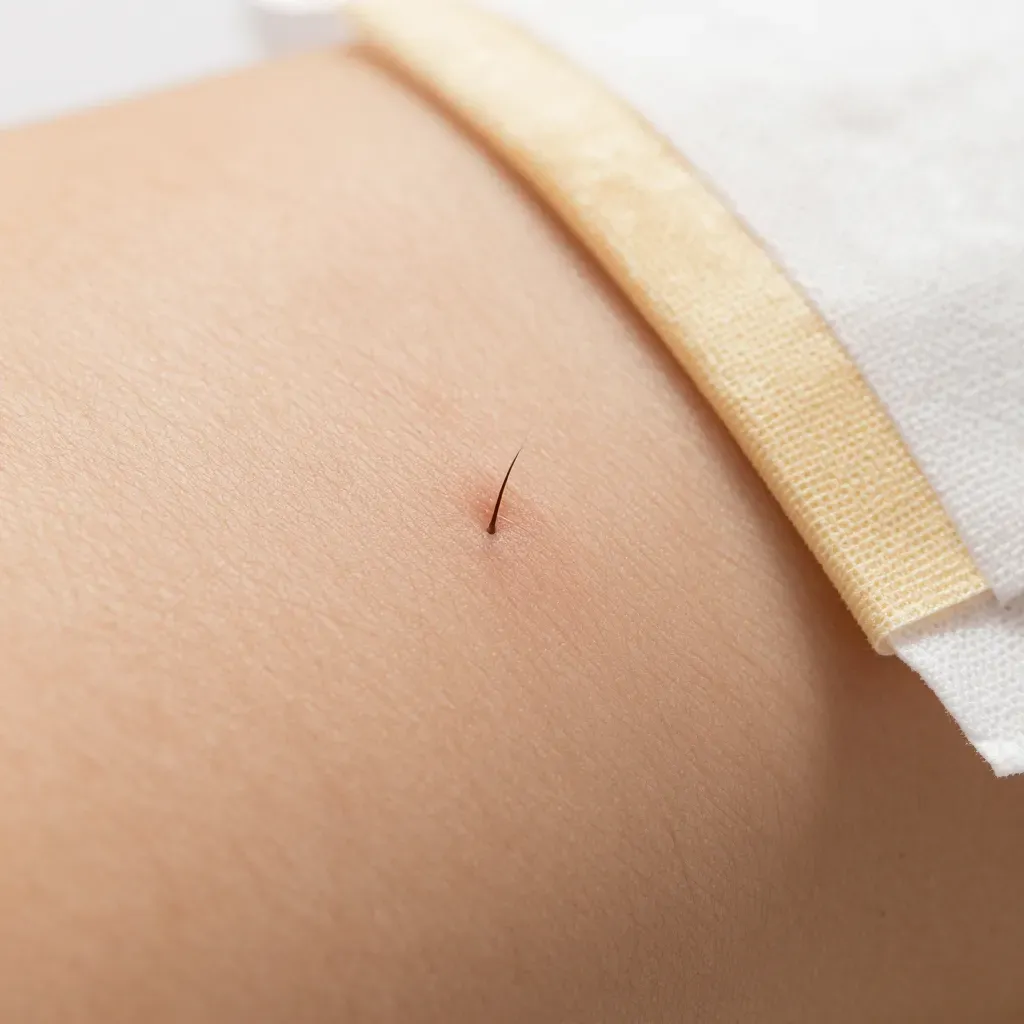
When a curled hair finally springs free after being tucked under skin, the visual completion satisfies deep-seated needs for resolution and order.
This phenomenon explains why millions watch satisfying ingrown hair removal clips despite finding them gross.
The science behind the satisfaction
Recent studies track brain activity during these videos.
Researchers found specific neurological triggers that hook your attention.
- Visual resolution triggers dopamine spikes
- Tension-release cycles activate reward pathways
- Problem-solving completion satisfies cognitive closure needs
- Sympathetic relief mirrors the subject's experience
One Reddit user described watching their husband's neck extraction: the hair "sprung out like those snakes in a prank can of peanuts."
This spring-loaded visual creates an oddly satisfying moment you cannot look away from.
Your brain interprets the extraction as restoring order to chaos.
The trapped hair represents a problem; its removal signals success.
This biological reward system keeps you clicking through removing ingrown hair compilations for hours.
Social media algorithms exploit this neurological response.
Platforms push content that guarantees completion-based satisfaction.
The "gross-out" genre works because it pairs disgust with ultimate relief.
Your prefrontal cortex processes the extraction as a task completed while your limbic system registers the emotional release.
This dual activation makes deep ingrown hair removal content uniquely addictive.
Even viewers without personal ingrown hair issues report feeling "therapy" from watching others achieve relief.
The experience transfers their pain into your pleasure through mirror neuron activation.
How ASMR triggers make extraction content go viral
ASMR transforms gross extraction videos into relaxation content.
Autonomous Sensory Meridian Response creates static-like tingling sensations that start at your scalp and travel down your spine.
Ingrown hair removal videos combine precise visual techniques with subtle audio cues that trigger this response.
The sensory cocktail that hooks viewers
Content creators specifically market these clips as ASMR experiences.
Deep extraction routines paired with clean shaving sounds generate multi-sensory satisfaction.
Trigger Type | How It Works | Viral Impact |
|---|---|---|
Visual precision | Slow, careful needle work | Creates anticipation and payoff |
Audio texture | Tweezer clicks, skin stretching sounds | Activates ASMR tingles |
Tactile mimicry | Close-up magnification | Brain mirrors the physical sensation |
Resolution | Hair finally emerging | Completes the tension cycle |
Even viewers without facial hair cysts watch these videos for sleep aid.
The combination of problem-solving and sensory stimulation hits two psychological needs simultaneously.
Sound design matters.
Creators use high-sensitivity microphones to capture every tweezer grasp and skin release.
These audio frequencies trigger parasympathetic nervous system responses that lower heart rate.
Visual ASMR plays equally important roles.
Macro lenses show hair sliding from follicles in hypnotic detail.
This precision satisfies control urges while the removal process provides narrative closure.
Platforms amplify this content because retention rates soar.
Viewers watch longer to experience the full sensory arc from tension to release.
The clinic-quality extraction techniques shown in amateur settings create authenticity that professional ASMR channels cannot replicate.
Your brain cannot distinguish between watching relief and experiencing it.
Mirror neurons fire as you observe the trapped hair finally freeing itself.
This neurological empathy creates a shared satisfaction that drives sharing behavior.
Safe DIY techniques for removing ingrown hairs at home
Successfully extracting an ingrown hair requires preparation and sterile technique.
Prepare the skin
Soak a clean washcloth in warm water.
Apply to the affected area for 10 to 15 minutes to soften the skin and bring the hair to the surface.
This reduces inflammation and makes extraction possible without breaking skin.
Tool sterilization is non-negotiable
Cleanse tweezers with rubbing alcohol before touching your skin.
Using unsterilized tools introduces bacteria that cause staph infections.
The extraction process
Gently lift the hair loop using the sterile tweezers.
Do not dig under the skin or puncture the surface.
If the hair does not release with gentle pressure, deep ingrown hair removal requires professional intervention.
Method | Best For | Risk Level |
|---|---|---|
Warm compress + tweezers | Surface-level hairs | Low if sterile |
Sterile needle lift | Just under surface | Medium |
Waxing | Prevention | Can worsen existing ingrowns |
After extraction, apply antibiotic ointment and a bandage.
Monitor for signs of infection including increased redness, warmth, or pus.
Waxing sometimes pulls out ingrown hairs but often creates new ones.
Check if wax can safely remove ingrown hairs in your specific case.
Consider whether you should remove ingrown hairs at all.
Sometimes letting them resolve naturally prevents scarring.
Consult a dermatologist if you have diabetes, immune issues, or circulation problems before attempting any extraction.
When satisfying becomes dangerous and you need a doctor
Viral extraction videos hide serious medical risks.
What looks easy on screen often becomes a staph infection in reality.
High-risk DIY behaviors
Medical professionals warn against common amateur techniques.
- Using safety pins found in junk drawers
- Extracting with unwashed fingernails
- Digging under skin with non-sterile tools
- Popping or squeezing inflamed bumps
These methods push bacteria deeper into tissue and cause cellulitis or abscess formation.
Warning signs of infection
Symptom | What It Means | Action Required |
|---|---|---|
Spreading redness | Bacterial invasion | Immediate medical care |
Warmth and swelling | Inflammatory response | Antibiotic evaluation |
Pus or drainage | Active infection | Professional drainage |
Fever or chills | Systemic spread | Emergency treatment |
Never attempt extraction if you have diabetes, compromised immunity, or circulation problems.
These conditions turn minor infections into limb-threatening emergencies.
Seek a specialized removal clinic for deep ingrown hairs that resist warm compresses.
Dermatologists use sterile instruments and microscopic techniques to extract trapped hairs without trauma.
They prescribe topical or oral antibiotics when infection develops.
Know where to go for ingrown hair removal before you need emergency care.
Professional intervention costs less than treating a serious skin infection.
Prevention methods that stop ingrown hairs before they start
Prevent ingrown hairs with proper technique and permanent solutions.
Shaving fundamentals
Wet skin thoroughly before every shave.
Use a sharp single-blade razor and replace it every 5 to 7 shaves.
Shave with hair growth direction never against it.
Apply high-quality shaving cream to reduce friction and prevent angled cuts.
Avoid stretching skin taut while shaving.
This technique keeps hair at natural angles that grow outward not inward.
Exfoliation protocols
Clear dead skin cells that clog follicles and force sideways growth.
Use chemical exfoliants containing salicylic acid or glycolic acid 2 to 3 times weekly.
Physical scrubs irritate inflamed skin and worsen existing bumps.
Consistent exfoliation keeps pores open for natural hair emergence.
Permanent prevention
Laser hair removal and electrolysis destroy follicles entirely.
These methods eliminate the root cause of ingrown hairs completely.
Consider best laser hair removal options for permanent smooth skin.
At-home devices offer maintenance between professional sessions.
Check top at-home laser devices for budget-friendly prevention.
Method | Prevention Level | Cost Range |
|---|---|---|
Proper shaving | Temporary | $10-30 monthly |
Chemical exfoliation | Moderate | $15-50 monthly |
Professional laser | Permanent | $200-500 per session |
Home laser system | Long-term | $200-400 one-time |
Curly hair types benefit most from professional home laser systems.
These systems target coarse hair that typically curls back into skin.
Consistent prevention beats repeated painful extractions.
Start with technique upgrades then advance to permanent solutions if problems persist.