
Table of Contents
An ingrown hair removal specialist diagnoses trapped follicles and performs sterile extractions using hooked tweezers and magnification tools. These professionals complete 600+ hours of esthetics training plus specialized certification in extraction techniques and safety protocols. They treat infected, painful, or persistent ingrowns that resist home care, offering manual removal ($50-$150 per session) or permanent solutions like laser hair elimination. Prevention requires proper shaving techniques, regular exfoliation with salicylic acid, and permanent hair removal for recurring cases.
Question | Answer |
|---|---|
What does an ingrown hair removal specialist do? | They diagnose trapped follicles and perform sterile extractions using hooked instruments to remove the entire hair shaft including the root. |
When should I see a specialist instead of treating at home? | Seek professional help immediately for pus, severe pain, red streaks, fever, or ingrowns persisting longer than three weeks. |
What qualifications do these specialists hold? | They complete state-approved esthetics licensing (600+ hours) plus advanced certification in extraction methods, safety protocols, and tool mastery. |
What treatments do specialists provide? | They offer manual extraction, exfoliation treatments, and permanent solutions including laser hair removal and electrolysis. |
How can I prevent future ingrown hairs? | Prevention requires shaving with the grain using single-blade razors, regular chemical exfoliation, and considering permanent hair removal for chronic cases. |
An ingrown hair removal specialist diagnoses trapped hairs and performs safe extraction using professional tools
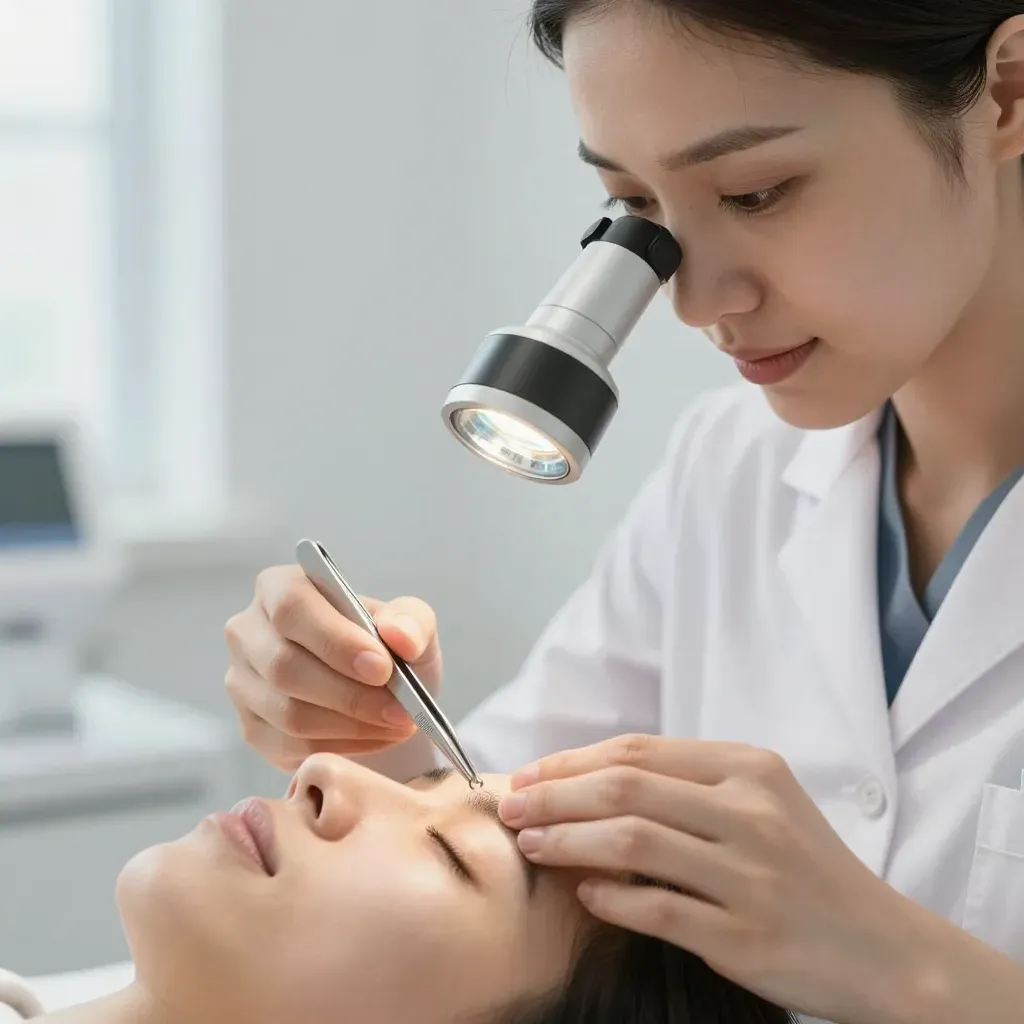
An ingrown hair removal specialist examines skin to identify trapped follicles and reviews your hair removal routine to determine the root cause. They distinguish between simple razor bumps and infected cysts requiring medical attention.
Professional Diagnostic Process
- Visual skin assessment for inflammation patterns
- Discussion of shaving, waxing, or tweezing frequency
- Identification of hair type and growth direction
- Evaluation for infection or scarring risk
Specialized Extraction Tools
Tool | Function |
|---|---|
IngrownOut® Tweezer | Hook end grips hair beneath skin surface without cutting surrounding tissue |
Sterile Lancets | Create precise opening for deeply embedded hairs |
Magnifying Lamp | 10x magnification ensures accurate targeting |
Antiseptic Solutions | Pre/post-treatment disinfection prevents infection |
Extraction Technique
Specialists soften skin with warm compresses before using hooked instruments to tease out trapped hairs. They remove the entire shaft including the root to prevent immediate regrowth. The procedure takes 15-30 minutes depending on severity.
Unlike DIY digging which causes scarring, professionals maintain sterile fields and use angled lighting to avoid skin trauma. They treat facial hair, bikini lines, and beard areas where ingrowns commonly occur.
Specialists complete esthetics licensing plus specialized certification to master extraction techniques
Basic Esthetics Foundation
All specialists start with state-approved esthetics licensing. Programs require 600+ hours covering anatomy, sanitation, and skin science. Graduates pass written and practical exams to obtain licensure before practicing any hair removal.
Advanced Certification Requirements
Course Component | Hours/Details |
|---|---|
Hair Removal Theory | 50+ hours on wax types, tweezing, mechanical removal |
Ingrown Hair Specialization | Online certification (IngrownOut® or equivalent) |
Safety Protocols | Hygiene standards, infection control, skin damage prevention |
Tool Mastery | Hooked tweezers, lancets, magnification equipment |
Skin Assessment | Identifying infection risks and contraindications |
Specialized Training Programs
The IngrownOut® Hair Specialist Course teaches professionals to identify hair growth patterns and perform sterile extractions using proprietary hooked instruments. Wax technician programs add business development and client consultation skills.
Practical training includes manipulating skin tension, angling tools beneath the surface, and recognizing when to refer cases to dermatologists. Students practice on models with various hair textures and skin types.
Continuing education keeps specialists current with rising hygiene standards in waxing treatments worldwide. Many pursue cosmetic laser training to offer permanent solutions alongside manual extraction techniques.
Treatment options include manual extraction exfoliation and laser hair removal for permanent results
Immediate Relief Methods
- Warm compresses open pores and soften skin for 10-15 minutes
- Gentle exfoliation removes dead skin cells blocking hair exit
- Salicylic acid clears bumps and prevents new blockages
- Stop shaving, tweezing, or waxing for 1-6 months until condition improves
Professional Manual Extraction
Specialists perform sterile extractions using hooked tweezers to tease out trapped hairs without breaking the skin. They remove the entire shaft including root to prevent immediate regrowth. Single sessions cost $50-$150 depending on severity and location.
Permanent Removal Solutions
Method | How It Works | Best For |
|---|---|---|
Laser Hair Removal | Targets follicle with light energy to stop regrowth | Dark hair on light skin, large areas |
Electrolysis | Destroys individual follicles with electric current | All hair colors, small precise areas |
Surgical Excision | Doctor cuts out deeply embedded infected hairs | Persistent painful cysts |
Laser treatments require 6-8 sessions for permanent reduction. Professional laser hair removal eliminates the root cause of ingrowns by stopping hair growth entirely. Specialists often recommend laser for clients with recurring issues in beard, bikini, or underarm areas.
Electrolysis works on gray or blonde hair that lasers cannot target. Both permanent methods cost more upfront but eliminate ongoing extraction appointments and prevent scarring from repeated manual removal.
See a specialist for infected painful or deep ingrown hairs that resist home treatment
Warning Signs You Need Professional Help
- Pus or fluid drainage indicating bacterial infection
- Severe pain that interferes with daily activities or sleep
- Red streaks radiating from the bump (lymphangitis)
- Fever, chills, or swollen lymph nodes
- Hair trapped under thick scar tissue or keloid formation
- Ingrown persisting longer than three weeks despite home care
- Darkening or hyperpigmentation spreading around the area
Specialist vs Dermatologist
Provider | Handles | Cost Range |
|---|---|---|
Ingrown Hair Specialist | Non-infected extractions, prevention plans, laser referrals | $50-$150 per session |
Dermatologist | Infected cysts, antibiotic prescriptions, surgical excision | $200-$500+ |
Plastic Surgeon | Scar revision after repeated infections | $500+ |
The Extraction Process
Specialists first disinfect the area with medical-grade antiseptic. They apply warm compresses to soften skin and open pores. Using 10x magnification lamps, they locate the exact entry point of the trapped hair. Hooked tweezers slide beneath the skin surface to grip the shaft without piercing surrounding tissue. For big ingrown hair removal cases, they make minimal incisions with sterile lancets.
Complex cases require multiple sessions spaced two weeks apart to allow skin healing between extractions. Specialists document hair growth patterns to identify why ingrowns recur in specific areas.
Dermatologist ingrown hair removal cost varies by procedure complexity. Insurance covers infected cases but considers routine extraction cosmetic. Fastest removal methods combine professional extraction with laser treatments to prevent recurrence.
Prevention involves proper shaving techniques regular exfoliation and permanent hair removal solutions
Proper Shaving Protocol
Shaving causes most ingrown hairs when razors cut hair below skin level. Wet skin with warm water for three minutes to soften follicles. Use sharp single-blade razors instead of multi-blade cartridges that create uneven cuts. Shave with the grain using short strokes. Never pull skin taut while shaving—this causes hair to retract below the surface when released. Rinse blades after every stroke. Replace razors every 5-7 uses. Consider electric clippers with guard attachments that trim hair to 1-2mm without touching the skin surface.
Exfoliation Routine
- Chemical exfoliants: Apply salicylic acid or glycolic acid 2-3 times weekly to dissolve dead skin
- Physical exfoliants: Use soft brush or scrub every other day on beard, bikini line, or legs
- Timing: Exfoliate 24 hours before shaving, never immediately after
- Products: Avoid harsh scrubs with nut shells that cause micro-tears
Clothing and Aftercare
Avoid tight clothing for 48 hours after hair removal. Synthetic fabrics trap sweat and friction against freshly shaved skin. Wear loose cotton underwear and breathable fabrics. Leg ingrown prevention requires avoiding skinny jeans immediately after shaving.
Permanent Solutions
Method | Prevention Rate | Investment |
|---|---|---|
Laser Hair Removal | 90% permanent reduction after 6-8 sessions | $200-$400 per session |
Electrolysis | 100% permanent, works on all hair colors | $60-$150 per hour |
Depilatory Creams | Temporary, less irritation than shaving | $10-$30 monthly |
At-home laser devices require consistent use every 2-4 weeks for maintenance. Professional laser treatments offer faster permanent results than DIY methods. For facial areas, proper facial hair management combines threading instead of shaving with retinol exfoliation.