
Table of Contents
Ingrown hair removal surgery becomes necessary when home treatments fail or infection develops after one to two weeks.
Four surgical options exist: incision and drainage for acute infections, complete excision for chronic cysts, laser hair removal for prevention, and phenol treatment for resistant cases.
Incision and drainage resolves immediate infection through a small cut that drains pus and extracts the trapped hair under local anesthesia.
Recovery ranges from three days for simple drainage to four weeks for full excision requiring daily wound care and activity restrictions.
Laser hair removal offers a non-invasive preventive alternative that reduces recurrence rates from 34% to 10% by destroying the follicle permanently.
Question | Answer |
|---|---|
When does an ingrown hair require surgery instead of home treatment? | Surgery becomes necessary when inflammation persists beyond two weeks, signs of infection appear, or the cyst exceeds one centimeter in diameter. |
What happens during incision and drainage surgery? | The dermatologist numbs the area with local anesthetic, makes a small incision to drain pus, and extracts the embedded hair using sterile forceps. |
How long does recovery take after ingrown hair surgery? | Recovery spans three days to four weeks depending on the procedure type with incision and drainage healing fastest and complete excision requiring the longest tissue regeneration period. |
What is the difference between incision and drainage versus complete excision? | Incision and drainage removes pus and hair through a small cut while complete excision removes the entire cyst wall and surrounding follicle to prevent recurrence. |
Can laser hair removal prevent ingrown hairs permanently? | Medical-grade laser hair removal destroys the follicle and reduces recurrence rates from 34% to 10% after one year by preventing hair regrowth. |
When ingrown hair removal surgery becomes necessary
Ingrown hair removal surgery becomes necessary when conservative treatments fail or infection sets in. Most ingrown hairs resolve with warm compresses within one to two weeks. Surgery enters the picture when inflammation persists beyond this window, the cyst enlarges rapidly, or pain interferes with daily movement and clothing contact.
Warning signs requiring immediate surgical intervention
- Cyst turns red, hot, and throbbing indicating active bacterial infection
- Pus drainage or foul odor develops from the bump center
- Diameter exceeds 1 centimeter or doubles in size within 48 hours
- Hair remains trapped despite sterile needle lifting attempts
- Same location recurs more than three times within six months
- Fever or red streaking appears extending from the cyst
Chronic cases and recurrence prevention
Chronic pseudofolliculitis barbae requires medical intervention beyond home extraction. Clinical research demonstrates that adding laser hair removal to conventional treatment drops recurrence rates from 34% to 10% after one year. For severe recurring cysts, phenol treatment achieves 95% success by chemically destroying the hair follicle permanently.
Risks of delaying surgical treatment
Risk Factor | Potential Consequence |
|---|---|
Bacterial infection spread | Cellulitis or abscess requiring emergency drainage |
Prolonged inflammation | Permanent hyperpigmentation or dark spots |
Deep cyst penetration | Keloid scarring or permanent skin texture changes |
Systemic infection | Fever and bloodstream contamination |
Dermatologists perform incision and drainage procedures on inflamed cysts changing size. This outpatient surgery shrinks the cyst wall, extracts the trapped hair completely, and prevents further complications when topical antibiotics prove insufficient. Early surgical intervention minimizes tissue damage and reduces permanent scarring risks significantly.
Types of surgical procedures for ingrown hair cysts
Dermatologists and surgeons deploy distinct techniques based on cyst severity, depth, and recurrence history. Each method targets complete hair removal while minimizing tissue trauma and scarring.
Incision and drainage
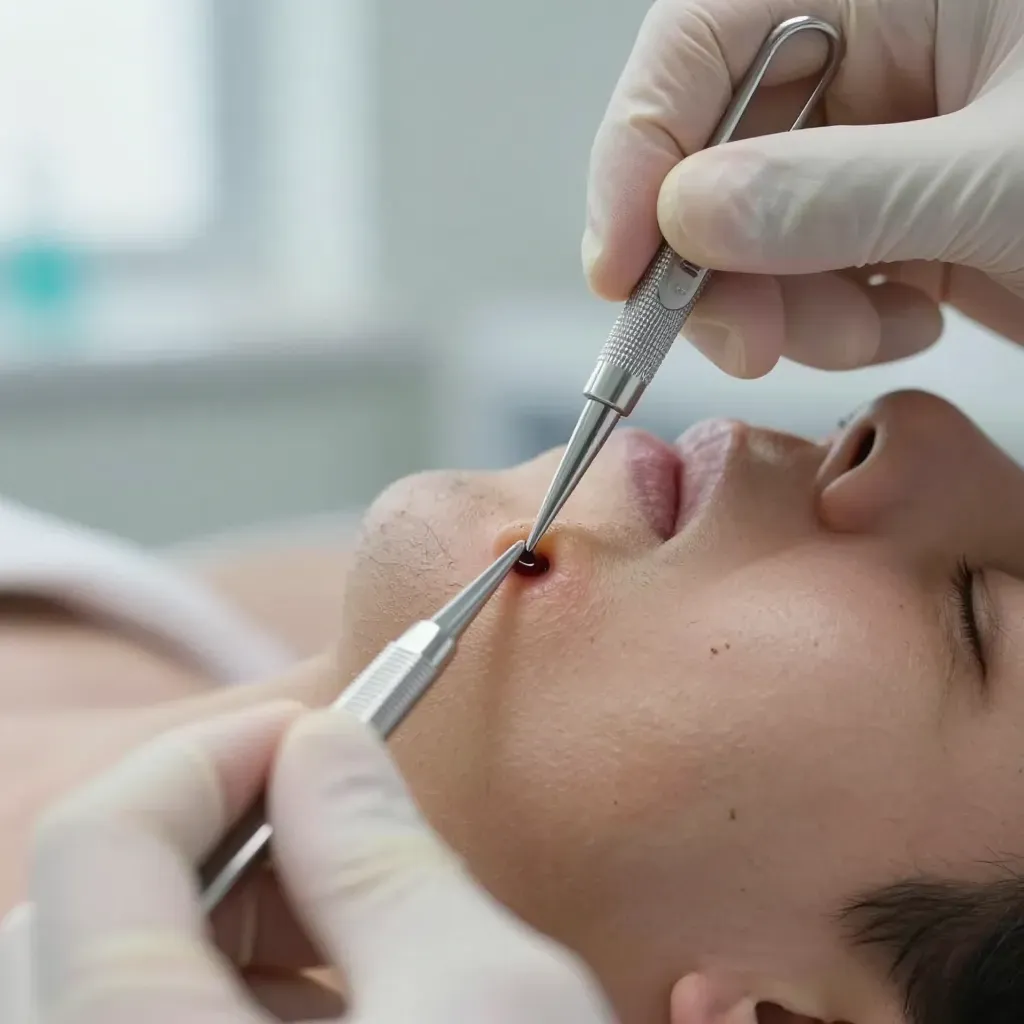
The most common surgical intervention for acute infected cysts. The provider numbs the area with local anesthetic, makes a small incision at the cyst center, drains purulent material, and extracts the embedded hair shaft. This procedure resolves immediate infection pressure but may require follow-up if the cyst wall remains intact.
Complete excision
Recurrent cysts require full surgical excision including the cyst wall and surrounding follicle. This outpatient procedure prevents regrowth by removing the entire sac structure. Excision carries higher scarring risk than drainage but eliminates recurrence in 85-90% of cases.
Laser hair removal
Medical-grade laser technology destroys the hair follicle beneath the skin surface. Research demonstrates this reduces recurrence rates from 34% to 10% after one year when combined with conventional treatment. Multiple sessions target hair in active growth phases.
Phenol treatment
Chemical cauterization using phenol acid destroys the follicle permanently. Clinical studies show 95% success rates for severe recurring cysts. The provider applies phenol directly to the exposed follicle after initial incision.
Procedure | Best For | Recovery Time | Recurrence Risk |
|---|---|---|---|
Incision & drainage | Acute infected cysts | 3-7 days | Moderate |
Complete excision | Chronic recurring cysts | 2-4 weeks | Low (10-15%) |
Laser removal | Prevention & mild cases | 24-48 hours | Very low (10%) |
Phenol treatment | Severe resistant cysts | 1-2 weeks | Minimal (5%) |
Selection depends on cyst location, infection status, and patient skin type. Deep facial cysts often require excision while bikini area inflammation responds well to laser protocols.
What happens during incision and drainage surgery
Incision and drainage surgery occurs in outpatient settings under local anesthesia. The procedure resolves acute infection and extracts trapped hair within 20 to 30 minutes.
Preparation and anesthesia
The dermatologist cleans the treatment area with antiseptic solution. Local anesthetic injection numbs the skin completely. You remain awake but feel no pain during the incision.
Surgical steps
- Small incision made at cyst apex using sterile scalpel or needle
- Purulent material drains immediately relieving pressure
- Provider flushes cavity with sterile saline to remove debris
- Embedded hair shaft extracted using sterile forceps or needle tip
- Cyst wall examined for remaining hair fragments
- Deep cavities packed with sterile gauze wick to prevent closure
- Antibiotic ointment applied to surface
- Sterile dressing secured with medical tape
Post-procedure protocols
The provider prescribes oral antibiotics if cellulitis surrounds the cyst. Pain management requires over-the-counter ibuprofen only. You receive instructions to change dressings daily and keep the area dry.
Phase | Duration | Sensation |
|---|---|---|
Anesthesia | 5 minutes | Burning then numbness |
Incision | 2 minutes | Pressure only |
Drainage | 5-10 minutes | Immediate relief |
Packing | 3 minutes | Mild discomfort |
Recovery room | 15 minutes | Soreness manageable |
Gauze packing removal occurs within 24 to 48 hours at a follow-up visit or by yourself at home. The incision heals from inside out preventing re-accumulation of fluid.
Recovery time and aftercare requirements
Recovery spans three days to four weeks depending on procedure depth. Incision and drainage heals fastest. Complete excision requires longer tissue regeneration.
First 48 hours
- Keep original dressing dry and intact for 24 hours minimum
- Elevate treated area to reduce swelling
- Take acetaminophen or ibuprofen for soreness
- Avoid submerging wound in baths, pools, or hot tubs
- Change gauze packing after 24-48 hours as directed
Wound care protocol
Remove packing gently using sterile gloves. Rinse cavity with saline solution. Apply thin antibiotic ointment layer. Cover with non-stick gauze. Repeat daily until cavity closes.
Activity restrictions
Activity | Restriction Period |
|---|---|
Strenuous exercise | 48-72 hours |
Swimming/hot tubs | 1-2 weeks |
Shaving treated area | Until fully healed (2-4 weeks) |
Tight clothing | Avoid until drainage stops |
Complication warning signs
- Increasing redness or warmth after day three
- Thick yellow-green drainage returns
- Fever exceeding 100.4°F
- Wound edges separate or gape
- Severe pain unresponsive to medication
Complete healing occurs when skin surface closes and no fluid accumulates. Scar maturation takes three to six months. Silicone gel sheets minimize raised scarring.
Laser hair removal as a preventive surgical alternative
Laser hair removal destroys the follicle preventing hair regrowth and eliminating ingrown formation. This outpatient procedure requires no incisions, sutures, or wound packing. Multiple sessions target hair in active growth phases permanently reducing hair density.
Clinical evidence
Research demonstrates significant reduction in recurrence rates. A 2017 study found combining laser treatment with conventional care dropped recurrence from 34% to 10% after one year. Medical-grade lasers specifically benefit chronic sufferers in the bikini area, beard, and neck regions.
How the procedure works
- Laser emits concentrated light absorbed by hair pigment
- Heat travels down shaft destroying follicle bulb
- Treated hair sheds within two weeks
- Successive sessions catch hairs in different growth cycles
- Most patients require 6-8 treatments for permanent reduction
Factor | Traditional Surgery | Laser Removal |
|---|---|---|
Invasion level | Incision required | Non-invasive |
Recovery | 3-14 days | 24-48 hours |
Recurrence risk | 15-35% | 10% |
Scarring | Possible | Minimal |
Cost per session | $200-500 one-time | $150-400 multiple |
Ideal candidates
Best results occur on dark hair with light skin contrast. The procedure prevents future cysts in patients with recurring pseudofolliculitis barbae or chronic bikini line inflammation. It serves as both treatment for existing irritation and permanent prevention strategy.