
Table of Contents
Ingrown hair removal costs fifty to one hundred fifty dollars for basic manual extractions and four hundred to one thousand four hundred dollars for complex cyst excisions requiring biopsy.
Urban dermatology practices charge thirty to sixty percent more than rural clinics due to higher commercial rent and staffing overhead.
Health insurance classifies routine removal as cosmetic surgery but covers procedures documenting active infection, abscess formation, or significant functional impairment.
Laser hair removal breaks even against repeated surgical extractions within three to four years while eliminating recurring expenses through permanent hair reduction.
Question | Answer |
|---|---|
How much does basic ingrown hair extraction cost? | Simple manual extractions run fifty to one hundred fifty dollars per treated area depending on session length and provider expertise. |
Why do urban clinics charge more than rural offices? | Urban practices command thirty to sixty percent premiums due to higher commercial rent, staffing costs, and regulatory compliance expenses. |
Does insurance cover ingrown hair removal procedures? | Standard policies exclude elective removal as cosmetic but cover surgical intervention proving active bacterial infection or significant functional impairment. |
What is the long-term cost comparison between repeated surgery and laser treatment? | Repeated extractions cost two thousand dollars over five years while professional laser protocols total one thousand to one thousand four hundred dollars for permanent prevention. |
How much does complex cyst removal with biopsy cost? | Complex excisions including pathology analysis range from four hundred to one thousand four hundred dollars depending on anesthesia requirements and tissue complexity. |
Basic extraction costs fifty to one hundred fifty dollars per treated area.
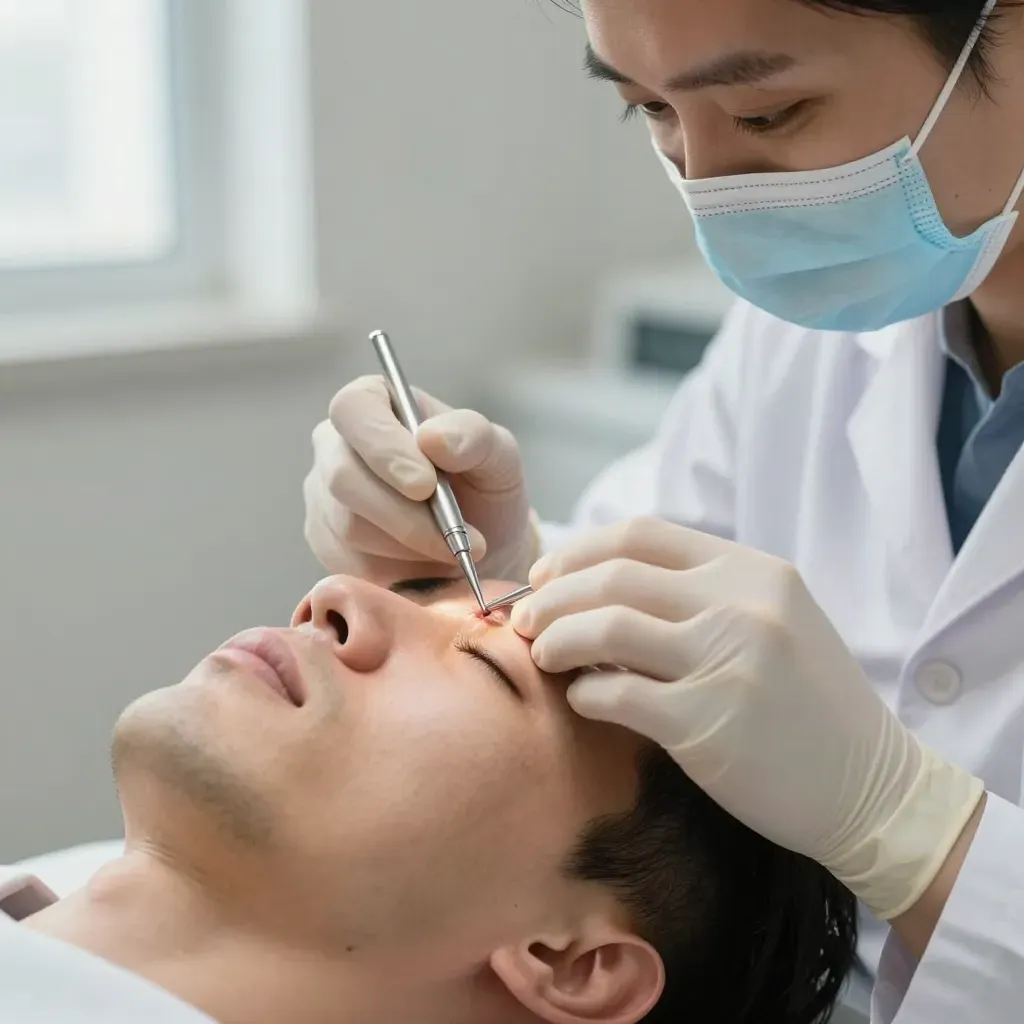
Simple incision and extraction runs fifty to one hundred fifty dollars per treated area. This covers the dermatologist's time to make a small incision and remove the trapped hair using sterile instruments. Most basic extractions resolve single ingrown hairs in one session lasting fifteen to forty minutes. The procedure requires only local anesthesia and involves minimal recovery time.
Manual extraction represents the most affordable professional option for isolated ingrown hairs. A targeted treatment for one small area typically totals seventy-five to one hundred ten dollars when performed in a single half-hour session. This assumes no complications requiring additional instrumentation or extended operative time. Patients paying cash upfront sometimes negotiate ten to fifteen percent discounts at private dermatology practices.
Price Variables
Three factors push costs toward the higher end of the range:
- Provider expertise: Board-certified dermatologists charge twenty to forty percent more than general practitioners or physician assistants performing identical procedures
- Geographic location: Urban clinics in major metropolitan areas price thirty to fifty percent above rural or suburban offices due to higher overhead costs
- Session length: Complex extractions requiring forty minutes of operative time bill higher than straightforward fifteen-minute procedures
Cost Components
The total reflects minimal material overhead and primarily professional labor:
Component | Low Range | High Range |
|---|---|---|
Professional labor | $40 | $120 |
Sterile supplies | $0 | $40 |
Facility fees | $0 | $25 |
Tax | 0% | 8% |
Total typical | $75 | $110 |
Some practices structure pricing per ingrown hair rather than per area. Removing three to five hairs in one zone may incur charges toward the upper limit, while isolated single-hair extractions fall at the lower end. Patients should confirm whether quotes include follow-up visits, as some providers charge additional fees for suture removal or wound checks at one-week intervals.
Complex cyst removal with biopsy ranges from four hundred to one thousand four hundred dollars.
Deeply embedded ingrown hairs requiring cyst excision or wedge resection cost substantially more than simple extractions. Minor surgical excisions performed in-office range from one hundred fifty to eight hundred dollars depending on tissue removal extent and anesthesia requirements. When pathological analysis becomes necessary to rule out malignancy or confirm diagnosis, biopsy fees push totals to four hundred to nine hundred dollars.
Advanced therapeutic interventions including laser ablation or surgical flap techniques for recurrent pilonidal cysts reach six hundred to one thousand four hundred dollars plus aftercare expenses. These procedures address significant tissue damage, extensive sinus tracts, or chronic inflammatory conditions unresponsive to conservative management. Operating time extends to one to two hours with recovery periods spanning two to four weeks.
Cost Breakdown by Procedure Type
Procedure | Cost Range | Key Inclusions |
|---|---|---|
Minor excision | $150-$800 | Local anesthesia, tissue removal, wound closure |
Excision with biopsy | $400-$900 | Surgical removal plus pathology lab analysis |
Laser/advanced therapy | $600-$1,400 | Specialized equipment, multiple treatment zones, follow-up |
Additional Cost Drivers
- Anesthesia upgrades: Sedation or regional blocks add two hundred to five hundred dollars compared to local injection
- Tissue complexity: Dense fibrous cysts requiring extensive dissection bill at higher facility fee tiers
- Geographic variation: Academic medical centers charge forty to sixty percent above community dermatology offices
- Post-operative care: Prescription antibiotics, specialized dressings, and follow-up visits add fifty to two hundred dollars
Urban providers charge significantly more than rural clinics for identical procedures.
Metropolitan dermatology practices command thirty to sixty percent premium pricing over rural counterparts for identical ingrown hair removal procedures. Basic manual extraction in major urban centers ranges from one hundred ten to three hundred dollars per area, while rural clinics offer the same service for forty to one hundred ten dollars. This disparity reflects commercial rent differentials, staffing costs, and market density rather than quality variation.
Location Type | Basic Extraction | Complex Cyst Removal |
|---|---|---|
Urban (Major Metro) | $110-$300 | $800-$1,400 |
Suburban | $75-$180 | $400-$900 |
Rural | $40-$110 | $150-$600 |
Overhead Cost Disparities
- Commercial rent: Urban medical office space costs three to five times more per square foot than rural markets
- Staffing expenses: Registered nurses and medical assistants in metropolitan areas earn twenty-five to forty percent higher wages
- Regulatory compliance: Major cities impose additional licensing fees and inspection requirements that increase operational overhead
Market Density Effects
Paradoxically, some rural markets with limited provider competition maintain lower prices to attract volume from broader geographic catchment areas. Conversely, saturated urban markets with numerous dermatology practices often maintain elevated pricing due to higher demand and affluent patient populations. Suburban clinics typically occupy the middle tier, offering competitive pricing twenty to thirty percent below urban centers while maintaining modern facilities and board-certified specialists.
Insurance rarely covers removal unless infection creates a medically necessary condition.
Standard health insurance classifies routine ingrown hair removal as cosmetic surgery, excluding coverage for elective procedures. Patients pay one hundred percent out-of-pocket for simple extractions or laser hair removal performed primarily for aesthetic improvement. However, policies activate coverage when clinical documentation proves medical necessity through active infection, abscess formation, or significant functional impairment.
Medical Necessity Criteria
Insurers require specific diagnostic indicators to justify surgical intervention:
- Active bacterial infection with purulent drainage requiring antibiotic therapy
- Abscess formation demanding incision and drainage procedures
- Recurrent pilonidal cysts causing chronic pain or mobility limitations
- Significant scarring or hyperpigmentation creating functional disability
Coverage Scenarios
Condition | Typical Coverage | Patient Responsibility |
|---|---|---|
Simple embedded hair, no infection | Not covered | 100% out-of-pocket |
Infected cyst with abscess | Covered | Deductible + coinsurance (20-40%) |
Recurrent pilonidal disease | Partial/Full coverage | Prior authorization required |
Laser hair removal (prevention) | Not covered | 100% out-of-pocket |
Even covered procedures generate substantial patient costs through high-deductible health plans. A medically necessary cyst excision billed at eight hundred dollars may leave patients responsible for four hundred to six hundred dollars after insurance adjustments, depending on deductible status and coinsurance percentages. Consultation fees ranging fifty to one hundred fifty dollars usually apply separately unless the visit results in immediate surgical treatment.
Laser hair removal offers a cost-effective long-term alternative to repeated surgeries.
Patients experiencing recurrent ingrown hairs face escalating costs with repeated surgical extractions. Four to six manual extractions annually at one hundred dollars each accumulates four hundred to six hundred dollars yearly indefinitely. Laser hair removal requires higher upfront investment but eliminates recurring expenses through permanent hair reduction.
Treatment Approach | Initial Cost | 5-Year Total | 10-Year Total |
|---|---|---|---|
Repeated surgical extractions (4x/year) | $100 | $2,000 | $4,000 |
Laser hair removal (4-6 sessions) | $800-$1,200 | $1,000-$1,400 | $1,200-$1,600 |
At-home IPL device | $300-$500 | $400-$600 | $500-$700 |
Long-Term Economic Advantage
Professional laser protocols targeting ingrown-prone areas like the bikini line or beard region typically require four to six sessions at two hundred to nine hundred dollars per treatment. The four to six session investment breaks even against surgical extraction costs within three to four years. Subsequent decades generate substantial savings while eliminating pain, infection risk, and appointment scheduling burdens.
Prevention Mechanism
- Destroys hair follicles at the root, eliminating the source of ingrown formation
- Reduces hair density by seventy to ninety percent permanently after complete protocol
- Prevents scarring and hyperpigmentation cycles caused by repeated surgical trauma
- Maintains results with annual touch-up sessions costing one hundred to three hundred dollars