
Table of Contents
Professional ingrown hair treatment ranges from immediate dermatologist extraction to permanent laser or electrolysis solutions.
Dermatologists use sterile needles to lift embedded hairs safely in fifteen minutes while medical-grade lasers target follicles with light pulses to stop regrowth permanently after six to eight sessions.
Electrolysis destroys individual follicles with electric current and works on all hair colors including blonde and gray where laser fails.
At-home relief requires warm compresses applied three to four times daily and chemical exfoliants like glycolic or salicylic acid to dissolve dead skin cells blocking pores.
Infected cysts showing pus spreading redness fever or hard painful lumps demand immediate medical care to prevent scarring and systemic infection.
Locate board-certified providers through Solv Healthgrades or Zocdoc using filters for insurance acceptance and real-time availability.
Question | Answer |
|---|---|
What is the fastest professional treatment for ingrown hairs? | Dermatologists extract embedded hairs using sterile needles in fifteen minute appointments for immediate relief. |
How many laser sessions prevent ingrown hairs permanently? | Six to eight laser sessions reduce hair growth by eighty to ninety percent and eliminate ingrowns for years. |
Does electrolysis work on blonde or gray hair? | Electrolysis treats all hair colors including blonde and gray by destroying individual follicles with electric current. |
When should I seek medical care for an ingrown hair? | See a doctor immediately for spreading redness pus drainage fever or hard painful lumps indicating serious infection. |
What helps ingrown hairs heal at home? | Apply warm compresses three to four times daily and use glycolic or salicylic acid to clear blocked follicles. |
Professional extraction and laser treatments are available at local clinics
Dermatologist Extraction
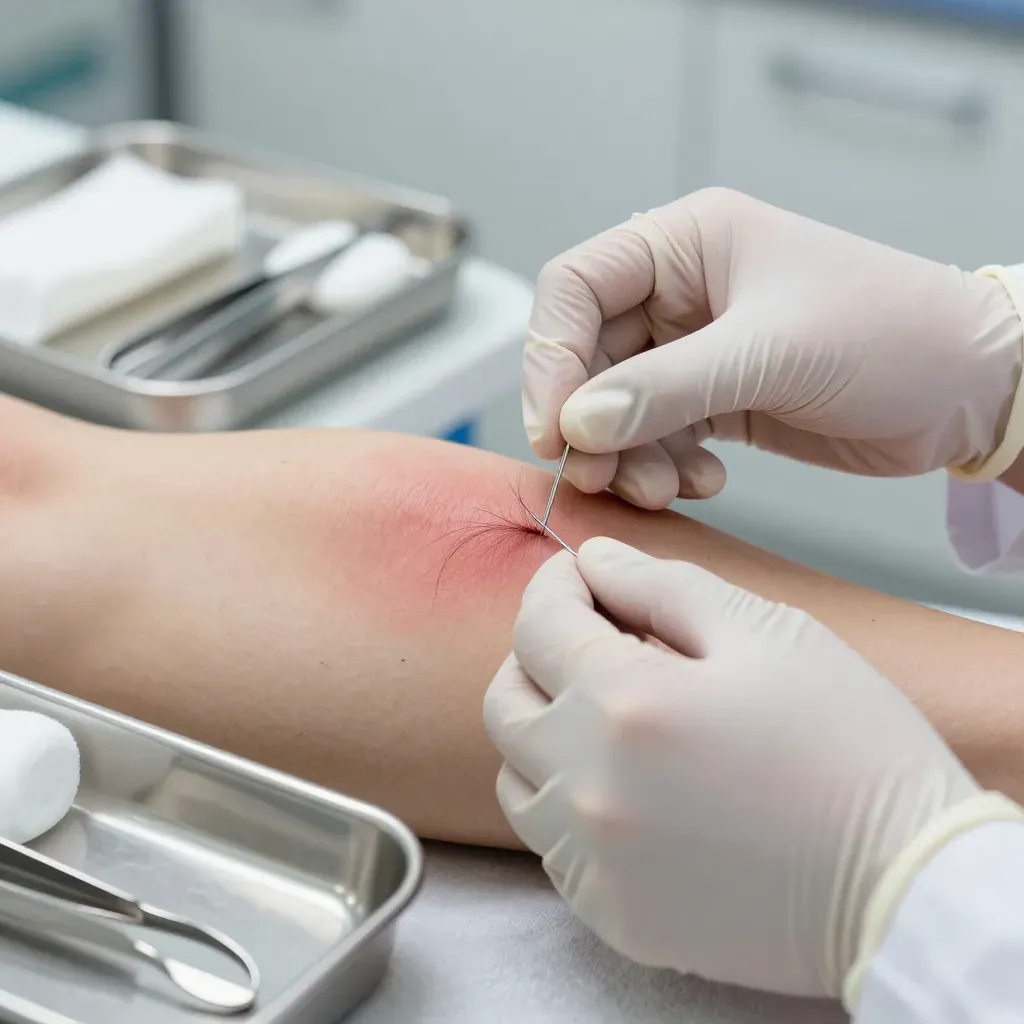
Dermatologists remove embedded hairs using sterile needles. They lift the hair from beneath the skin without causing infection or scarring. This beats DIY tweezing which worsens inflammation and introduces bacteria. Most extractions take fifteen minutes. You see immediate relief.
Laser Hair Removal
Clinics offer medical-grade laser treatments that target follicles directly. The procedure prevents hair from curling back into skin. Sixty million Americans suffer chronic ingrown hairs. Laser solves this permanently after six to eight sessions. Results last years. Techs use cooling devices to minimize discomfort.
Electrolysis Alternative
Electrolysis treats individual follicles with electric current. It works on all hair colors including blonde and gray where laser fails. Sessions cost less than laser but require twelve or more visits. Each session targets one hair at a time. It hurts more than laser but guarantees permanence.
Treatment | Method | Sessions Needed | Best For |
|---|---|---|---|
Professional Extraction | Sterile needle | 1 | Single stubborn hairs |
Laser Removal | Light pulses | 6-8 | Large areas, prevention |
Electrolysis | Electric current | 12+ | Light/fine hairs |
Costs vary by location. Laser runs higher per session but needs fewer treatments overall. Electrolysis costs less per visit but adds up over time. Dark spots from old ingrowns fade after professional treatment. Most clinics offer same-day appointments through online booking platforms.
You can locate board-certified dermatologists through online directories
Search Platforms
Use specialized medical directories to find providers. Solv, Healthgrades, and Zocdoc list board-certified dermatologists with verified reviews. Filter by location, availability, and insurance acceptance. Most platforms show real-time appointment slots.
Verification Checklist
Confirm credentials before booking. Look for American Board of Dermatology certification. Check years of experience with ingrown hair cases. Read patient reviews mentioning extraction techniques or laser equipment quality.
Platform | Key Feature | Booking Speed |
|---|---|---|
Solv | Same-day appointments | Immediate |
Healthgrades | Board certification verified | 24-48 hours |
Zocdoc | Insurance filter | Same week |
Practice Websites | Direct scheduling | Varies |
What to Expect
Clinics like Albemarle Dermatology Associates offer state-of-the-art facilities with medical and surgical treatment options. Call ahead to confirm they handle ingrown hair extraction or laser services. Ask about consultation fees. Many waive them if you proceed with treatment.
Charlottesville, VA and similar markets host multiple providers. Compare three clinics minimum. Check if they offer free ingrown hair assessments. Some medical spas employ dermatologists on staff for complex cases.
Warm compresses and chemical exfoliants provide effective at-home relief
Warm Compress Application
Apply a warm washcloth to affected areas for ten to fifteen minutes. Repeat three to four times daily. Heat reduces inflammation and softens skin. This encourages the trapped hair to break through the surface naturally. Keep the area clean to prevent infection.
Chemical Exfoliation
Speed up healing with over-the-counter acids. These dissolve dead skin cells blocking the hair follicle. Apply daily to clean, dry skin.
Acid Type | Function | Best For |
|---|---|---|
Glycolic Acid | Breaks down dead skin cells | Surface bumps and discoloration |
Salicylic Acid | Unclogs pores, reduces inflammation | Painful, red, swollen bumps |
Hair Removal Pause
Stop shaving, tweezing, or waxing the affected area immediately. Continue this break for one to six months until skin clears. Trim hair with scissors or electric clippers if you must maintain length. Pulling skin taut while shaving increases ingrown risk.
- Use alcohol-free products only
- Apply warm compress before any hair removal
- Massage oil or cream into skin before and after shaving
- Wear loose clothing to minimize friction
- Exfoliate gently with soft circular motions. Never scrub aggressively
Infected cysts with pus require immediate medical attention
Warning Signs
Redness spreading beyond the immediate bump indicates infection is expanding. Pus or fluid drainage confirms bacterial presence. Increasing pain, warmth, and fever signal your body is fighting a serious infection. Do not squeeze, lance, or attempt to drain these cysts yourself.
Symptom | Meaning | Action Required |
|---|---|---|
Redness spreading outward | Cellulitis risk | See dermatologist within 24 hours |
Yellow/green pus drainage | Active bacterial infection | Seek immediate medical care |
Fever over 100.4°F | Systemic infection | Go to urgent care or ER |
Hard, painful lump | Deep cyst formation | Professional drainage needed |
Dangers of DIY Drainage
Popping cysts drives bacteria deeper into skin layers. This creates permanent scars and spreads infection to surrounding hair follicles. Kitchen needles and tweezers harbor bacteria. You risk converting a simple ingrown hair into a staph infection requiring IV antibiotics.
Clinical Solutions
Healthcare providers diagnose the condition by examining your skin and reviewing hair removal habits. They drain cysts using sterile surgical instruments in controlled environments. Oral or topical antibiotics treat active infections. For patients with recurring cysts, doctors often recommend laser hair removal to eliminate the source permanently. Sometimes chronic ingrowns indicate underlying conditions like pseudofolliculitis barbae or hidradenitis suppurativa that require specialized prescription protocols.
Laser hair removal and electrolysis prevent future ingrown hairs permanently
Laser Hair Removal
Medical-grade lasers target melanin in hair follicles. Light energy destroys the root without damaging surrounding skin. Six to eight sessions reduce hair growth by eighty to ninety percent. Curly and coarse hair types benefit most. Results last years with occasional maintenance. Home devices exist but clinic lasers deliver faster, deeper results for stubborn cases.
Electrolysis
Technicians insert tiny probes into individual follicles. Electric current destroys growth cells permanently. This works on blonde, gray, and red hair that lasers miss. Also suitable for darker skin tones where laser risks hyperpigmentation. Each session treats fewer hairs but guarantees complete elimination. Plan for twelve to twenty-five sessions for full clearance.
Method | Technology | Best For | Sessions | Cost Factor |
|---|---|---|---|---|
Laser | Light pulses | Dark hair, large areas | 6-8 | Higher per session, fewer total |
Electrolysis | Electric current | All hair colors, small spots | 12-25 | Lower per session, more total |
Some patients combine both. They use laser for bulk reduction then electrolysis for remaining resistant hairs. Pricing varies by region. Consult a dermatologist to determine which method matches your hair color, skin tone, and budget. Both eliminate the mechanical causes of ingrown hairs by stopping regrowth entirely.