
Table of Contents
Free trapped hairs fast with warm compresses and gentle exfoliation.
Lift visible loops with sterilized tweezers without digging or plucking.
Prevent new bumps with daily 2% salicylic acid application.
Destroy follicles permanently with 6 to 8 laser sessions.
See your GP immediately for infection signs like spreading redness or fever.
Question | Answer |
|---|---|
How do I bring an ingrown hair to the surface? | Apply warm compresses for 10 to 15 minutes twice daily to soften skin and draw the hair outward. |
When can I safely use tweezers? | Only lift the hair once the loop visibly breaks through the skin after softening with warm compresses. |
What prevents ingrown hairs? | Daily 2% salicylic acid dissolves dead skin cells that block follicles. |
Is there a permanent cure? | Laser hair removal destroys follicles permanently after 6 to 8 sessions. |
When should I see a doctor? | Visit your GP immediately for red streaks, pus, fever, or bumps lasting over three weeks. |
Apply warm compresses then exfoliate gently to free trapped hairs fast
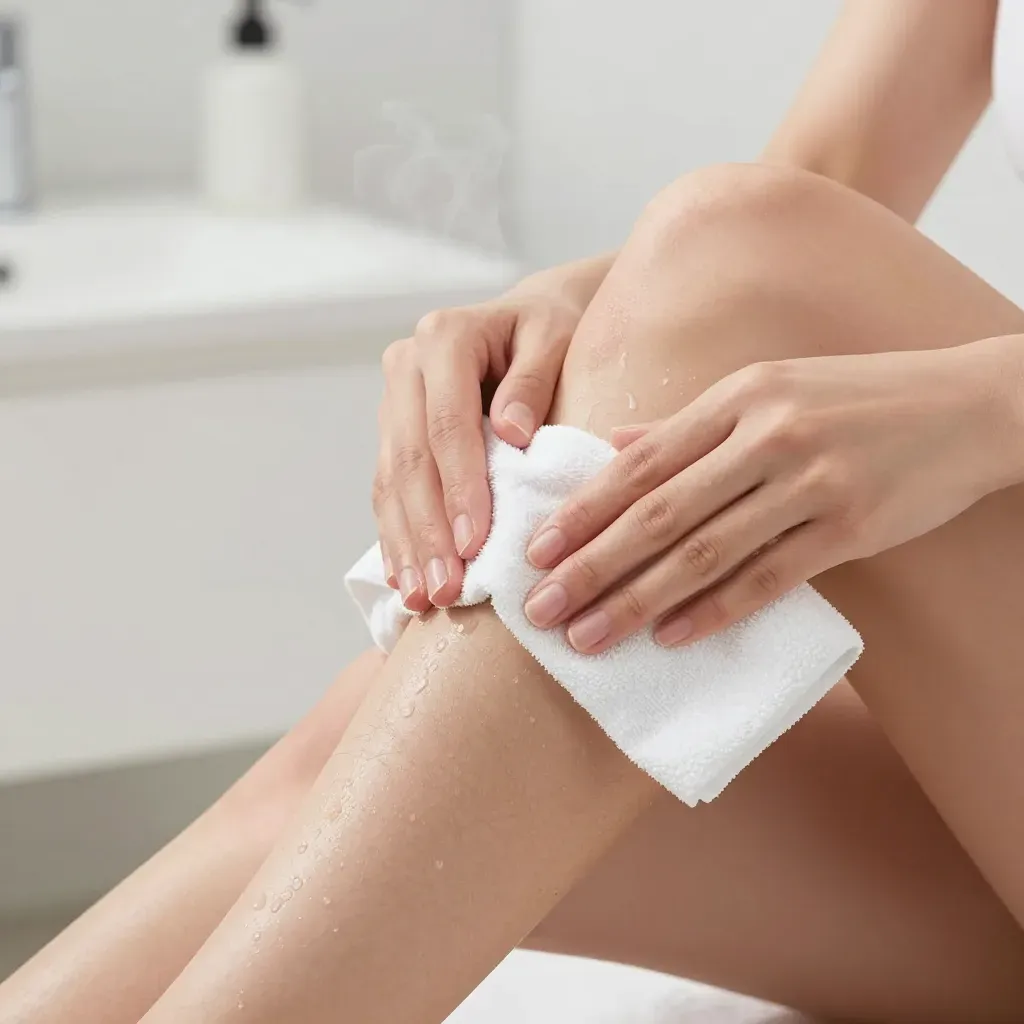
Warm compresses start the ingrown hair removal process fast.
Soak a clean flannel in hot water.
Test heat on your wrist.
Press against the bump for 10 to 15 minutes.
Repeat this twice daily.
The heat draws the trapped hair toward the surface.
Warmth increases blood flow to the hair follicle.
This reduces inflammation and helps the hair pierce the skin naturally.
Re-warm the flannel if it cools down during treatment.
Exfoliation clears dead skin cells blocking the follicle.
Use a soft washcloth or chemical exfoliant containing salicylic acid.
Massage the area gently in circular motions.
Do not scrub hard.
Stop immediately if skin breaks or bleeds.
Best exfoliants for sensitive areas
Use salicylic acid 2% or glycolic acid 5% for bikini lines and faces.
These dissolve dead skin without harsh scrubbing.
Apply with cotton pads.
Avoid strong acne creams on fresh bumps as they irritate skin.
Method | Action | Frequency |
|---|---|---|
Warm compress | Softens skin, reduces swelling | 2x daily |
Physical exfoliation | Removes dead cells with cloth | Every 2 days |
Chemical exfoliation | Unblocks pores with acids | Daily |
Combine both methods for faster results.
Start with the compress.
Wait five minutes.
Then exfoliate gently.
Rinse with cool water.
Pat dry.
Apply a light moisturizer.
Time this routine after showering when pores are already open.
Nighttime works best as skin repairs while you sleep.
Wear loose cotton clothing after treatment to prevent friction.
Do not pick, squeeze, or dig at the bump.
This drives bacteria deeper and creates scars.
If the hair does not surface after three days of treatment, stop exfoliating and consult a pharmacist.
Use sterilized tweezers to lift visible hairs once skin opens naturally
Wait until the hair loop breaks through the skin surface.
Never dig for buried hairs.
Wash hands with antibacterial soap first.
Cleanse the bump with mild soap and warm water.
Pat dry with a clean towel.
Sterilize pointed tweezers by wiping with rubbing alcohol.
Pass the tips through a flame if alcohol is unavailable.
Let them cool completely before touching skin.
Position yourself under bright light.
Use a magnifying mirror for facial areas.
Grasp the visible hair loop gently with the tweezer tips.
Pull upward to lift the tip above skin level.
Do not pluck the hair out completely.
Plucking creates a sharp new tip that grows back into the skin.
Snip the loop with sterilized scissors if the hair is long.
Leave enough length for the hair to grow outward naturally.
Critical safety rules
- Stop immediately if you draw blood
- Stop if pain increases sharply
- Never use unsterilized tools
- Do not probe underneath the skin surface
- Avoid this method on facial ingrowns if prone to scarring
Apply witch hazel or diluted tea tree oil after lifting.
This disinfects the follicle opening.
Cover with a breathable plaster only if clothing rubs the area.
Wash the area morning and night until fully healed.
Wear loose cotton clothing to prevent re-embedding.
Dark skin types risk hyperpigmentation from digging.
See a pharmacist if redness spreads beyond the bump after 24 hours.
Keep these tweezers dedicated to ingrown removal only.
Store in a clean pouch between uses.
Apply salicylic acid daily to unblock pores and prevent new bumps
Salicylic acid dissolves the dead skin cells trapping hairs beneath the surface.
It is a beta-hydroxy acid that penetrates oil-filled pores.
Apply a thin layer to clean, dry skin every morning.
Start with a 2% concentration for body areas.
Use 0.5% to 1% for sensitive facial skin.
Boots and Superdrug stock affordable options like Clearasil or own-brand formulas.
Pharmacy chains sell pads, gels, and lotions.
Choose alcohol-free formulas to prevent drying.
Wait five minutes after application before dressing.
This prevents the product rubbing off on clothing.
Continue daily use even after the bump clears.
This prevents new blockages from forming.
Application areas and strengths
Body Area | Recommended % | Form |
|---|---|---|
Bikini line | 2% | Pad or gel |
Face | 0.5-1% | Gentle lotion |
Legs | 2% | Body spray |
Underarms | 1% | Roll-on |
Do not apply to broken or bleeding skin.
Stop use if stinging persists beyond thirty seconds.
Always wear SPF 30 sunscreen on treated areas.
Salicylic acid increases sun sensitivity.
Exfoliating acids thin the skin barrier temporarily.
Apply moisturizer after the acid absorbs if skin feels tight.
Non-comedogenic moisturizers work best.
Results appear within three to five days of consistent use.
Pair with warm compresses for stubborn embedded hairs.
Get laser hair removal to kill follicles and stop ingrowns permanently
Laser destroys the follicle entirely.
This stops hair growth permanently.
No hair means no ingrowns.
The laser targets dark pigment in the hair shaft.
Heat travels down to the root.
This kills the follicle's ability to regrow.
Most people need 6 to 8 sessions spaced 4 to 6 weeks apart.
Treat all areas prone to bumps.
Bikini lines and beards respond best.
Curly hair types see dramatic results.
This includes men with pseudofolliculitis barbae.
Laser hair removal on ingrown hairs targets existing bumps while preventing new ones.
Choose the right laser for your skin
Skin Tone | Laser Type | Sessions Needed |
|---|---|---|
Light | Alexandrite | 6-8 |
Medium | Diode | 6-8 |
Dark | Nd:YAG | 8-10 |
Clinics across the UK offer this treatment.
sk:n and The Harley Medical Group operate nationwide.
Independent laser clinics exist in every major city.
Sessions cost £50 to £300 depending on area size.
Which laser hair removal is best depends on your tone.
Nd:YAG bypasses surface pigment.
It targets hair directly without burning skin.
How many sessions for laser hair removal Brazilian areas typically requires 6 to 10 treatments.
Bikini zones often harbor the most stubborn ingrowns.
Avoid sun exposure for 4 weeks before treatment.
Shave the area 24 hours prior.
Do not wax or pluck.
The laser needs the root intact to target it.
Sessions last 15 to 45 minutes.
You feel a rubber band snap sensation.
Redness fades within hours.
Results appear after session 2 or 3.
Hair grows back finer first.
Then it stops completely.
Maintenance sessions happen yearly.
This catches any dormant follicles that activate later.
Visit your GP if you see signs of infection or severe pain
Red streaks spreading from the bump signal infection.
Yellow or green pus indicates bacteria.
Fever means the infection is systemic.
See your GP immediately for these symptoms.
NHS consultations cost nothing.
Walk-in clinics handle urgent cases same-day.
Infection warning signs
- Warmth radiating beyond the bump
- Throbbing pain that worsens
- Red streaks traveling outward
- Pus with foul odor
- Swollen lymph nodes nearby
- Body temperature over 38C
Book a GP appointment if the bump lasts longer than three weeks.
Home treatments should show improvement within ten days.
Request a dermatologist referral for recurring ingrowns.
These specialists prescribe stronger treatments.
Treatment | Purpose | Availability |
|---|---|---|
Oral antibiotics | Kill bacterial infection | GP prescription |
Steroid injection | Reduce deep inflammation | Dermatologist |
Prescription retinoids | Prevent cell buildup | Dermatologist |
Incision and drainage | Remove deep cysts | Minor surgery clinic |
Large cysts require surgical removal.
Doctors cut and drain these under sterile conditions.
Never lance cysts yourself.
This spreads bacteria and causes scars.
Private dermatologists charge £150 to £300 per consultation.
NHS waiting times vary by region.
Ask your GP about urgent referral pathways.
Chronic sufferers qualify for faster specialist access.
Bring photos of previous flare-ups to your appointment.
This helps doctors assess severity.
Track patterns in a diary.
Note hair removal methods triggering bumps.