
Table of Contents
Viral ingrown hair videos hide infection risks sterile setups and weeks of healing.
Safe home extraction requires boiled tweezers warm compresses and parallel angles.
Deep infected cysts need dermatologists to stop sepsis and permanent scarring.
Daily salicylic acid exfoliation prevents ingrowns better than extraction attempts.
Question | Answer |
|---|---|
Why are viral extraction videos dangerous? | They hide infection risks and healing time while encouraging risky non-sterile bathroom surgery. |
What sterilization is required for home removal? | Boil tweezers five minutes or wipe with seventy percent isopropyl alcohol before touching skin. |
When should you see a dermatologist? | Book immediately for thick yellow pus fever red streaks or deep painful cysts. |
What angle prevents damage during extraction? | Keep tweezers parallel to skin surface and pull with natural growth never dig down. |
How do you prevent ingrown hairs? | Apply two percent salicylic acid daily to dissolve dead skin before it traps emerging hairs. |
Viral videos show ingrown hair extractions but hide infection dangers
What viral clips leave out
Millions watch ingrown hair removal videos for the satisfying release. A 2017 viral clip showed a six-year-old ingrown hair extracted in one clean pull. These clips rack up millions of views but rarely display the bloody aftermath, sterile setup, or weeks of healing required.
Hidden risks behind the camera
- Bacterial infection from bathroom bacteria on non-sterile tweezers
- Permanent scarring and hyperpigmentation on dark skin tones
- Spreading staph infection to surrounding tissue
- Trauma forcing hair deeper into dermis creating cysts
- Keloid formation from aggressive digging
When extraction becomes emergency
Deep ingrown hairs form painful cysts. Videos show lancing with sewing needles or razor blades. Without medical training and sterile fields, you risk sepsis, cellulitis, or MRSA. Red streaks radiating from the site, fever, or thick yellow pus means the DIY video tutorial created a medical emergency requiring professional ingrown hair removal treatment.
Video shows | Reality hides |
|---|---|
Instant gratification | 2-4 weeks of wound care |
Clean extraction | Bleeding and bruising |
Final smooth skin | Permanent scar formation |
Free entertainment | $200+ dermatologist bill |
Licensed dermatologists use surgical loops, sterile scalpels, and antibiotic protocols. Your bathroom mirror and kitchen tweezers lack all three. Stop the video and book an appointment if you see pus, increasing redness, or feel warmth radiating from the bump. For safer alternatives, read about deep ingrown hair removal at home protocols or find ingrown hair removal treatment near you.
Sterilize tweezers and apply warm compress before any home removal attempt
Tool sterilization protocol
Boil tweezers for 5 minutes or wipe with 70% isopropyl alcohol. Let them dry completely. Dirty tools push bacteria into open pores and cause infections that require professional ingrown hair removal.
Softening the skin
Apply a warm compress for 10-15 minutes. Use a clean washcloth soaked in hot water. Reheat every 2 minutes. Heat dilates pores and brings the hair closer to the surface. This step separates safe extractions from traumatic digging.
Extraction preparation checklist
Step | Time | Risk if skipped |
|---|---|---|
Sterilize tools | 5 min | Bacterial infection |
Warm compress | 10-15 min | Skin tearing |
Clean skin | 2 min | Surface bacteria entry |
Good lighting | Setup | Missed hair, excess trauma |
Needle use warning
Only use a sterile needle to lift the hair loop above skin. Never pierce sideways or deep. One small prick at the surface releases the trapped end. Stop immediately if you see blood before the hair emerges. For buried hairs that resist surfacing, follow how to remove an ingrown hair you can't see protocols or abandon the attempt.
Skip metal tools entirely if possible. Ingrown hair removal natural remedies using exfoliation and warm soaks resolve many cases without extraction risks.
See a dermatologist for deep infected hairs instead of using DIY methods
Warning signs that demand professional care
Stop watching extraction videos and book an appointment if you notice thick yellow pus, fever, or red streaks radiating from the bump. These indicate infection spreading beyond the hair follicle into surrounding tissue. Deep cysts buried under skin require surgical excision in sterile environments.
- Pus drainage lasting more than 48 hours
- Fever above 100.4°F (38°C)
- Red streaks extending from the site
- Severe pain preventing normal movement
- Recurrent ingrowns in the same spot
What dermatologists do differently
Licensed professionals use sterile surgical loops and scalpels under bright magnification. They prescribe topical or oral antibiotics when infection is present. For chronic cases, they inject corticosteroids to reduce inflammation immediately. Find ingrown hair removal treatment near you instead of risking permanent scars.
DIY attempt | Dermatologist visit |
|---|---|
Kitchen tweezers | Sterile surgical instruments |
Bathroom mirror | LED magnification |
Neosporin | Prescription antibiotics |
Unknown outcome | Controlled sterile field |
When to seek emergency care
Cellulitis and abscesses require immediate medical intervention. Attempting to lance deep infected ingrown hair cysts at home pushes bacteria into bloodstream causing sepsis. Dermatologists drain properly and culture the infection to target specific bacteria strains. The $150-300 office visit prevents emergency room bills and permanent disfigurement.
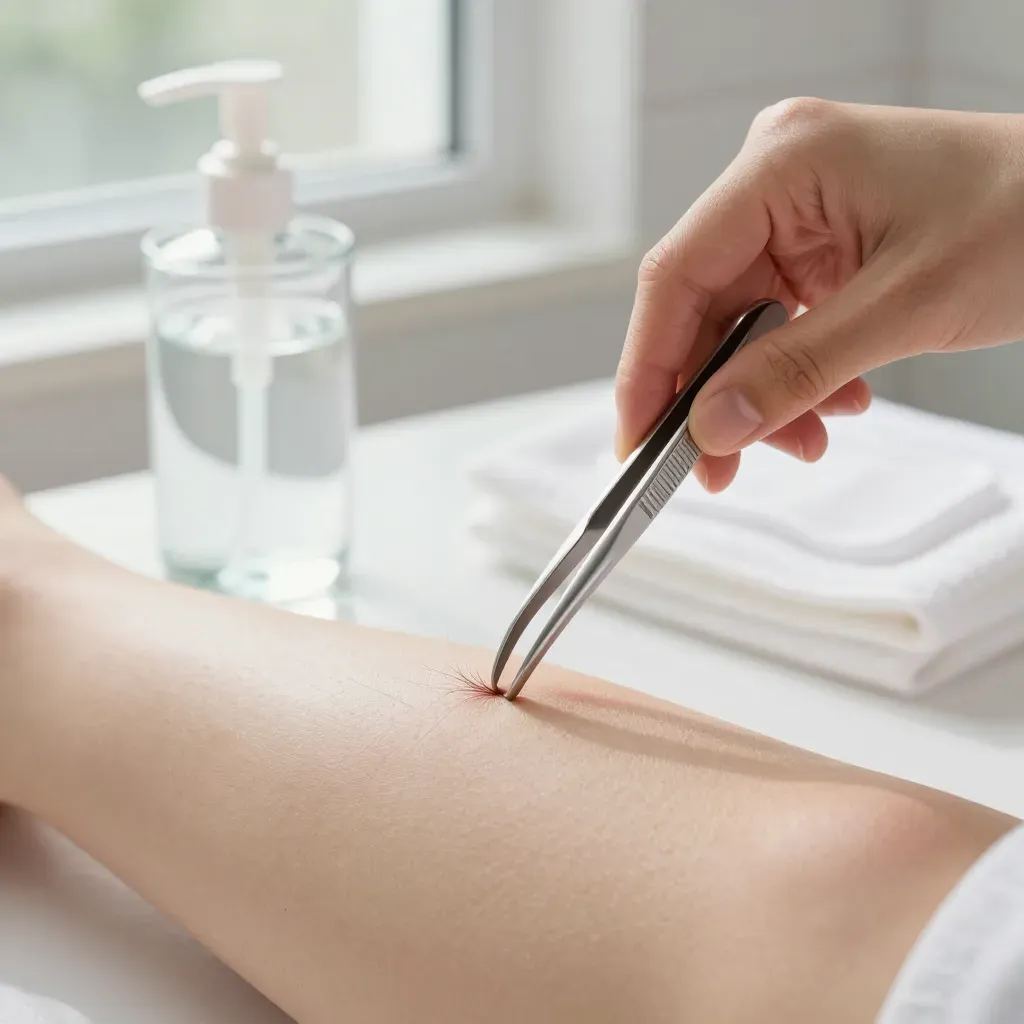
Videos demonstrate proper extraction angle to release trapped hairs safely
Parallel extraction technique
Quality ingrown hair removal videos demonstrate tweezers sliding parallel to skin surface. Never dig perpendicular or downward. This angle follows the natural hair shaft direction and prevents snapping the strand below epidermis. Professionals keep tools flat against skin while approaching the trapped loop.
Hook and lift mechanics
Insert sterile tweezer tips under the visible hair loop. Rotate wrist slightly to create gentle upward tension. Pull in the direction of natural growth only. Videos demonstrating how to remove a ingrown hair in pubic area stress this hook motion prevents breakage. If the hair resists, abandon the attempt.
Angle determines outcome
Approach angle | Result | Risk level |
|---|---|---|
Parallel to surface | Clean extraction | Low |
45 degree dig | Broken hair shaft | Moderate |
Perpendicular stab | Dermal puncture | High |
Against growth direction | Hair snapping | Moderate |
Visual success markers
- Hair loop clearly visible above skin line
- Zero bleeding before hair movement
- Tweezer tips grip strand not surrounding tissue
- Resistance feels springy not cemented
- Hair slides out with continuous gentle pressure
Stop immediately if the hair does not release within three gentle pulls. Watch remove ingrown hair tutorials showing board-certified dermatologist hand positioning. For completely buried hairs without visible loops, consult how to remove an ingrown hair you can't see guides rather than digging blind and creating cysts.
Exfoliate daily to prevent ingrowns before they need video-style removal
Chemical exfoliation acids
Salicylic acid and glycolic acid dissolve dead skin cells that trap emerging hairs. Apply 2% salicylic acid pads or 8% glycolic acid lotion daily to high-risk areas. These beta and alpha hydroxy acids keep follicles clear without abrasive scrubbing that irritates sensitive skin. Ingrown hair removal natural remedies often include willow bark extract as a natural salicylic acid source.
Physical exfoliation limits
Use gentle scrubbing gloves or soft washcloths only 2-3 times weekly. Aggressive sugar scrubs and stiff brushes create micro-tears that actually increase infection risk. Chemical methods outperform physical abrasion for daily prevention.
Method | Frequency | Best for |
|---|---|---|
Salicylic acid 2% | Daily | Oily skin, bikini line |
Glycolic acid 8% | Daily | Dry skin, legs |
Lactic acid 5% | Daily | Sensitive skin |
Soft washcloth | 2-3x weekly | All skin types |
Shaving protocol integration
Exfoliate 24 hours before shaving or waxing never immediately after. Shave with the grain using single-blade razors. Replace blades every 5-7 uses. Apply non-comedogenic moisturizer post-shower. These steps prevent the trapped hairs that remove ingrown pubic hair videos attempt to fix after the fact.
- Exfoliate night before hair removal
- Use shaving gel with aloe
- Rinse blade between every stroke
- Apply cold compress post-shave
- Moisturize with tea tree oil
Consistent prevention eliminates the need for extraction videos entirely. For stubborn areas prone to recurring bumps, consider alternative hair removal methods that bypass shaving trauma completely.