
Table of Contents
Millions watch satisfying ingrown hair extraction videos on platforms like TikTok and YouTube for entertainment and education.
Safe removal requires warm compresses, sterile pointed tweezers, and patience, while unsafe DIY methods like needle digging risk serious infection and permanent scarring.
Regular exfoliation prevents formation by clearing dead skin from follicles, and laser hair removal offers permanent elimination by destroying follicles after 6-8 sessions.
Question | Answer |
|---|---|
Why do millions watch ingrown hair removal videos? | Viewers enjoy satisfying visual extractions and learn safe techniques from board-certified dermatologists demonstrating proper methods. |
What is the correct way to remove an ingrown hair at home? | Apply warm compresses for 10-15 minutes until the hair loop appears, then use alcohol-sterilized pointed tweezers to pull gently in the growth direction. |
Which DIY methods do dermatologists warn against? | Never use sewing needles, safety pins, or fingers to dig or squeeze because these push bacteria deeper and cause infection or permanent scarring. |
How can you permanently stop getting ingrown hairs? | Laser hair removal destroys follicles with light energy after 6-8 sessions, eliminating the root cause completely. |
Millions watch ingrown hair removal videos for satisfying extractions.
Social media platforms exploded with ingrown hair removal content. Instagram account Tweezist built an entire following around tweezing extractions. YouTube hosts 16-minute tutorials showing detailed removal techniques. TikTok features Dr. Sandra Lee demonstrating professional methods to millions of viewers.
The appeal mirrors pimple-popping content. Viewers experience satisfaction watching trapped hairs release from beneath skin. Close-up visuals capture the complete resolution of a painful problem. This oddly satisfying content creates a visual ASMR effect for skincare enthusiasts.
Top platforms hosting extraction content
Platform | Content Type | Popular Creators |
|---|---|---|
Short extraction clips | Tweezist | |
YouTube | Long-form tutorials | Dr. Pimple Popper |
TikTok | Quick satisfying extractions | @drpimplepopper |
User submissions | r/popping |
Content categories viewers seek
- Deep cyst extractions requiring surgical precision
- Long coiled hairs pulled from beneath skin surface
- Before-and-after healing documentation
- Tool comparisons and technique tutorials
- DIY home removal demonstrations
These videos serve dual purposes. Entertainment drives views, but education teaches proper technique. Viewers learn sterilization methods and tool selection. Medical professionals use these platforms to demonstrate safe practices versus dangerous picking behaviors. The content bridges professional dermatology with accessible home care guidance.
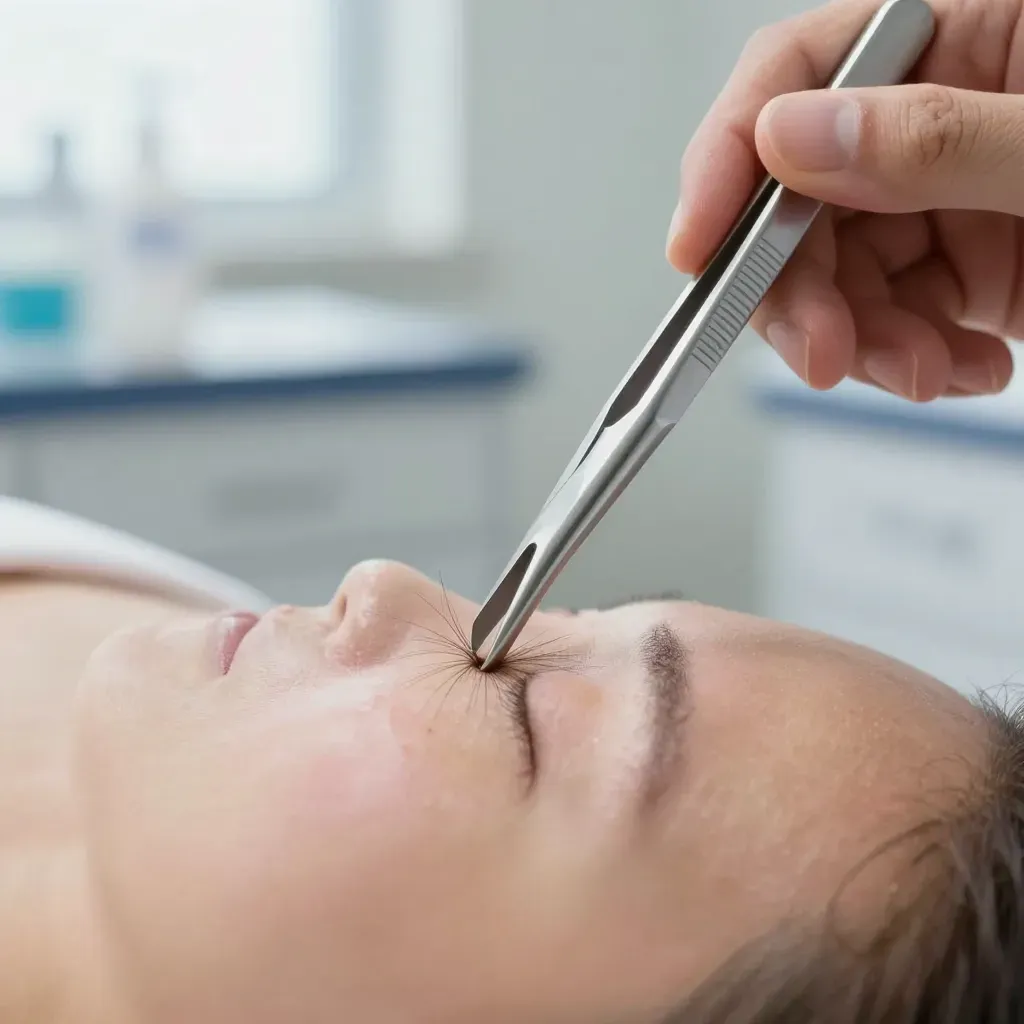
Professional videos demonstrate safe tweezing and warm compress techniques.
Board-certified dermatologists share extraction methods that minimize infection risk. These instructional videos emphasize preparation over force. Medical experts demonstrate precise techniques using sterile tools and patient timing.
Warm compress protocol
Heat softens skin and brings trapped hair closer to the surface. Professionals recommend specific timing:
- Soak clean washcloth in warm water (not boiling)
- Apply to affected area for 10-15 minutes
- Repeat 3-4 times daily until hair loop becomes visible
- Never force extraction before skin readiness
Research shows warm compresses rank as the most effective first-line treatment for ingrown hair cysts. The heat reduces inflammation while encouraging natural hair emergence.
Safe tweezing technique
Step | Action | Risk if skipped |
|---|---|---|
1 | Sterilize tweezers with rubbing alcohol | Bacterial infection |
2 | Wait for visible hair loop above skin | Breaking hair below surface |
3 | Grasp gently without yanking | Skin tearing |
4 | Pull in direction of hair growth | Hair snapping off |
5 | Apply antibiotic ointment after | Post-extraction infection |
Professional tool recommendations
Experts in these videos consistently recommend specific preparation items:
- 70% isopropyl alcohol for sterilization
- Pointed tweezers (not flat slant-tip)
- Magnifying mirror for visibility
- Adapalene gel for post-treatment exfoliation
- Hydrocortisone cream for inflammation
Dermatologists warn against unsafe DIY extraction methods.
Medical professionals consistently caution against aggressive home extraction attempts. Deep ingrown hairs buried beneath skin layers require professional intervention. Self-removal attempts frequently convert minor irritations into serious infections requiring antibiotic treatment.
Dangerous DIY mistakes to avoid
Unsafe Method | Why It Fails | Potential Damage |
|---|---|---|
Needle digging | Pushes bacteria deeper | Scarring, infection |
Finger squeezing | Breaks hair below surface | Inflammation, cyst formation |
Breaking skin with pins | Creates open wound | Bacterial infection, cellulitis |
Forceful tweezing | Snaps hair shaft | Embedded fragment, abscess |
Infection risk indicators
Stop immediately and consult a dermatologist if you observe:
- Increasing redness spreading beyond immediate area
- Warmth radiating from the site
- Yellow or green pus discharge
- Fever or systemic illness symptoms
- Pain intensifying rather than resolving
When professional help becomes mandatory
Board-certified dermatologists recommend immediate office visits for deep ingrown hairs in sensitive areas, recurrent cysts in identical locations, or any extraction attempt that breaks skin without sterile conditions. Professional tools and sterile environments prevent complications that home bathrooms cannot replicate.
Most ingrown hairs resolve naturally within one to two weeks with gentle exfoliation and patience. Medical intervention becomes necessary only when inflammation persists or infection signs emerge.
Proper exfoliation prevents ingrown hairs before they form.
Dead skin cells block follicle openings and force hair sideways beneath the surface. Regular exfoliation removes this barrier and allows natural upward growth. The process sloughs off the outer epidermis before debris accumulates and traps emerging strands.
Physical exfoliation tools
- Gentle scrubs with fine, non-abrasive particles
- Exfoliating gloves for controlled shower use
- Dry brushes for body areas and leg prevention
- Soft washcloths for delicate regions
Chemical exfoliation options
Product Type | Active Ingredient | Application Frequency |
|---|---|---|
Adapalene gel | Retinoid | Every 2-3 days |
BHA/AHA pads | Salicylic/Glycolic acid | Daily |
Exfoliating cleansers | Lactic acid | 3-4 times weekly |
Timing and technique guidelines
Exfoliate 24-48 hours before shaving or waxing to clear follicles without causing immediate irritation. Avoid exfoliating directly after hair removal when skin remains sensitive. Maintain routine 2-3 times weekly for high-risk areas like bikini line and neck.
Curly and coarse hair types benefit most from aggressive prevention routines. These textures naturally curve back toward skin when blocked. Exfoliation creates clear exit paths specifically critical for facial hair, bikini zones, and underarms where friction and tight clothing compound the problem.
Use circular motions without aggressive scrubbing. Over-exfoliation damages the skin barrier and ironically increases infection risk. Focus on areas with thick hair growth or previous ingrown history to maximize prevention benefits.
Laser hair removal offers permanent solutions to stop ingrown hairs.
Laser hair removal destroys follicles with concentrated light energy. Without active follicles, hair cannot become trapped beneath skin. This eliminates the root cause of ingrown hairs rather than treating symptoms repeatedly.
Permanent elimination methods
Method | Technology | Best For | Session Count |
|---|---|---|---|
Laser | Concentrated light pulses | Large areas, dark hair | 6-8 sessions |
Electrolysis | Electrical current via needle | Small areas, all hair colors | Multiple sessions per follicle |
Treatment expectations
- Each session targets active growth phase hairs
- Brazilian areas typically require 6-12 sessions
- Results become permanent after completing full series
- Maintenance sessions occasionally needed for hormonal changes
- Professional clinics use medical-grade devices for deeper penetration
Professional laser treatments differ from at-home IPL devices in power and precision. Medical settings adjust wavelengths for specific skin and hair types. This customization prevents burns while maximizing follicle destruction.
Cost varies by treatment area size and geographic location. Brazilian treatments range from $150-$400 per session. Face and neck areas typically cost less per session but require precise technique. Despite upfront investment, permanent elimination saves money long-term compared to endless waxing, shaving supplies, and ingrown treatments.