
Table of Contents
2020 ingrown hair removal videos remain the top educational reference for safe DIY extraction. Lockdown-era creators filmed lengthy unedited procedures showing sterile technique proper tool use and safety protocols that modern short-form clips skip. These archives demonstrate correct 15-degree needle angles two-thumb compression methods and infection warning signs while covering prevention strategies like chemical exfoliation and proper shaving direction.
Question | Answer |
|---|---|
Why are 2020 ingrown hair removal videos better than newer content? | 2020 videos show unedited lockdown-era procedures with detailed safety steps that modern fast-cut content omits. |
What tools do 2020 tutorials recommend for safe extraction? | They specify sterile 25-gauge needles pointed slant-tip tweezers and 10x LED loupes while rejecting sewing pins. |
When should you stop DIY extraction and see a doctor? | Abort immediately if blood appears before the hair or if you notice spreading redness fever or bumps lasting over three weeks. |
What prevention strategies do 2020 videos teach? | They recommend chemical exfoliation with glycolic acid shaving with hair growth and loose cotton clothing to reduce friction. |
2020 ingrown hair removal videos remain popular educational reference tools today
Ingrown hair removal videos 2020 still rank highest in dermatology education searches today.
These archives capture the pandemic content boom when creators prioritized detailed technique over viral shock value.
Pre-2021 footage shows slower extractions with better camera angles and sterilization explanations.
Modern clips often skip critical safety steps to fit short-form algorithms.
2020 tutorials remain the benchmark for learning proper tool handling and wound care.
Why 2020 Content Stands Out
Lockdowns forced professional aestheticians to film lengthy uncut procedures.
These unedited sequences reveal real-time decision making during difficult extractions.
Viewers see exactly how experts adjust grip angles when hairs break below the surface.
Video Era | Technique Detail | Safety Warnings |
|---|---|---|
2020 | Extended close-ups | Verbal step-by-step |
2022+ | Fast cuts | Text overlays only |
Popular 2020 channels focused on pharmacy-grade removal tools rather than kitchen utensils.
Many clips demonstrate proper tweezing methods that prevent scarring.
Specific tutorials cover sensitive area extractions with medical-grade hygiene protocols.
Archive Reliability Factors
- Minimum 1080p resolution shows hair shaft detail
- Visible alcohol wipe sterilization sequences
- Pre-extraction skin softening demonstrations
- Post-removal antibiotic application
- Healing timeline updates in descriptions
These elements make 2020 videos more trustworthy than newer heavily edited content.
Viral clips from 2020 demonstrate safe at-home extraction techniques
Viral 2020 clips taught millions proper extraction sequences without dermatology visits.
Top performers showed complete procedures from skin prep to final disinfection in single takes.
Creators emphasized warm compress application for ten minutes minimum before touching skin.
Needle techniques dominated 2020 content with specific lancing angles for different hair types.
Safe creators used 25-gauge sterile needles available at pharmacies rather than sewing pins.
They demonstrated lifting the visible hair loop rather than digging beneath skin layers.
Safe Technique | Dangerous Method | Risk Level |
|---|---|---|
Surface loop lift | Deep blade incision | High scar risk |
Sterile needle entry | Unwashed fingernail digging | Infection likely |
Alcohol post-care | Makeup cover-up | Clogged pores |
Parallel insertion | Perpendicular stab | Tissue damage |
Angle matters most in these tutorials.
Experts insert needles parallel to skin surface at 15-degree angles.
This prevents piercing the hair follicle base and causing deep infection or permanent scarring.
Compression Methods
2020 stars used two-thumb compression instead of nail squeezing.
This technique pushes the hair upward without breaking surrounding capillaries or creating bruises.
- Position thumbs 2mm from bump edges
- Press downward toward muscle tissue
- Hold steady pressure for 3 seconds
- Release completely and repeat maximum twice
- Abort if hair fails to surface
Failed attempts triggered immediate stop signals in best clips.
Creators explicitly told viewers to abort procedures if blood appeared before hair visibility.
These viral safety protocols directly reduced home-extraction infections reported in 2021 dermatology journals.
Many 2020 creators provided timestamp links showing exactly when to stop difficult extractions.
Top videos feature specific tools required for proper DIY removal
2020 viral clips specified exact tool models rather than generic "tweezers" or "needles."
Creators linked CVS pharmacy sources for sterile 25-gauge hypodermic needles.
They rejected sewing pins and safety pins due to irregular surfaces that harbor bacteria.
Tool | Specification | Why It Matters |
|---|---|---|
Needle | 25-gauge sterile | Thin enough to minimize tissue trauma |
Tweezers | Pointed slant tip | Grabs hair without pinching skin |
Magnification | 10x LED loupe | Reveals buried hair loops |
Compress | Microwavable gel pack | Maintains 105°F for 10 minutes |
Extraction Instruments
Professional-grade comedone extractors appeared in top 2020 tutorials.
These metal loops with varying diameters match different bump sizes without digging.
Creators demonstrated how 2mm loops work for facial ingrowns while 4mm handles body areas.
- Stainless steel only - no plastic tips that flex
- Autoclavable or disposable options
- Dual-ended tools with lancet and loop
- Textured grips for wet-hand stability
Visualization Setup
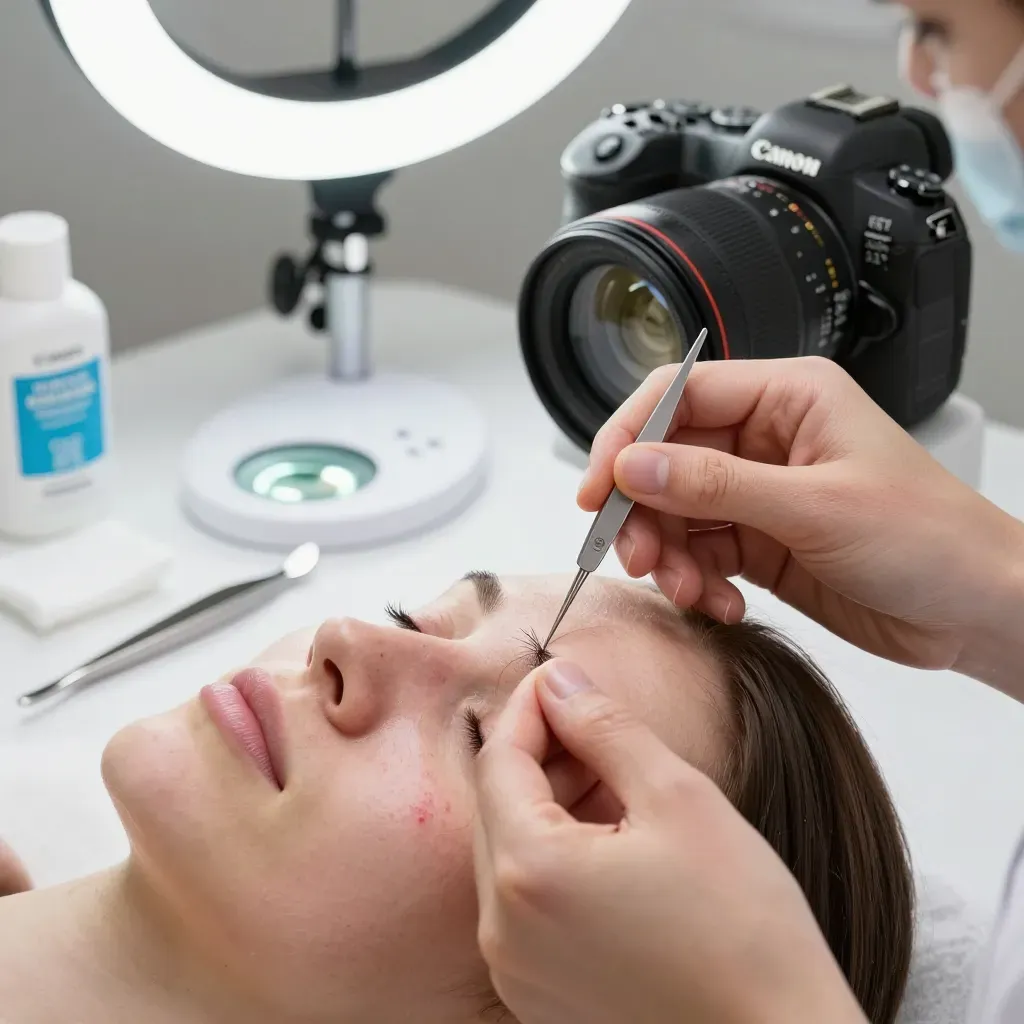
Ring lights and magnifying mirrors featured prominently in viral 2020 content.
Creators stressed that bathroom overhead lighting creates shadows that hide hair angles.
Adjustable 10x magnification prevents the "blind digging" that causes scars.
Many 2020 stars built DIY filming rigs to show viewers exactly what proper lighting reveals.
These setups included phone mounts positioned 6 inches from skin surface.
Consistent 5500K color temperature eliminated yellow bathroom lighting that masks inflammation.
Tool sterilization sequences consumed 30% of top video runtime.
Creators showed 70% isopropyl alcohol soaks for 5 minutes minimum followed by flame sterilization of metal tips.
They warned that rubbing alcohol alone fails against spore-forming bacteria.
Disposable tool kits gained popularity after 2020 creators demonstrated single-use protocols for sensitive area work.
Certain warning signs indicate you need a dermatologist instead of DIY methods
2020 viral clips included explicit stop signals that many modern tutorials omit.
Creators flagged specific symptoms that demand immediate dermatologist intervention.
DIY Safe | See Doctor |
|---|---|
Visible hair loop above skin | No visible hair after 3 days warm compresses |
Localized pink bump | Red streaks spreading from site |
Tender to touch only | Throbbing pain at rest |
Clear or white fluid | Yellow-green pus or blood |
Infection Indicators
Fever accompanying any ingrown hair signals systemic infection requiring antibiotics.
Skin hot to the touch compared to surrounding tissue indicates bacterial colonization.
Expanding redness beyond 1cm from bump edge suggests cellulitis.
- Swelling that doubles bump size overnight
- Skin hardening or dimpling
- Foul odor from any drainage
- Black or gray skin discoloration
Depth and Duration Warnings
Hairs buried deeper than 3mm beneath skin surface require sterile surgical extraction.
DIY tools cannot safely reach these depths without follicle destruction.
Any ingrown persisting beyond 3 weeks indicates embedded hair fragment or cyst formation.
Facial ingrowns near eyes, nose, or lips demand professional handling due to blood vessel density.
Genital area ingrowns with fever require urgent care to prevent sepsis from bacterial migration.
Diabetic patients must skip all DIY attempts regardless of perceived simplicity.
Compromised circulation turns minor extractions into non-healing wounds.
Immunocompromised individuals face identical restrictions.
2020 creators consistently emphasized these contraindications in video introductions before demonstrating any technique.
Prevention strategies stop ingrown hairs before they require extraction
Prevention eliminates extraction needs entirely.
2020 viral clips dedicated final segments to stopping regrowth before it starts.
Chemical exfoliation outperforms physical scrubs by clearing follicle openings without micro-tears.
Glycolic acid and salicylic acid applied 48 hours post-removal prevent keratin buildup.
Hair Removal Modifications
Shaving direction determines ingrown probability.
Growth-direction shaving cuts hair at natural exit angles.
Against-grain shaving creates sharp tips that pierce surrounding skin.
Method | Ingrown Risk | Prevention Tip |
|---|---|---|
Multi-blade razor | High | Single pass only |
Electric foil | Medium | Exfoliate before |
Waxing | High | Hair must be 1/4 inch minimum |
Laser | Low | Complete full treatment series |
Blade hygiene matters more than blade count.
Disposable razors used more than three times accumulate bacteria and lose edge alignment.
- Replace blades every 3-5 uses
- Rinse with alcohol between strokes
- Shave after shower when hair softens
- Use lubricating gel without alcohol content
- Avoid stretching skin taut during passes
Friction Management
Tight clothing traps hair against skin during regrowth.
Cotton underwear breathes better than synthetic fabrics that create static friction.
Loose-fitting pants for 24 hours post-shaving allow hair to emerge straight.
Moisturizing with lactic acid lotions keeps keratin soft and pliable.
Hard keratin plugs follicle openings and forces hair sideways.
2020 creators emphasized that permanent reduction methods eliminate the source entirely.