
Table of Contents
Ingrown hair removal videos dominate YouTube and TikTok, drawing millions of views through satisfying extraction footage and community engagement.
You can safely remove superficial ingrown hairs at home using sterilized needles and tweezers after softening skin with warm compresses.
Dermatologists recommend chemical exfoliants like salicylic and glycolic acid to dissolve dead skin and prevent future blockages.
Seek immediate medical care for deep cysts, infections showing pus or red streaks, or cases requiring digging below the skin surface.
Question | Answer |
|---|---|
Why do people watch ingrown hair removal videos? | Viewers experience satisfaction and relief from completion anxiety while normalizing shared skin conditions through community engagement. |
When is it safe to extract an ingrown hair at home? | Only attempt extraction when the hair tip remains visible beneath thin skin layers without pus, severe redness, or significant pain. |
What prevents ingrown hairs from forming? | Chemical exfoliants containing salicylic or glycolic acid dissolve dead skin barriers that trap emerging hairs beneath the surface. |
When should you see a doctor for an ingrown hair? | Seek professional care immediately for deep cysts, yellow or green pus, red streaks, warmth, fever, or symptoms persisting beyond one week. |
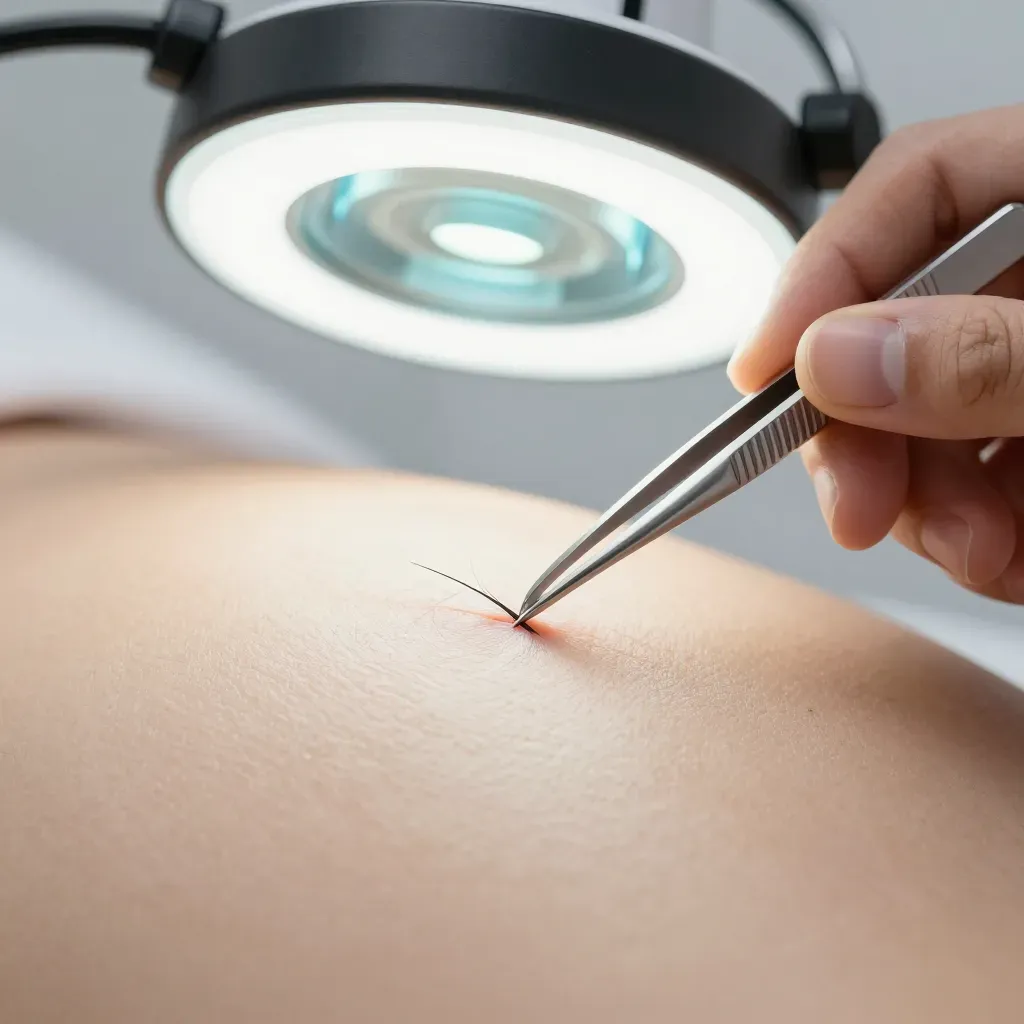
What tools do you need for safe home extraction? | Use a sterilized fine needle to lift the hair loop and pointed tweezers to pull in the direction of natural growth under bright, magnified lighting. |
Millions watch ingrown hair removal videos for satisfying visual content
YouTube hosts the bulk of ingrown hair removal content. Channels like "Ingrown Hair Lab" publish original extraction footage that regularly accumulates millions of views. Compilation videos featuring "best pops" dominate search results, with creators curating the most dramatic extractions from across the internet. Single videos often exceed 16 minutes of continuous extraction footage, maintaining viewer retention through progressive complexity of cases.
Where to Find Viral Content
Platform | Content Style | Popular Creators |
|---|---|---|
YouTube | Long-form compilations, detailed tutorials | Ingrown Hair Lab, Pimple.tv |
TikTok | Short clips under 60 seconds | Dr. Sandra Lee (Dr. Pimple Popper) |
Close-up Reels and Stories | Specialized extraction accounts |
The psychological draw stems from completion anxiety relief. Viewers experience immediate satisfaction watching trapped hairs release from beneath inflamed skin. Dr. Pimple Popper's TikTok videos featuring embroidery needle extractions of deeply embedded beard hairs regularly exceed 227,000 likes, demonstrating massive audience appetite for precise technique demonstrations.
Community engagement drives the trend further. Comment sections fill with viewers sharing personal experiences, asking technique questions, and expressing relief that others deal with similar skin issues. This creates a supportive space where embarrassing conditions normalize through shared viewing experiences.
- YouTube compilations average 5-20 minutes per video
- TikTok extraction clips often reach 100K+ likes within 48 hours
- Instagram accounts dedicated solely to ingrown content gain 500K+ followers
- Hashtags like #ingrownhair accumulate billions of combined views
You can safely extract superficial ingrown hairs at home using sterilized tools
Only attempt extraction on superficial ingrown hairs where the hair tip remains visible beneath thin skin layers. Deeply embedded hairs buried under thick skin or scar tissue require dermatologist intervention. Stop immediately if you encounter resistance, bleeding, or severe pain.
Preparation Protocol
Apply a warm compress for 10 minutes to soften skin and dilate the follicle opening. Sterilize your tools—tweezers and a fine needle—by wiping with 70% isopropyl alcohol. Work under bright, magnified lighting to avoid unnecessary skin trauma.
Extraction Technique
Use the sterilized needle to gently lift the hair loop above skin surface. Never dig downward. Once exposed, grasp the hair with pointed tweezers and pull in the direction of natural growth. Release immediately if the hair does not slide out with minimal pressure.
When to Stop
Safe to Continue | See a Doctor |
|---|---|
Hair visible under thin skin layer | Hair completely buried under skin |
No pus or severe redness | White pus-filled head present |
Slides out with gentle pull | Requires digging or cutting |
Minimal discomfort only | Significant pain or bleeding |
After successful removal, apply antiseptic wash and avoid shaving the area for 72 hours. Persistent redness beyond 48 hours signals potential infection requiring medical evaluation.
Dermatologists recommend chemical exfoliants to prevent future ingrown hairs
Chemical exfoliants top every dermatologist's list for ingrown hair prevention. Salicylic acid and glycolic acid dissolve the dead skin barrier that traps emerging hairs beneath the surface. Regular application keeps follicles clear and allows hair to grow outward rather than curling back into skin.
Active Ingredients That Work
Ingredient | Function | Best For |
|---|---|---|
Salicylic Acid (BHA) | Penetrates oil, unclogs pores | Oily skin, beard area, bikini line |
Glycolic Acid (AHA) | Removes surface dead cells | Dry skin, legs, arms |
Lactic Acid | Gentle exfoliation plus hydration | Sensitive skin types |
Apply chemical exfoliants 24 hours before hair removal and continue daily between sessions. This timing prevents immediate post-shave irritation while maintaining cell turnover. Start with 2-3 applications weekly to assess skin tolerance before daily use.
Supporting Products
- Antiseptic cleansers containing benzoyl peroxide reduce bacterial infection risk in high-friction areas
- Non-comedogenic moisturizers soften skin so hairs pierce through easily rather than coiling beneath
- Retinoid serums increase cell turnover speed for chronic ingrown hair sufferers
- Hydrocortisone cream calms existing inflammation while exfoliants prevent new formations
Stop all exfoliation 48 hours prior to waxing or laser treatments to avoid skin lifting or sensitivity. Resume 72 hours after hair removal once skin barrier repairs.
Seek professional care immediately for deep or infected ingrown hair cysts
Deep ingrown hairs buried under thick skin layers or acne scars require professional extraction. Attempting home removal risks pushing bacteria deeper, creating abscesses, or causing permanent scarring. Infected cysts containing thick pus or exhibiting red streaks demand immediate medical intervention to prevent systemic infection spread.
Warning Signs Requiring Medical Care
Home Treatment Acceptable | See Dermatologist Immediately |
|---|---|
Hair visible at surface | Hair completely hidden under skin |
Small, non-painful bump | Large cyst with yellow or green pus |
No heat or spreading redness | Warmth, red streaks, or fever present |
Improves within 3 days | Persists or worsens beyond 1 week |
Clinical Treatment Options
- Incision and drainage for infected cysts caused by bacteria like S. aureus
- Oral or topical antibiotics for spreading cellulitis or abscess formation
- Intralesional corticosteroid injections to rapidly reduce inflammation
- Surgical extraction using sterile tools and local anesthesia
- Culture testing to identify antibiotic-resistant bacterial strains
Dermatologists diagnose through visual examination and detailed history of hair removal practices. Treatment protocol mandates stopping all shaving, tweezing, and waxing for 1 to 6 months until the condition fully resolves. Patients needing to maintain facial hair must use only scissors or electric clippers, avoiding razors completely during the healing period to prevent recurrence.