
Table of Contents
Dr. Pimple Popper and extraction experts dominated 2024's viral ingrown hair content with medical-grade removal techniques.
Professional videos showcase forceps and embroidery needle methods requiring sterilization protocols and magnification equipment.
Dermatologists warn against home popping of infected bumps due to risks of cellulitis, abscess formation, and permanent scarring.
Prevention requires sharp single-blade razors, chemical exfoliants like salicylic acid, and laser hair removal for permanent reduction.
Watch videos for education only with superficial bumps; book dermatologist appointments immediately for pus-filled cysts, fever, or facial triangle infections.
Question | Answer |
|---|---|
Who creates the most popular ingrown hair extraction videos? | Dr. Sandra Lee (Dr. Pimple Popper), Jada Kennedy, and Dr. Dustin Portela produce the most viewed professional content across TikTok and YouTube. |
What professional tools extract ingrown hairs safely? | Experts use sterilized forceps for surface hairs and fine embroidery needles for deep subcutaneous retrieval beneath scar tissue. |
Why should I avoid popping ingrown hairs at home? | Squeezing drives bacteria deeper and creates abscesses requiring surgical drainage while dirty instruments cause infections and permanent scars. |
How do I prevent recurring ingrown hairs? | Use single-blade razors shaving with hair growth, apply salicylic acid cleansers, and consider laser hair removal for 70-90% permanent reduction. |
When must I see a dermatologist instead of watching videos? | Seek immediate medical care for pus-filled centers, fever, facial triangle bumps, or recurrent monthly cysts to prevent sepsis and cavernous sinus thrombosis. |
Dr. Pimple Popper and extraction experts dominated 2024's viral ingrown hair content
Dr. Sandra Lee, known globally as Dr. Pimple Popper, led the 2024 surge in ingrown hair removal videos.
Her viral TikTok and YouTube content showcases forceps-based extraction techniques that blend medical precision with viewer satisfaction.
Lee regularly accumulates millions of views demonstrating how embedded hairs curl back into skin, particularly in beard areas affected by acne scarring.
Her embroidery needle technique videos demonstrate how fine needles lift skin to release trapped hairs without causing additional trauma.
Extraction expert Jada Kennedy operates from her Saint Louis clinic and produces detailed content using diverse toolkits.
Her videos demonstrate complex extractions requiring specialized equipment beyond standard tweezers.
Kennedy emphasizes the physical mechanics of hair embedding while maintaining strict clinical hygiene standards.
Her stomach-churning yet skilled demonstrations attract viewers seeking professional-grade procedural content.
Board-certified dermatologist Dr. Dustin Portela contributed quick technique tutorials focusing on safe removal methods.
His content bridges educational dermatology and satisfying visual formats, teaching viewers to identify when hairs require professional intervention versus home care.
Portela's videos specifically address infected cysts and pus-filled bumps that demand medical attention rather than home extraction.
Platform distribution shifted heavily toward short-form video in 2024.
TikTok hosted rapid extraction clips optimized for ASMR-like satisfaction, while YouTube channels like Ingrown Hair Lab released extended compilations allowing detailed procedural observation.
Pimple.tv specialized in 16-minute instructional sequences demonstrating patience requirements for successful removal.
These longer formats acknowledge that self-removal requires practice and restraint.
The content ecosystem splits between amateur attempts and clinical procedures.
Amateur videos often show home extraction failures, while professional content emphasizes sterilization protocols and anatomical precision.
This dichotomy drives viewer education about proper technique boundaries and infection risks.
Top 2024 Creators and Specialties
Creator | Platform | Technique Focus |
|---|---|---|
Dr. Sandra Lee | TikTok, YouTube | Forceps extraction, embroidery needles |
Jada Kennedy | YouTube, TikTok | Multi-tool clinic procedures |
Dr. Dustin Portela | TikTok | Quick educational techniques |
Ingrown Hair Lab | YouTube | Compilation precision demos |
Pimple.tv | YouTube | Extended 16-minute tutorials |
Forceps and needle techniques professionals use in satisfying removal videos
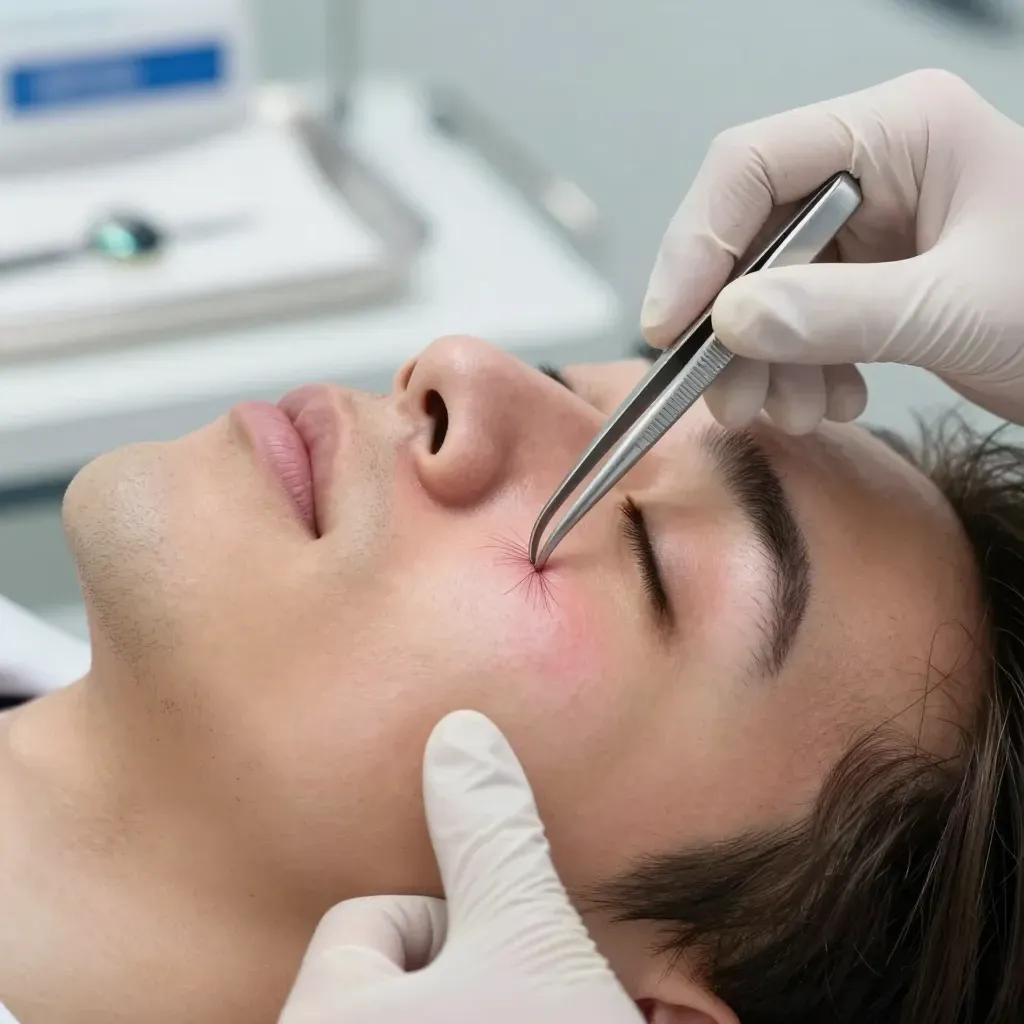
Professional extraction videos showcase two primary instrument categories: forceps for surface-level embedded hairs and needles for deep subcutaneous retrieval.
Forceps Extraction Method
Specialized medical tweezers grip hairs visible beneath translucent skin.
Practitioners apply perpendicular pressure to the skin surface, isolating the curled hair shaft without breaking it.
Dr. Sandra Lee demonstrates this with 10x magnification loops, extracting beard hairs that grew several inches beneath facial skin before surfacing as painful bumps.
Success requires identifying the hair direction through skin distortion analysis before gripping.
Embroidery Needle Technique
Fine-gauge needles penetrate the epidermis at 15-degree angles to create micro-channels.
This method targets hairs trapped by acne scar tissue or dense collagen deposits where forceps cannot reach.
The needle hooks under the hair loop, lifting it through the created opening without full incision.
Videos show this technique particularly effective for African American beard hair prone to pseudofolliculitis barbae.
Incision and Drainage
Infected cysts containing pus require scalpel puncture before extraction.
Professionals make 2-3mm stab incisions parallel to skin tension lines to minimize scarring.
Pressure expression follows needle insertion to evacuate purulent material before hair retrieval.
Tool Sterilization Protocols
Instrument | Pre-procedure Treatment | Risk if Skipped |
|---|---|---|
Forceps | Autoclave or alcohol flame | Bacterial introduction, cellulitis |
Embroidery needles | Single-use sterile packs | Cross-contamination, MRSA |
Scalpels | Surgical grade sterilization | Sepsis, permanent scarring |
Professional videos consistently display instrument preparation sequences lasting 30-60 seconds before any skin contact.
Home attempts lacking this sterilization phase frequently result in secondary infections requiring antibiotic intervention.
Safety experts warn against popping infected bumps like pimples at home
Dermatologists consistently prohibit squeezing ingrown hairs like acne blemishes.
This practice drives bacteria deeper into follicles, converting simple irritations into abscesses requiring surgical drainage.
Dr. Sandra Lee and Dr. Dustin Portela emphasize that extraction videos show sterilized clinical environments, not bathroom mirror attempts.
Infection Warning Signs
- Pus-filled centers indicating bacterial colonization
- Warmth radiating from the bump
- Expanding redness beyond the hair entry point
- Fever or systemic symptoms
- Increasing pain rather than relief after attempted extraction
These symptoms signal staphylococcus or streptococcus invasion requiring prescription antibiotics.
Home lancing with sewing needles or unsterilized tweezers introduces additional pathogens.
Complications from Amateur Extraction
Mistake | Immediate Result | Long-term Damage |
|---|---|---|
Squeezing forcefully | Hair shaft rupture | Hypertrophic scarring |
Dirty instruments | Cellulitis | Hyperpigmentation |
Incomplete removal | Foreign body reaction | Keloid formation |
Deep digging | Tissue trauma | Permanent pits |
Professional extraction costs $100-300 per session.
Emergency room visits for infected home attempts average $1,200-$4,000 before antibiotics.
Board-certified dermatologists reserve incision and drainage for fluctuant abscesses showing yellow purulent heads.
They administer local anesthesia before any cutting, unlike painful bathroom attempts.
Topical steroids and antibiotic ointments treat early-stage inflammations without mechanical intervention.
Prevention strategies and laser treatments prevent recurring ingrown hairs
Sharp razors prevent hairs from snapping below skin level.
Replace blades every 5-7 shaves and shave with hair growth direction rather than against it.
Single-blade razors reduce ingrown risk compared to multi-blade cartridges that cut hairs beneath the skin surface.
Chemical Prevention Protocol
- Salicylic acid cleansers dissolve dead skin blocking follicle openings
- Glycolic acid lotions accelerate cell turnover preventing hair trapping
- Retinoid creams regulate keratinization in prone areas
- Post-shave moisturizers maintain skin elasticity
Avoid tight clothing that creates friction against freshly shaved skin.
Cotton underwear and loose athletic wear reduce mechanical hair re-embedding in bikini and beard areas.
Professional Hair Removal
Method | Mechanism | Duration | Risks |
|---|---|---|---|
Laser (Nd:YAG/Diode) | Targets melanin in follicle | 6-12 sessions | Blistering, dyspigmentation |
Electrolysis | Destroys follicle with current | Permanent | Scarring, infection |
Laser hair removal penetrates deeper than shaving or waxing.
Treatment intervals of 4-6 weeks target anagen-phase hairs.
Most patients achieve 70-90% permanent reduction after full protocols.
Dark skin tones require Nd:YAG lasers to avoid surface burns while maintaining efficacy against coarse hair.
Maintenance regimens combine quarterly laser touch-ups with daily chemical exfoliation.
This dual approach eliminates both existing embedded hairs and the follicles producing them.
When to watch extraction videos versus when to book a dermatologist appointment
Watch extraction videos for educational purposes only when dealing with superficial, non-infected bumps.
Content from Dr. Pimple Popper and Ingrown Hair Lab demonstrates techniques requiring sterile environments and magnification equipment unavailable at home.
Safe Home Observation Only
- Single visible hair loop beneath thin skin layer
- No pus, warmth, or spreading redness
- First occurrence in easily accessible area
- Patient has steady hands and sterile tools
Attempt gentle warm compresses and topical exfoliants before any mechanical intervention.
Mandatory Dermatologist Referral
Symptom | Risk Level | Delay Consequence |
|---|---|---|
Pus-filled center | High | Abscess formation |
Fever or chills | Emergency | Sepsis |
Facial triangle area | High | Cavernous sinus thrombosis |
Recurrent monthly | Moderate | Scarring, hyperpigmentation |
Deep cystic lump | High | Rupture into tissue |
Book appointments immediately for genital area infections where skin is thin and bacterial load is high.
Professional extraction costs less than emergency intervention for botched home attempts.
Videos normalize skin issues but cannot replace clinical sterilization protocols.
Dermatologists provide local anesthesia and prescription post-care that home attempts lack.