
Table of Contents
Dr. Sandra Lee extracts ingrown hairs as a board-certified dermatologist and cosmetic surgeon using sterile needles and surgical forceps in clinical settings. Her videos demonstrate proper medical techniques while explaining hair follicle biology and prevention methods to millions of viewers across YouTube and TikTok. She developed SLMD Skincare with chemical exfoliants like salicylic acid to prevent future embedded hairs by keeping follicles clear.
Question | Answer |
|---|---|
Who is Dr. Sandra Lee? | Dr. Sandra Lee is a board-certified dermatologist and cosmetic surgeon with FAAD and FAACS fellowships who practices in Upland, California. |
What tools does she use for extractions? | She uses sterile embroidery needles, surgical forceps, and magnification loupes to remove embedded hairs without tissue damage. |
Why do hairs become ingrown? | Hairs embed when curly textures curl backward, shaving creates sharp tips, or dead skin cells block exit paths. |
How can people prevent ingrown hairs? | Prevention requires chemical exfoliation with salicylic or glycolic acid, proper shaving technique, and avoiding tight clothing. |
What products does she offer? | She sells SLMD Skincare containing dermatologist-grade chemical exfoliants that dissolve dead skin cells and prevent follicle blockage. |
Dr. Sandra Lee is a board-certified dermatologist and cosmetic surgeon
Sandra Lee maintains active board certification in dermatology and cosmetic surgery. She practices in Upland, Southern California, where she performs Mohs micrographic surgery, removes skin cancers, and treats complex dermatological conditions. Her medical degree comes from Drexel University College of Medicine, following her undergraduate studies at UCLA. She holds the designations MD, FAAD, and FAACS, reflecting her standing in both dermatology and cosmetic surgery communities.
Medical Credentials and Specialized Training
Lee completed extensive residency training in dermatology followed by specialized fellowship training in dermatologic surgery. Her dual certification allows her to perform complex excisions and aesthetic procedures with medical precision. This rigorous background distinguishes her ingrown hair removal videos from amateur extraction content flooding social media platforms. She diagnoses skin conditions accurately before treatment, ensuring viewers see legitimate medical procedures rather than risky DIY attempts. Her surgical expertise enables her to extract deeply embedded hairs without causing additional trauma to surrounding tissue.
Professional Organizations and Fellowships
Medical Society | Designation |
|---|---|
American Academy of Dermatology | Fellow (FAAD) |
American Academy of Cosmetic Surgery | Fellow (FAACS) |
American Society for Dermatologic Surgery | Active Member |
American Society for Mohs Surgery | Active Member |
She began documenting dermatological procedures in 2015 through Instagram. Her account provided transparent views of cyst removals, blackhead extractions, and ingrown hair treatments. The content went viral, attracting millions of viewers who sought both education and the satisfaction of watching precise medical work. This success led to her TLC television series "Dr. Pimple Popper" and a massive YouTube following. Unlike esthetician-level services, Lee performs surgical extractions using sterile technique and medical-grade instruments in clinical settings. She uses professional tools including surgical needles and forceps rather than household items, demonstrating proper technique for embedded hair removal.
She extracts deep ingrown hairs using sterile needles and professional tools
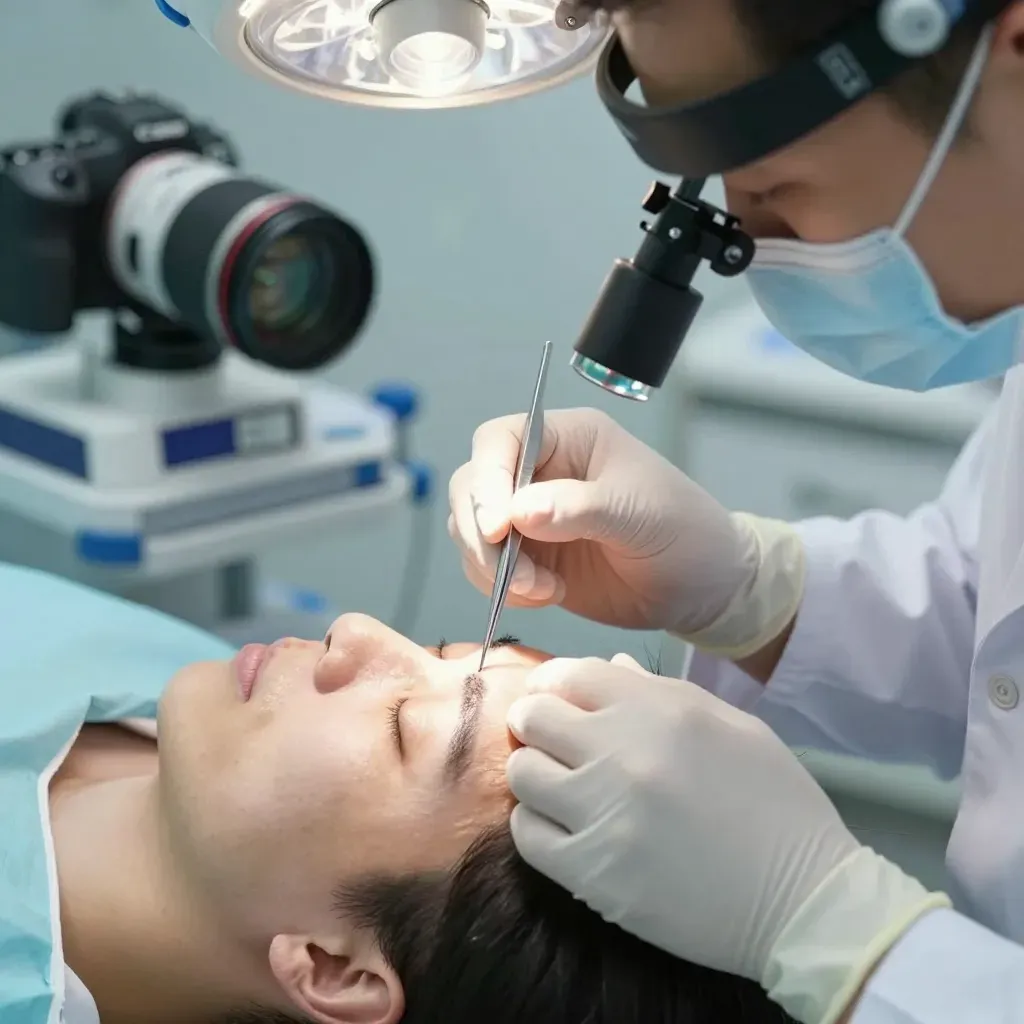
Lee performs extractions using medical-grade instruments in sterile clinical environments. She commonly employs fine embroidery needles to release deeply embedded beard hairs that have grown sideways into the skin. This technique requires piercing the skin surface to create an exit path for the trapped hair shaft without causing additional trauma to surrounding tissue. Unlike amateur attempts using tweezers or fingers, her method minimizes tissue damage and prevents bacterial introduction that leads to infection or scarring. She works under high-powered magnification with surgical lighting to visualize the entire hair structure beneath the skin surface.
Professional Tools vs. Household Items
Medical Grade Instruments | DIY Extraction Risks |
|---|---|
Sterile embroidery needles | Unsterilized pins introducing bacteria |
Surgical forceps with precision grip | Slipping tweezers breaking hair shafts |
Magnification loupes | Poor visibility leaving hair fragments |
Antiseptic skin preparation | Bathroom bacteria exposure |
Controlled pressure technique | Forceful squeezing causing tissue damage |
Clinical Protocol for Deep Extractions
Each procedure follows strict dermatological surgical standards. Lee examines the lesion under bright examination light to map the hair growth path and identify entry points. She swabs the area with medical-grade antiseptic before any instrument contact. Using a sterile needle, she enters at the precise angle required to loop the hair without piercing the follicle sac. Surgical forceps then grasp the shaft firmly to remove the entire hair including the root bulb. Complete extraction prevents the hair from re-embedding immediately. She applies sterile dressing post-procedure and monitors for signs of secondary infection. Her technique demonstrates why attempting to remove deep ingrown hairs at home often results in broken shafts, inflammation, or permanent scarring that requires additional corrective treatment.
Her videos demonstrate why hairs become embedded and how to prevent them
Lee uses each extraction as a teaching opportunity about hair follicle biology. She explains that ingrown hairs develop when cut or shaved hairs curl backward and re-enter the skin surface instead of growing outward. Curly and coarse hair types face higher risk because the natural curl pattern directs the shaft back toward the epidermis. Her footage shows how shaving creates sharp hair tips that easily pierce surrounding tissue when they grow sideways. She also demonstrates how dead skin cell accumulation creates physical barriers that force growing hairs to redirect beneath the surface rather than exiting through the pore opening.
Primary Causes of Embedded Hairs
- Curly or coarse hair texture that naturally redirects toward skin
- Improper shaving technique creating sharp, angled hair tips
- Tight clothing causing friction and hair repositioning
- Clogged pores from dead skin cells blocking normal exit paths
- Pulling skin taut while shaving causing hairs to retract beneath surface
Prevention Strategies and Professional Guidance
Prevention Method | Implementation |
|---|---|
Exfoliation | Regular gentle scrubbing to remove dead skin blocking follicles |
Proper shaving | Shaving with grain using single-blade razors to avoid sharp tips |
Moisturizing | Keeping skin hydrated to reduce friction and allow normal hair growth |
Topical treatments | Salicylic acid or glycolic acid products to maintain clear pores |
Avoiding tight clothing | Wearing loose fabrics in areas prone to friction-induced embedding |
She emphasizes that untreated ingrown hairs can evolve into painful cysts when bacteria like S. Aureus invade the trapped follicle. Her educational content stresses recognizing warning signs including increasing redness, warmth, or pus formation that indicate infection requiring medical intervention rather than home extraction. Through her SLMD Skincare line, she formulates specific products containing chemical exfoliants that prevent the keratin buildup responsible for blocking hair emergence. Her videos consistently reinforce that understanding hair growth patterns and maintaining proper skin preparation prevents the majority of embedded hair cases before they require surgical removal.
Millions watch her satisfying extractions on YouTube and TikTok
Lee's extraction videos generate massive viewership across multiple platforms. Her TikTok posts featuring ingrown hair removals regularly accumulate hundreds of thousands of likes within days of posting. One video demonstrating embroidery needle extraction of a long beard hair garnered 189,400 likes and 456 comments. Another extreme case removal received 235,100 likes and 892 comments. YouTube hosts longer-form content where single videos often surpass millions of views. Her channel maintains millions of subscribers who return consistently for new dermatological content.
Cross-Platform Engagement Statistics
Platform | Content Type | Typical Engagement |
|---|---|---|
TikTok | Short-form extractions | 100K-235K+ likes per video |
YouTube | Full-length procedures | Millions of views per upload |
Photo and video clips | Started her viral rise in 2015 |
Why Audiences Return for More
- Visual satisfaction from complete hair extraction
- Educational value about proper removal techniques
- ASMR-like relaxation from precise medical work
- Curiosity about extreme dermatological cases
- Community connection with fellow viewers
Viewers describe her content as "oddly satisfying" while learning legitimate medical information. The comment sections function as educational forums where people discuss their own skin conditions. Her viral reach has normalized conversations about previously embarrassing dermatological issues. People share her ingrown hair removal videos across social networks, expanding dermatological awareness to audiences who never visit doctors for these conditions. This engagement demonstrates high demand for professional medical content presented in accessible formats. Her videos bridge entertainment and education, converting casual viewers into informed patients who recognize when home treatment suffices versus when professional extraction becomes necessary.
SLMD Skincare products help treat and prevent future ingrown hairs
Lee developed SLMD Skincare to extend clinical prevention beyond her office. The product line targets keratin buildup and follicle blockage using dermatologist-grade chemical exfoliants. Formulations incorporate salicylic acid and glycolic acid to dissolve dead skin cells that physically block hair emergence paths. Unlike abrasive scrubs that irritate sensitive skin, these chemical exfoliants work at the cellular level to maintain clear pore openings. The line includes body treatments specifically designed for areas prone to shaving-induced ingrowns such as bikini lines, beards, and underarms.
Key Products and Active Ingredients
Product Category | Active Ingredient | Function |
|---|---|---|
Resurfacing Body Scrub | Salicylic acid | Penetrates oil to clear follicle blockages |
Glycolic Acid Body Lotion | Glycolic acid | Accelerates cell turnover to prevent buildup |
Bump Care Treatments | Multi-acid complexes | Target existing ingrowns while preventing new ones |
Mechanism of Prevention
Chemical exfoliants in SLMD products maintain stratum corneum integrity without mechanical irritation. Salicylic acid, a beta-hydroxy acid, penetrates sebum-filled pores to break down cellular debris. Glycolic acid, an alpha-hydroxy acid, loosens desmosome bonds between dead cells allowing them to shed naturally. This dual-action approach keeps follicle openings clear so emerging hairs exit normally rather than redirecting beneath the skin surface. Regular use reduces the sharp tip formation that occurs when shaved hairs get trapped and continue growing inward.
Lee markets these products alongside her extraction videos to create comprehensive care systems. Viewers watch her remove existing embedded hairs then purchase prevention products to avoid recurrence. This integration of educational content and clinical-grade skincare addresses both acute treatment and long-term management. The formulations reflect her surgical understanding of hair follicle biology translated into accessible daily routines.