
Table of Contents
Ingrown hairs form when hair grows sideways or curls back into skin instead of breaking the surface often triggered by shaving waxing or dead skin blocking follicles
Curly and coarse hair types face higher risk due to sharp cut angles that pierce surrounding tissue
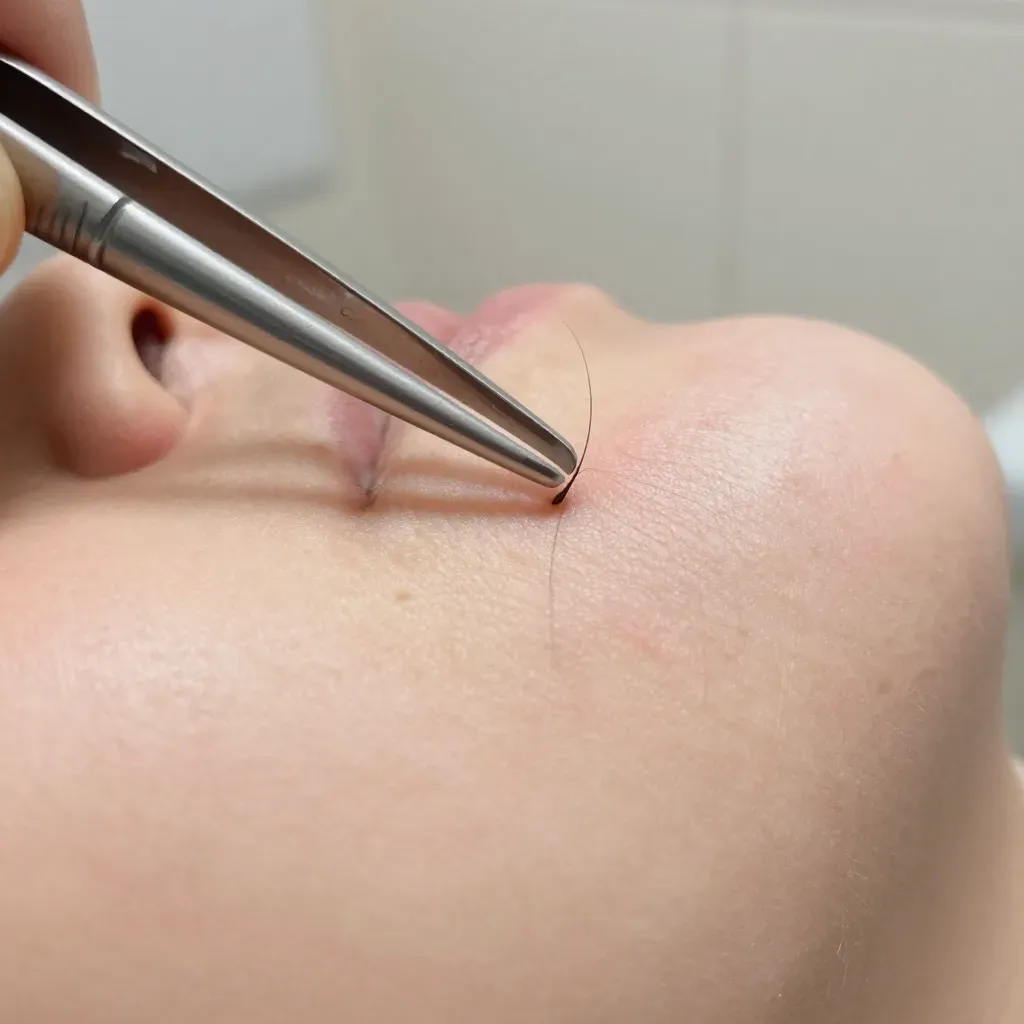
At-home removal works only for visible hair tips using warm compresses and sterilized tweezers to lift the looped end without digging
Deep or infected ingrowns require medical extraction to prevent scarring and infection with surgery available for chronic cases
Laser hair removal offers permanent prevention by destroying follicles so they cannot produce new strands
Prevention requires regular exfoliation proper shaving technique with sharp blades and avoiding tight clothing that rubs hair back into follicles
Question | Answer |
|---|---|
What causes ingrown hairs to form under skin | Hair grows sideways or curls back into skin when dead cells block follicle openings or shaving creates sharp tips that pierce surrounding tissue |
How can I safely remove ingrown hairs at home | Apply warm compresses for ten to fifteen minutes three times daily then use sterilized tweezers to lift only visible hair loops without digging or plucking the entire strand |
When should I see a doctor for an ingrown hair | Seek medical care immediately if you notice pus spreading redness severe pain fever or no improvement after one week of home treatment |
Does laser hair removal stop ingrowns permanently | Yes laser destroys hair follicles at the root preventing new growth and eliminating the source of ingrowns entirely after six to twelve sessions |
How do I prevent ingrown hairs from forming | Exfoliate daily with salicylic acid shave with sharp blades in the direction of growth and wear loose cotton clothing to prevent hair from rubbing back into follicles |
What causes ingrown hairs to form under skin
How hair gets trapped
Hair grows sideways or curls back into skin instead of breaking surface. Dead skin cells block follicle openings. Hair lacks exit path. It re-enters skin or grows parallel to surface beneath epidermis. Body treats trapped strand as foreign object. This triggers inflammatory response.
Why your hair type matters
Curly or coarse hair faces higher risk. Sharp angles of cut strands pierce surrounding skin easily. Curved follicle structure creates natural tendency for hair to re-enter. African American men experience pseudofolliculitis barbae frequently due to this biology.
Common triggers
Shaving | Cutting hair below skin level creates sharp tips that pierce surrounding tissue |
|---|---|
Waxing/Tweezing | Removes strand but leaves follicle intact; new growth easily misdirected |
Dull blades | Pull hair before cutting, creating angled tips that re-enter skin |
Tight clothing | Rubs hair back into follicles, especially in pubic area or thighs |
Dead skin | Unexfoliated cells physically block hair exit |
Visual signs
Ingrowns vary in appearance. Some display skin-colored bumps with visible dark centers showing trapped hair beneath. Others show red inflamed papules or painful pus-filled lesions resembling acne. Inflammation ranges from mild irritation to infected cysts requiring medical drainage.
Fast at-home removal using warm compresses and tweezers
Loosen the hair
Soak a clean washcloth in warm water. Press against the bump for 10 to 15 minutes. Repeat three times daily. Heat opens pores and relaxes follicle walls. This brings trapped hair closer to surface.
Extract only visible hairs
Never dig for buried strands. If you see the hair tip poking through skin, proceed. Sterilize tweezers or needle with rubbing alcohol. Gently lift the looped end above skin level. Do not pluck the entire strand. Cutting the loop prevents re-penetration. Stop immediately if you meet resistance or see bleeding.
Speed healing with topicals
Salicylic acid | Dissolves dead skin blocking follicle |
|---|---|
Benzoyl peroxide | Kills bacteria and reduces inflammation |
Adapalene gel | Retinoid exfoliant that prevents new blockages |
What to avoid
- Picking or squeezing bumps spreads bacteria
- Needles without sterilization cause infection
- Forcing out deep hairs tears skin and creates scars
- Shaving over active ingrowns worsens inflammation
When home fails
Persistent pain, spreading redness, or pus formation signals infection. Deep ingrown hairs require medical extraction. Professional removal prevents scarring and resolves stubborn cases.
When you need a doctor to remove deep ingrowns
Red flags that demand professional care
Pus or yellow drainage | Bacterial infection requiring oral antibiotics |
|---|---|
Spreading redness or warmth | Cellulitis risk needing immediate treatment |
Severe throbbing pain | Deep abscess formation under skin |
Fever or chills | Systemic infection spreading beyond local area |
No change after 1 week home care | Hair trapped under thick scar tissue |
Medical extraction methods
Doctors use sterile needles or surgical blades to release buried hairs without tearing surrounding skin. They incise and drain abscesses if present. This provides instant pressure relief. They prescribe steroid creams to reduce swelling or antibiotic tablets to clear infection. Professional extraction prevents the scarring that comes from digging with unsterilized tools.
Surgical solutions for chronic cases
Recurring deep cysts or sinus tracts require ingrown hair removal surgery. Dermatologists excise the entire follicle structure under local anesthesia. This permanently stops hair regrowth in that specific spot. The procedure takes minutes and may require stitches.
Risks of DIY deep removal
- Creating tunnels under skin that become permanent scars
- Introducing staph bacteria with non-sterile needles
- Causing hyperpigmentation or keloids, especially on jawline or chest
- Turning simple ingrown into painful cyst needing surgical drainage
How laser hair removal stops ingrowns permanently
The mechanism
Laser targets melanin inside hair follicles. Concentrated light converts to heat. This damages follicle structure at the root. Destroyed follicles cannot produce new strands. Laser ingrown hair removal eliminates the source of the problem entirely.
Why no hair means no ingrowns
Ingrown hairs require hair growth to occur. When follicles stop producing strands, the cycle breaks permanently. Curly or coarse hair types benefit most since they face highest ingrown risk. You eliminate shaving, waxing, and tweezing triggers completely.
Treating active ingrowns
Mild to moderate ingrown hairs do not prevent laser sessions. In fact, treating follicles while they contain trapped hairs helps resolve current bumps while preventing future ones. Always inform your practitioner about active ingrowns during consultation so they can assess treatment timing.
Session requirements
Number of sessions | 6 to 12 treatments typically required |
|---|---|
Interval timing | 4 to 6 weeks apart to catch new growth cycles |
Results timeline | Permanent reduction visible after 3 to 4 sessions |
Maintenance | Occasional touch-ups for hormonal changes |
Professional vs at-home options
Medical-grade lasers offer fastest permanent results. Professional devices use higher energy levels than home units. At-home IPL devices work for maintenance but require more sessions. Both methods stop ingrowns by removing the hair entirely rather than just cutting or pulling it.
Prevention tips to avoid future ingrown hairs
Exfoliate before and after
Remove dead skin cells that block follicle exits. Use chemical exfoliants containing salicylic acid or glycolic acid daily. Apply physical scrubs with fine particles weekly. Exfoliating gloves provide controlled abrasion during showers. This ensures hair grows out rather than sideways.
Optimize shaving technique
Blade quality | Change razor every 5 to 7 shaves. Dull blades pull hair and create sharp angled tips. |
|---|---|
Direction | Shave with hair growth, never against it. This keeps cut ends from piercing surrounding skin. |
Preparation | Soak skin in warm water for 3 minutes. Use moisturizing shaving cream with glycerin or aloe. |
Pressure | Use light strokes only. Heavy pressure cuts hair below skin surface. |
Consider hair removal alternatives
Depilatory creams dissolve hair proteins without creating sharp cut ends. At-home laser devices permanently reduce growth cycles. Electric clippers leave hair slightly above skin level unlike razors that cut below surface.
Post-removal care
- Rinse with cool water to close pores immediately after shaving
- Apply non-comedogenic moisturizer to reduce friction and irritation
- Avoid tight clothing for 24 hours post-hair removal
- Use tea tree oil as natural antiseptic on prone areas
Wardrobe adjustments
Wear loose breathable cotton underwear and pants. Tight synthetic fabrics rub hair back into follicles especially on bikini line and inner thighs. This simple change prevents mechanical irritation that triggers ingrowns.