
Table of Contents
Scalp ingrown hairs develop when cut hairs curve back and pierce the epidermis instead of exiting the follicle.
Curly hair types and close fades pose highest risk due to asymmetrical follicles and sharp cutting angles.
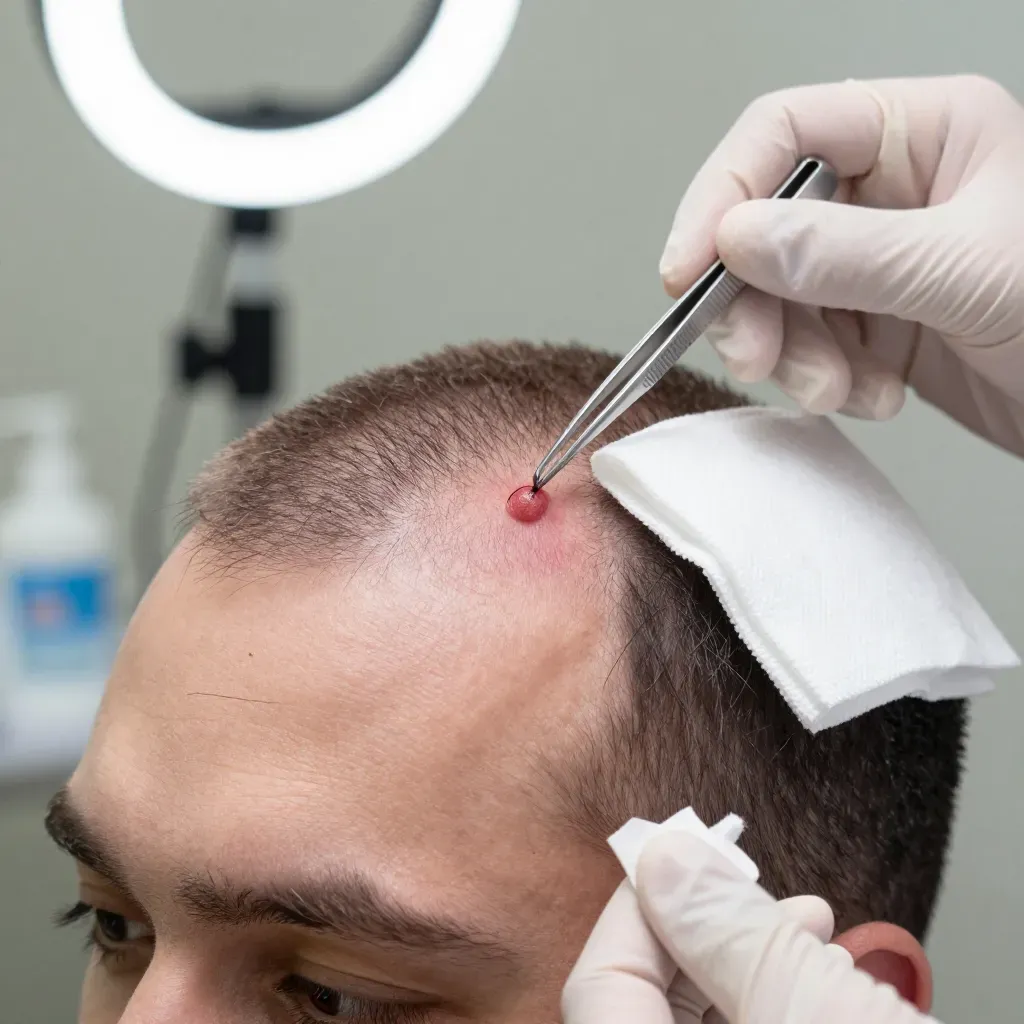
Home treatment requires warm compresses and sterile extraction of visible hair loops only.
Seek immediate medical care for pus, spreading redness, fever, or severe pain to prevent permanent scarring and hair loss.
Laser hair removal permanently prevents ingrowns by destroying follicles entirely.
Prevent recurrence through weekly exfoliation and shaving with hair growth direction.
Question | Answer |
|---|---|
What causes scalp ingrown hairs? | Cut hairs growing sideways into skin instead of exiting follicles, often triggered by close fades or curly textures. |
How do you remove them at home? | Apply warm compresses then lift visible hair loops with sterilized tweezers without digging into skin. |
When should you see a doctor? | Immediately upon observing pus, spreading redness, red streaks, fever, or severe pain. |
Can you prevent them permanently? | Yes, laser hair removal destroys follicles to eliminate hair growth completely. |
How do you prevent future ingrowns? | Exfoliate weekly with salicylic acid and shave with the grain using sharp blades. |
Ingrown hairs develop on the scalp when shaved or cut hairs grow sideways into the skin.
Scalp ingrown hairs form when cut hair shafts curve back and pierce the epidermis instead of exiting the follicle opening. This triggers foreign body inflammation. The scalp contains approximately 100,000 follicles with thick terminal hairs. When these large-caliber hairs penetrate surrounding tissue, they create deeper inflammatory nodules than vellus hair ingrowns on arms or legs.
Mechanism of Formation
Hair grows in three phases. During anagen, rapidly extending shafts meet resistance from keratin plugs or sharp cutting angles. The hair tip deflects sideways and tunnels into the dermis. The immune system attacks the embedded keratin as a foreign object. This produces the characteristic papule or pustule.
High-Risk Scenarios
Activity | Why It Causes Ingrowns | Common Location |
|---|---|---|
Close fades | Hair cut below skin level | Nape, temples |
Tight protective styles | Traction alters growth angle | Edges, crown |
Infrequent exfoliation | Dead skin blocks follicle exits | Entire scalp |
Curly hair shaving | Oval follicle shape guides hair sideways | Hairline |
Early Warning Signs
- Isolated red bump with visible hair loop beneath surface
- Tenderness concentrated at hair base rather than spread across scalp
- Small pustule containing clear fluid or pus at follicle opening
- Itching that localizes to one spot rather than general dryness
Barbershop fades and military-style cuts pose highest risk. Clippers cut hair at or below skin level. As hair regrows, the sharp tip easily pierces adjacent follicular walls rather than exiting straight. Hair texture determines susceptibility. Curly and coarse hair types feature asymmetrical follicles that naturally guide shafts toward skin rather than away from it.
Warm compresses and sterilized tweezers allow safe removal of superficial scalp ingrown hairs at home.
Apply a warm compress for 10-15 minutes to soften the skin and draw the hair to the surface. Use a clean washcloth soaked in hot water. Reheat the cloth every 3 minutes to maintain temperature. This reduces inflammation and creates a larger follicular opening.
Tool Preparation
Tool | Sterilization Method | Drying Time |
|---|---|---|
Tweezers | Isopropyl alcohol 70% soak for 5 mins | Air dry completely |
Needle | Flame sterilization + alcohol wipe | 30 seconds cooling |
Fingers | Soap wash 20 seconds + alcohol rub | Immediate use |
Extraction Steps
- Locate the hair loop visible beneath the skin surface using bright light and magnification mirror
- Insert sterilized needle parallel to skin surface to lift the hair loop only—never dig downward
- Grasp the exposed hair with tweezers and pull gently in the direction of natural growth
- Stop immediately if you meet resistance or see bleeding
- Apply antibiotic ointment (bacitracin or mupirocin) to prevent bacterial entry
Critical Warnings
- Do not extract if the bump contains pus or shows a whitehead—this indicates infection requiring professional drainage
- Never dig for buried hairs without visible loops; this causes scarring and folliculitis
- Avoid extraction if you have diabetes, immunosuppression, or scalp psoriasis
- Stop if pain exceeds mild pressure sensitivity
Clean the area twice daily with saline solution post-extraction. Avoid hair products containing alcohol or heavy oils for 48 hours. If redness spreads beyond 2 millimeters from the site within 24 hours, discontinue home treatment and seek dermatological care.
Seek immediate medical care if the scalp bump shows pus, severe pain, or signs of spreading infection.
Home extraction fails when bacteria colonize the embedded hair shaft. The scalp contains abundant Staphylococcus aureus. Once this bacterium enters the dermis through extraction wounds or hair tunnels, infection spreads rapidly through vascularized scalp tissue.
Infection Warning Signs
Sign | Indicates | Action Required |
|---|---|---|
Yellow/green pus | Bacterial colonization | Same-day clinic visit |
Warmth radiating beyond bump | Cellulitis development | Urgent care within 4 hours |
Red streaks | Lymphangitis | ER immediately |
Fever over 100.4°F | Systemic infection | ER immediately |
Expanding redness | Abscess formation | Dermatology within 24 hours |
Serious Complications
Untreated scalp infections cause folliculitis decalvans, a scarring alopecia destroying follicles permanently. Deep abscesses require incision and drainage under local anesthesia. Keloid formation risk increases with delayed treatment, particularly in darker skin phototypes.
Medical Interventions
Dermatologists perform sterile extraction using magnifying loupes and surgical tools. They prescribe oral antibiotics (doxycycline or cephalexin) for spreading infections. Intralesional corticosteroid injections reduce inflammation in buried hairs. Surgical excision removes chronically ingrown follicles causing recurrent issues.
- Immunocompromised patients require immediate evaluation for any scalp abscess
- Children need pediatric assessment due to thinner scalp skin and rapid bacterial spread
- Seek care if pain prevents sleep or head movement
- Do not attempt drainage at home using needles or blades
Laser hair removal permanently prevents scalp ingrown hairs by destroying the underlying hair follicle.
Laser devices target follicular bulbs with concentrated light energy. Melanin in hair shafts absorbs 755-1064nm wavelengths and converts this to heat. The thermal energy coagulates the dermal papilla and destroys blood supply to the follicle. Dead follicles cannot produce hairs. No hair growth means zero risk of future ingrowns.
How It Eliminates Scalp Ingrowns
Each laser pulse treats multiple follicles simultaneously. The beam penetrates 2-5 millimeters into scalp tissue to reach bulb depth. Unlike shaving or waxing that address only the visible shaft, laser ablation removes the source entirely. Treatment protocols typically require 6-8 sessions spaced 4-6 weeks apart to catch all hairs in active growth phase.
Technology Selection
Laser Type | Best For | Scalp Safety |
|---|---|---|
Alexandrite 755nm | Light skin, dark hair | Avoid near eyes |
Nd:YAG 1064nm | Darker skin tones | Deepest penetration, safest |
Diode 810nm | Medium skin | Fast treatment times |
Cost Considerations
Per-session pricing varies by geographic location and treatment area size. Partial scalp treatments targeting specific ingrown-prone zones cost less than full scalp clearance. Most patients require 6-10 sessions for permanent results. Calculate total investment by multiplying single-session rates by recommended treatment count.
- Requires contrast between hair and skin pigment (ineffective on blonde, gray, or white scalp hair)
- Avoid sun exposure 2 weeks pre and post treatment to prevent burns
- Licensed providers must treat scalp areas near temples and occipital bone
- Results appear gradually after session 2-3 when shedding begins
Prevent future scalp ingrown hairs by exfoliating weekly and avoiding close shaving against hair growth.
Mechanical exfoliation removes keratin debris blocking follicle openings. Chemical exfoliants dissolve protein bonds in dead skin layers. Combine both weekly to maintain clear follicular exits without over-drying scalp tissue.
Weekly Exfoliation Methods
Method | Frequency | Application |
|---|---|---|
Salicylic acid 2% | 2-3x weekly | Apply to dry scalp 10 mins pre-shower |
Scalp brush | 1-2x weekly | Circular motions on wet scalp |
Glycolic acid toner | 1x weekly | Swipe on high-risk zones only |
Shaving Protocol Adjustments
Always shave with hair growth direction. Use guards leaving 1-2mm length rather than bare skin fades. Sharp blades cut cleanly; dull blades tear hair shafts creating sharp angled tips that pierce skin easily. Replace clipper blades every 3-4 cuts.
- Use single-edge razors or trimmers with guards instead of multi-blade cartridges
- Apply pre-shave oil to reduce friction and allow hair to stand upright
- Stretch skin taut but do not press blade into scalp
- Rinse blade after every stroke to prevent hair buildup forcing uneven cuts
Texture-Specific Prevention
Curly hair requires different protocols than straight hair. For coily textures, avoid styles pulling hair back tightly. Traction alopecia alters growth angles permanently. For fine straight hair, use lighter exfoliants to prevent irritation.
Consistency prevents recurrence. Exfoliate Sunday evenings. Replace blades monthly. Book barber appointments requesting "with grain" direction specifically. These habits eliminate the mechanical causes of embedded hairs.