
Table of Contents
Essential oils treat ingrown hairs by fighting infection reducing inflammation and speeding healing. Tea tree oil leads with strong antibacterial and drying properties. Lavender and chamomile soothe irritation and work well for sensitive skin. You can mix these oils into spot treatments bath soaks scrubs or post-shave mists. Always dilute with a carrier oil like jojoba or coconut oil before applying. Start with low concentrations and patch test first. Results typically show within 3 to 7 days of consistent use.
Question | Answer |
|---|---|
Which essential oil works best for ingrown hairs? | Tea tree oil is the top choice because it kills bacteria and reduces swelling around trapped hairs. |
Can I apply essential oils directly to an ingrown hair? | No, always dilute with a carrier oil like jojoba or coconut oil to prevent skin irritation. |
How long does it take for essential oils to clear an ingrown hair? | Most ingrown hairs improve within 3 to 7 days of regular application. |
Are lavender and chamomile oils safe for sensitive areas? | Yes, both have very low irritation risk and work well on bikini lines and underarms. |
What carrier oil should I use for ingrown hair treatment? | Jojoba oil is ideal because it mimics natural sebum and absorbs without clogging pores. |
Tea Tree Oil Reduces Inflammation and Fights Infection in Ingrown Hairs
Tea tree oil stands as the most researched and trusted essential oil for ingrown hair treatment due to its powerful antimicrobial and anti-inflammatory properties.
Key Benefits for Ingrown Hair
- Antibacterial action: Destroys bacteria that cause infection in inflamed follicles
- Anti-inflammatory: Reduces redness, swelling, and pain around ingrown hairs
- Antiseptic: Cleans the affected area and prevents secondary infections
- Drying properties: Helps draw out pus from infected bumps
How It Works
When hair becomes trapped beneath the skin, the body reacts with inflammation as if responding to a foreign invader. Tea tree oil contains terpinen-4-ol, a compound that:
- Penetrates the skin barrier to reach embedded hairs
- Neutralizes bacteria including Staphylococcus aureus
- Reduces the inflammatory response causing redness and swelling
- Promotes faster healing of damaged tissue
Application Methods
Method | Dilution | Frequency |
|---|---|---|
Direct spot treatment | 1 drop oil + 10 drops carrier oil | 2-3 times daily |
Added to cleanser | 5-10 drops per bottle | Twice daily |
Warm compress | 3 drops in warm water | Once daily |
Important Precautions
- Always dilute with carrier oil before skin application
- Perform patch test on inner arm 24 hours before use
- Discontinue if excessive dryness or irritation occurs
- Avoid contact with eyes and mucous membranes
Lavender and Chamomile Oils Soothe Irritation and Speed Up Healing
Lavender and chamomile essential oils offer gentle yet effective relief for ingrown hair irritation, making them ideal for sensitive skin areas prone to razor bumps and inflammation.
Lavender Oil Benefits
- Calms redness: Reduces visible inflammation around ingrown hair sites
- Pain relief: Mild analgesic properties ease discomfort of tender bumps
- Antibacterial: Prevents infection in open or irritated follicles
- Regenerates skin: Promotes cellular repair for faster recovery
- Reduces scarring: Minimizes dark marks left after ingrown hairs heal
Chamomile Oil Benefits
- Anti-inflammatory: Contains chamazulene, a potent inflammation fighter
- Moisturizing: Prevents dry skin that blocks hair follicles
- Gentle: Suitable for sensitive bikini and underarm areas
- Relaxes tissue: Softens skin to help trapped hairs break through
Comparison of Properties
Property | Lavender Oil | Chamomile Oil |
|---|---|---|
Primary action | Healing & calming | Soothing & moisturizing |
Scent | Floral, herbaceous | Sweet, apple-like |
Skin sensitivity | Very low risk | Extremely low risk |
Best paired with | Tea tree, frankincense | Lavender, tea tree |
Simple Application Methods
- Direct application: Mix 2-3 drops lavender or chamomile with 1 teaspoon carrier oil, apply to affected area twice daily
- Cool compress: Add 4 drops lavender and 2 drops chamomile to cool water, soak cloth and press against inflamed area for 10 minutes
- Post-shower oil: Combine 5 drops each of lavender and chamomile with 2 tablespoons jojoba oil, apply to clean damp skin
DIY Essential Oil Recipes for Ingrown Hair Treatment
Creating effective ingrown hair treatments at home requires combining the right essential oils with proper carrier oils. These recipes maximize healing benefits while ensuring safe skin application.
Recipe 1: Healing Spot Treatment Blend
This fast-acting treatment targets individual ingrown hairs.
- 1 tablespoon jojoba oil (carrier)
- 5 drops tea tree oil
- 3 drops lavender oil
- 2 drops frankincense oil
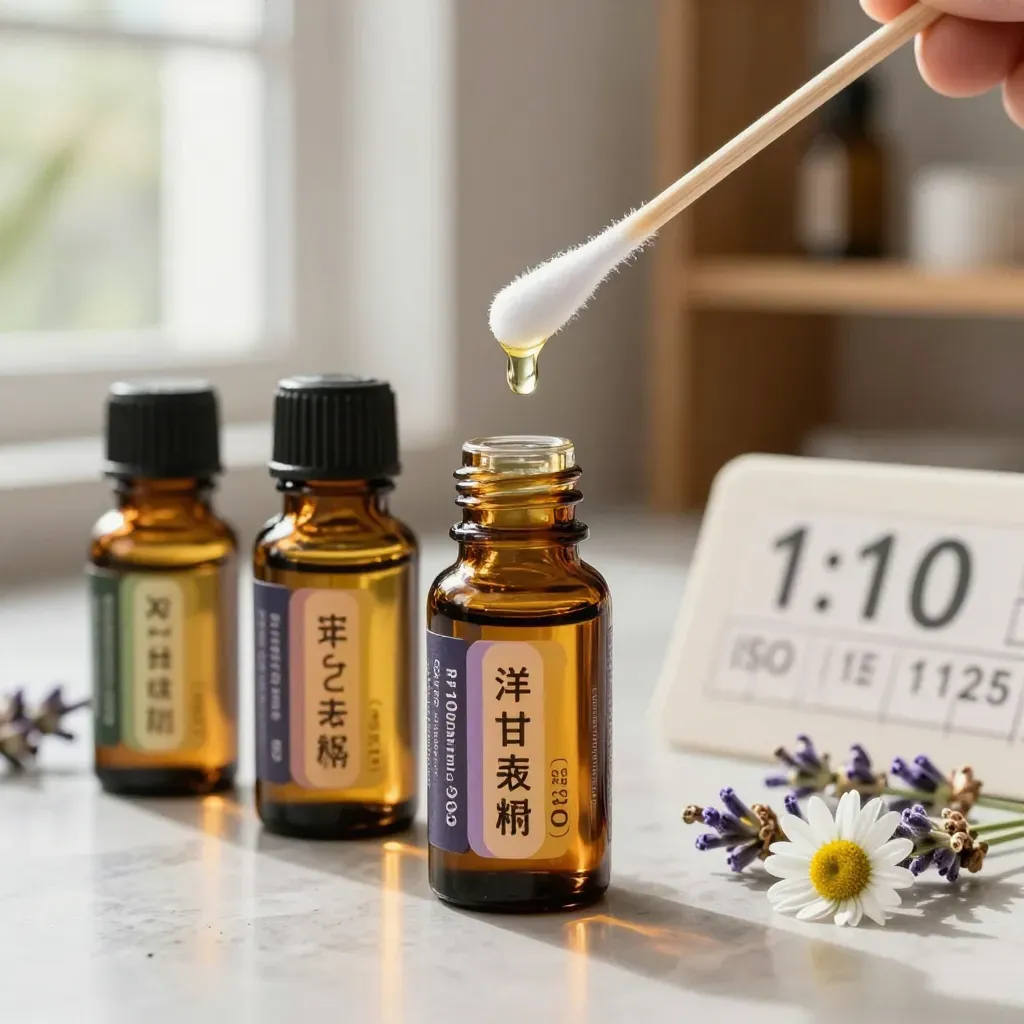
Instructions: Mix all oils in a small glass bottle. Apply 1-2 drops directly to affected areas using a cotton swab. Use morning and evening until bump subsides (typically 3-5 days).
Recipe 2: Soothing Bath Soak
Full-body treatment for multiple ingrown hairs or prevention.
- 1 cup Epsom salt
- 10 drops tea tree oil
- 10 drops lavender oil
- 5 drops peppermint oil
- 2 tablespoons milk
Instructions: Dissolve Epsom salt in warm bathwater. Mix essential oils with milk, then add to bath. Soak for 15-20 minutes. Pat skin dry—do not rub.
Recipe 3: Exfoliating Scrub
Prevents ingrown hairs by keeping pores clear.
- ½ cup raw sugar
- ¼ cup coconut oil (melted)
- 8 drops tea tree oil
- 5 drops lavender oil
Instructions: Combine sugar and melted coconut oil. Add essential oils and mix well. Store in airtight jar. Use in gentle circular motions on affected areas before showering. Rinse thoroughly.
Recipe 4: After-Shave Soothing Mist
Prevents ingrown hairs when used after every shave.
- ½ cup witch hazel
- ¼ cup aloe vera gel
- 10 drops tea tree oil
- 5 drops lavender oil
- 5 drops chamomile oil
Instructions: Combine all ingredients in a spray bottle. Shake well before each use. Mist onto skin after shaving. Allow to dry naturally. Store in refrigerator for up to 2 weeks.
Quick Reference Chart
Recipe | Best For | Application |
|---|---|---|
Spot Treatment | Individual bumps | Cotton swab, 2x daily |
Bath Soak | Full body treatment | 15-20 min soak |
Scrub | Prevention | 2-3x weekly |
Mist | Post-shave care | After every shave |
How to Dilute and Apply Essential Oils Safely on Affected Areas
Proper dilution prevents skin irritation and maximizes therapeutic benefits when treating ingrown hairs with essential oils.
Recommended Dilution Ratios
Application Area | Essential Oil Drops | Carrier Oil Amount | Percentage |
|---|---|---|---|
Face and neck | 1-2 drops | 1 tablespoon | 1% |
Bikini line | 3-4 drops | 1 tablespoon | 2% |
Legs and body | 5-6 drops | 1 tablespoon | 3% |
Spot treatment | 1 drop | 10 drops carrier | 5% |
Best Carrier Oils for Ingrown Hair Treatment
- Jojoba oil: Mimics skin's natural sebum, absorbs quickly, won't clog pores
- Sweet almond oil: Lightweight, rich in vitamin E, softens skin
- Coconut oil: Antibacterial properties, moisturizes deeply
- Fractionated coconut oil: Liquid form, longer shelf life, non-greasy
- Grapeseed oil: Non-comedogenic, suitable for oily and acne-prone skin
Step-by-Step Application Guide
- Step 1: Clean the affected area with mild soap and warm water
- Step 2: Pat skin dry completely
- Step 3: Mix essential oil with carrier oil in clean container
- Step 4: Apply small amount to fingertip or cotton swab
- Step 5: Gently dab onto ingrown hair bump
- Step 6: Allow oil to absorb fully before dressing
- Step 7: Repeat 2-3 times daily until resolved
Safety Rules
- Always patch test on inner forearm 24 hours before first use
- Never apply undiluted essential oils to broken or infected skin
- Stop use immediately if burning, excessive redness, or itching occurs
- Keep oils away from eyes, nose, and mouth
- Store blends in dark glass bottles away from direct sunlight
- Discard any mixture that changes smell or appearance