
Table of Contents
Ingrown hairs occur when removed hair curls back into the skin, caused by shaving, waxing, curly hair, dead skin, or tight clothing. Prevention includes exfoliating, shaving with the grain, using sharp razors, moisturizing, and laser hair removal. Treatments involve warm compresses, sterile extraction tools, and OTC products for infections. Laser offers permanent reduction by destroying follicles.
Question | Answer |
|---|---|
What causes ingrown hairs? | Ingrown hairs are caused by hair removal methods like shaving and waxing, especially with curly or coarse hair, and dead skin buildup that traps hairs. |
How can I prevent ingrown hairs? | Prevent ingrown hairs by exfoliating regularly, shaving with the grain, using a sharp razor, moisturizing daily, and considering laser hair removal for permanent results. |
What's the best way to treat an ingrown hair at home? | Treat ingrown hairs at home with warm compresses to soften skin and bring hairs to the surface, then extract gently with sterilized tweezers if visible. |
When should I see a doctor for an ingrown hair? | See a doctor if the ingrown hair shows signs of infection like pus, increased redness, or fever, or if it persists beyond two weeks. |
How does laser hair removal prevent ingrown hairs? | Laser hair removal prevents ingrown hairs by destroying hair follicles with heat, stopping hair growth and eliminating sharp regrowth that causes ingrowns. |
What causes ingrown hairs and why they keep coming back
Main Causes
Ingrown hairs happen when a removed hair curls back and penetrates the skin. This creates a painful, red bump. The primary cause is hair removal itself.
- Shaving creates a sharp tip that easily pierces the skin as it grows.
- Waxing and tweezing removes hair from the root, often leaving a sharper regrowing tip.
- Curly or coarse hair naturally has a tendency to curl back into the skin.
- Dead skin buildup traps hairs beneath the surface, preventing normal exit.
- Tight clothing rubs hair back into the skin, especially on the legs and bikini line.
Why They Recur
The cycle repeats because the underlying factors remain. Each time you remove hair, you create a new sharp tip prone to re-entering. Inflammation from a previous ingrown hair damages the follicle, increasing the chance of future ingrowns in the same spot. Poor shaving technique—like stretching the skin taut or using a dull blade—makes the problem worse. Without changing the hair removal method or treating the skin, ingrown hairs become a chronic issue.
Prevention Strategies
Action | How It Helps |
|---|---|
Exfoliate regularly | Removes dead skin cells that trap hairs. Use a gentle scrub or chemical exfoliant like salicylic acid 2-3 times a week. |
Shave with the grain | Shaving in the direction of hair growth leaves a blunter tip less likely to curl back. Avoid stretching skin. |
Use a sharp, single-blade razor | Dull blades tug and irritate, increasing inflammation and sharp regrowth. |
Moisturize daily | Hydrated skin is more elastic, allowing hairs to emerge easily. |
Consider laser hair removal | Reduces the number of hairs permanently, eliminating the root cause. |
Warm compress method to bring ingrown hairs to the surface
Why this method works
Heat softens the top layer of skin. It reduces swelling and increases blood flow to the affected area. This process helps trapped hairs break through the skin naturally.
Step-by-step guide
Follow these steps to draw out the hair safely.
- Soak a clean washcloth in hot water. Ensure the water does not burn your skin.
- Press the warm cloth directly against the ingrown hair bump.
- Hold the compress in place for 10 to 15 minutes.
- Repeat the application three to four times daily until the hair surfaces.
Treating deep ingrown hairs
Standard compresses sometimes fail to reach deep hairs. Add a gentle exfoliant like salicylic acid after the compress. This clears dead skin cells blocking the hair shaft. For stubborn cases, learn how to remove an ingrown hair that is deep without causing infection.
Tools to use after compressing
Tool | Purpose |
|---|---|
Washcloth | Provides heat and slight friction to help the hair escape. |
Sterilized needle | Gently lifts the hair loop once the skin softens. Do not dig. |
Pointed tweezers | Grasps the exposed hair tip to pull it straight out. |
Once the hair emerges, pull it gently with clean tweezers. If you cannot see the hair, stop treatment and retry the warm compress later. The best way to remove an ingrown hair requires patience. Let the hair surface fully before extraction. If bumps persist on your jawline, change your shaving routine and learn how to remove ingrown hair in your beard effectively.
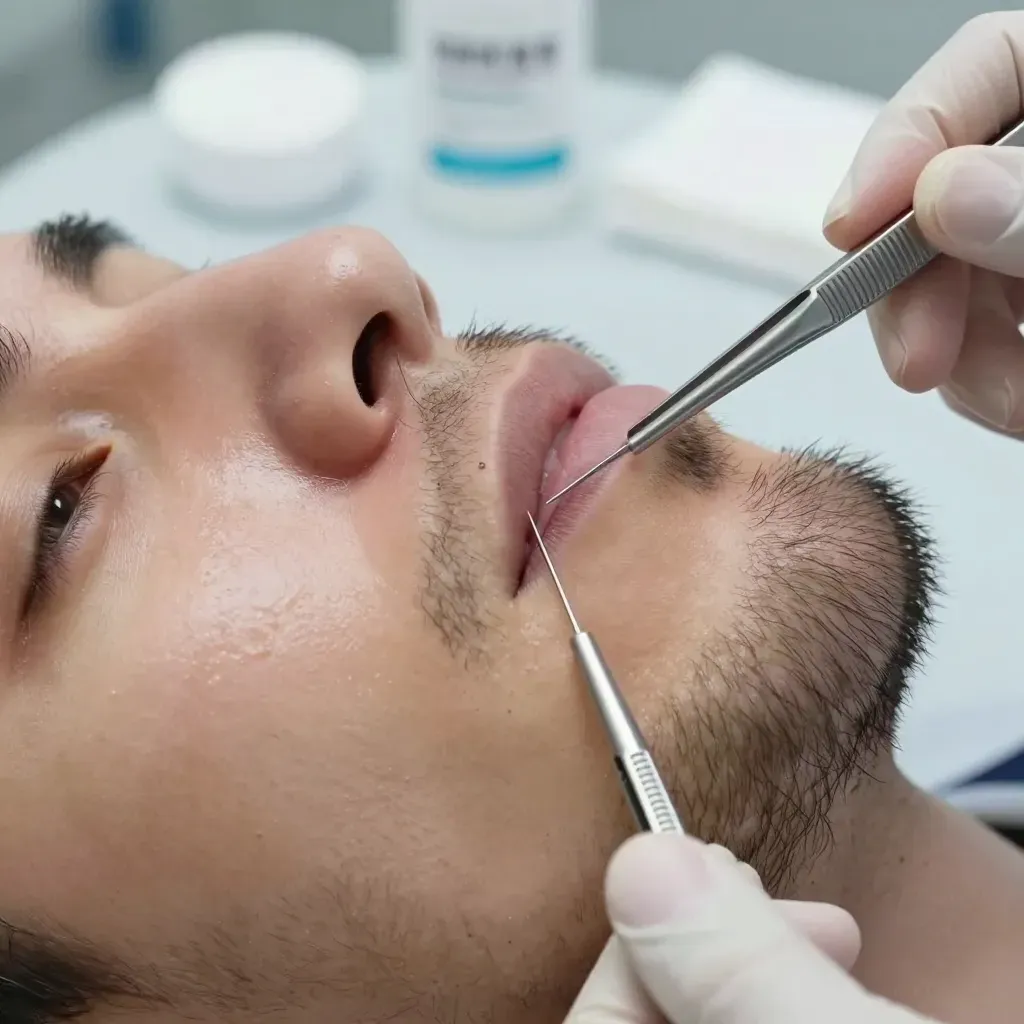
How to use tweezers and needles to extract ingrown hairs safely
Preparation steps
Sterilize all tools to prevent infection and scarring.
Always wash your hands with soap before touching your face or body.
- Wipe a sharp sewing needle with rubbing alcohol.
- Sanitize pointed tweezers to ensure a clean grip.
- Clean the target skin area with antibacterial soap.
- Apply a warm compress for five minutes to soften the skin.
Extraction process
Never dig blindly into the skin.
Only attempt extraction if you see the hair loop trapped under the skin.
Step | Action |
|---|---|
1 | Slide the sterile needle carefully under the visible hair loop. |
2 | Lift the needle gently to tease the hair tip above the skin surface. |
3 | Grasp the freed hair base firmly with your sterilized tweezers. |
4 | Pull the hair out smoothly in the direction of hair growth. |
Aftercare and tools
Wash the extracted area with warm water immediately.
Apply an antibacterial ointment to stop infection and reduce inflammation.
Avoid shaving the area until the skin heals completely.
Watch ingrown hair removal videos to see the correct technique.
Use a dedicated ingrown hair remover tool for better precision.
Professional removing ingrown hairs services offer safe extraction for deep cysts.
Treating infected ingrown hairs with over the counter products
Signs of infection
Infected ingrown hairs develop when bacteria enter the follicle. Watch for these warning signs.
- Increased redness and swelling beyond the initial bump.
- Pus or fluid draining from the area.
- The bump feels warm to the touch.
- Pain intensifies instead of subsiding.
- Fever develops in severe cases.
Effective OTC products
Product Type | How It Works |
|---|---|
Salicylic acid | Exfoliates dead skin, opens clogged pores, reduces inflammation. |
Benzoyl peroxide | Kills bacteria, dries out excess oil, reduces redness. |
Hydrocolloid bandages | Pulls out fluid, protects the wound, promotes healing. |
Tea tree oil | Natural antibacterial properties, reduces swelling. |
Antibiotic ointments | Prevents bacterial growth, protects the skin barrier. |
Application method
Clean the infected area with gentle soap and warm water twice daily.
Apply a thin layer of benzoyl peroxide gel directly on the bump.
Use a hydrocolloid bandage overnight to absorb pus and protect healing tissue.
Follow up with a fragrance-free moisturizer to prevent skin dryness.
Continue treatment for 7 to 10 days. If symptoms worsen or persist beyond two weeks, see a dermatologist for prescription antibiotics or professional ingrown hair removal in Chicago or your local area.
Permanent solutions like laser hair removal to stop ingrown hairs for good
Why laser destroys ingrown hairs
Laser hair removal targets melanin in the hair shaft. Light converts to heat. Heat destroys the hair follicle at the root. Destroyed follicles stop producing hair entirely. Without hair growing back, sharp tips cannot pierce the skin. This ends the cycle of inflammation and scarring permanently.
Comparing permanent options
Method | Results | Ideal Candidate |
|---|---|---|
Diode/Alexandrite Laser | Permanent reduction | Light skin, dark hair |
ND:YAG Laser | Permanent reduction | Darker skin tones |
At-home IPL | Gradual reduction | Light skin, dark hair |
Electrolysis | 100% Permanent removal | All skin and hair types |
Choosing your equipment
Home devices require strict consistency. Buy the best laser hair removal machine you can afford. Melanin-rich skin needs safe technology to prevent burns and hyperpigmentation. Read guides for the best at-home laser hair removal devices for Indian skin. Bikini and beard zones suffer most from severe ingrowns. Treatments there cause discomfort. Apply the best laser hair removal numbing cream 30 minutes before your session to block pain.
Stop waxing and tweezing six weeks before laser treatments. The root must remain intact for the laser to target it. Shave the area 24 hours before treatment. This prevents surface burns while hitting the follicle below the skin.