
Table of Contents
Ingrown hairs form when hair removal methods like shaving or waxing cause hair to grow back into the skin.
You can treat most mild cases at home using warm compresses gentle exfoliation and over-the-counter salicylic acid.
Preventing future ingrown hairs requires proper shaving techniques regular exfoliation and wearing loose clothing.
Seek medical treatment if you experience severe infections large cysts or bumps that do not heal.
Question | Answer |
|---|---|
What causes ingrown hairs? | Ingrown hairs occur when hair removal methods like shaving or waxing cut the hair so it grows back into the skin. |
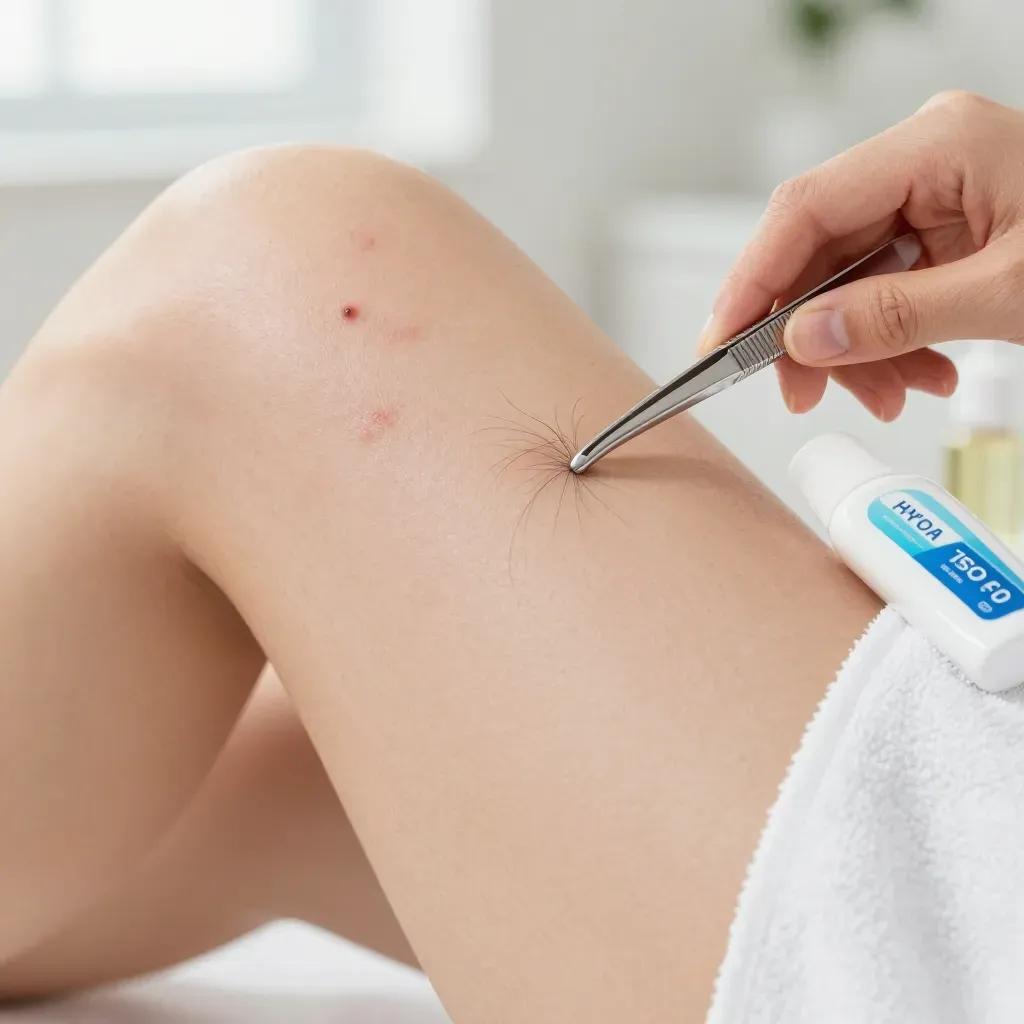
How do you remove an ingrown hair at home? | Apply a warm compress to soften the skin then use sterile tweezers to gently lift the trapped hair. |
When should I see a doctor for an ingrown hair? | You need medical help if the bump grows large produces smelly pus or causes a fever. |
Does laser hair removal stop ingrown hairs? | Laser hair removal destroys the hair follicle making it the most effective long-term solution to prevent ingrown hairs. |
What Causes Ingrown Hairs and How to Identify Them
Ingrown hairs form when hair grows back into the skin instead of outward. This happens most often after hair removal methods that cut hair at or below the skin surface.
Main Causes
- Shaving - Creates sharp hair tips that easily pierce skin
- Waxing - Removes hair from follicle, allowing regrowth into skin
- Tweezing - Leaves hair fragments that grow sideways
- Tight clothing - Pushes hair back into skin
- Curly or coarse hair - More likely to curl and re-enter skin
How to Identify Ingrown Hairs
Sign | Description |
|---|---|
Small bumps | Red or pink papules, often itchy |
Pustules | Pus-filled lesions similar to acne |
Dark spots | Post-inflammatory hyperpigmentation |
Pain or tenderness | Especially when touched or shaved over |
Early signs include tiny red bumps appearing days after hair removal. The hair may be visible trapped beneath the skin surface as a small dark spot or curl.
Safe At-Home Ingrown Hairs Removal Methods
Most ingrown hairs can be treated safely at home with proper technique and hygiene.
Warm Compress Method
- Soak a clean cloth in warm water
- Apply to affected area for 10-15 minutes
- Repeat 3-4 times daily
- This softens skin and helps hair emerge naturally
Gentle Exfoliation
- Use a soft washcloth or gentle scrub
- Massage in circular motions for 2-3 minutes
- Do this every other day after initial warm compress
- Avoid aggressive scrubbing on active bumps
Sterile Tweezer Extraction
Step | Action |
|---|---|
1 | Clean area with rubbing alcohol |
2 | Wait for warm compress to soften skin |
3 | Use sterile tweezers to gently lift hair tip |
4 | Pull hair in direction of growth |
Over-the-Counter Products
- Salicylic acid - Helps unclog pores and exfoliate
- Glycolic acid - Breaks down dead skin cells
- Tea tree oil - Has antibacterial properties
- Hydrocortisone cream - Reduces inflammation
Important Safety Rules
- Always sterilize tools before use
- Never pick or pop ingrown hair bumps
- Stop if you experience pain or bleeding
- See a doctor if no improvement after 1-2 weeks
When to Seek Professional Treatment for Ingrown Hairs
Most ingrown hairs resolve with home care. But certain situations require a dermatologist or healthcare provider.
Warning Signs That Need a Doctor
- Infection signs: increasing redness, warmth, pus, or fever
- No improvement: bumps lasting over 14 days despite proper home care
- Severe inflammation: large, painful, swollen areas
- Cyst formation: firm lumps under skin that may require drainage
- Recurring ingrowns: frequent ingrown hairs in same area despite prevention
- Sensitive locations: near eyes, on genitals, or in deep skin folds
Professional Treatment Options
Treatment | Best For | Key Points |
|---|---|---|
Antibiotics | Infected ingrown hairs | Oral or topical; complete full course |
Corticosteroids | Severe redness and swelling | Creams or injections to reduce inflammation fast |
Sterile extraction | Visible trapped hairs | Doctor uses specialized tools to remove hair without damage |
Laser hair removal | Prevention and treatment | Reduces hair growth over sessions; safe for most skin types |
Chemical exfoliation | Chronic ingrown hairs | Professional-grade acids to prevent clogged follicles |
What to Expect During Your Visit
- Assessment: Doctor examines skin, asks about hair removal routine
- Diagnosis: Confirms ingrown hair vs. other conditions like cysts or acne
- Treatment plan: May include immediate relief and long-term strategy
- Procedures: Quick in-office steps like drainage or laser consultation
- Follow-up: Often recommended to monitor healing and adjust prevention
Preventing Future Issues After Treatment
- Follow post-care instructions carefully
- Adjust hair removal techniques based on doctor's advice
- Consider laser hair removal for persistent problems
- Use gentle exfoliation and moisturize regularly
- Avoid tight clothing in affected areas
Prevention Tips to Avoid Future Ingrown Hairs
Before Hair Removal
- Warm skin with a shower or warm compress for 5 minutes
- Let shaving cream sit 2-3 minutes to soften hair and skin
- Massage area in circular motion to lift hairs from follicles
- Trim long hair first if shaving to reduce pulling
During Hair Removal
Do | Don't |
|---|---|
Shave in direction of hair growth | Shave against the grain |
Use a single-blade razor | Use dull or multi-blade razors |
Apply light pressure | Press hard into skin |
Rinse blade after each stroke | Stretch skin taut while shaving |
After Hair Removal
- Pat skin dry instead of rubbing
- Apply fragrance-free moisturizer immediately
- Exfoliate gently 2-3 times per week
- Wear loose clothing for 24 hours
- Use exfoliating products designed for post-hair removal skin
Long-Term Prevention Strategies
- Switch from shaving to laser hair removal to eliminate the root cause
- Use salicylic acid body wash 3 times weekly to keep pores clear
- Avoid waxing or plucking if you get chronic ingrown hairs
- Replace razor blades every 3-5 uses
- Moisturize daily to keep skin barrier strong
High-Risk Areas Need Extra Care
- Exfoliate before and after shaving
See a doctor if an ingrown hair becomes severely infected forms a cyst or won't heal with home care.
Signs You Need Medical Help
- Bump grows larger than a pea or spreads across skin
- Pus that smells bad or looks dark yellow/green
- Fever or warmth radiating from the area
- No improvement after 7 to 10 days of home care
- Pain that interferes with daily movement
- Recurring ingrown hair in the same spot repeatedly
Infected Ingrown Hair Symptoms
Symptom | Mild | Severe |
|---|---|---|
Redness | Small circle around bump | Spreads beyond bump area |
Swelling | Slight raise | Hard lump under skin |
Pain | Tender to touch | Throbbing constant pain |
Pus | White dot at center | Thick smelly discharge |
Fever | None | Present above 100.4F |
What a Doctor Can Do
Dermatologists have several treatment options not available at home.
- Prescribe oral or topical antibiotics for bacterial infection
- Drain large cysts using sterile surgical tools
- Inject corticosteroids to reduce severe inflammation
- Perform minor excision to remove the entire hair follicle
- Recommend laser treatment to destroy the follicle causing repeated ingrowns
When It Might Be Something Else
Some skin conditions mimic infected ingrown hairs. A doctor can rule out:
- Boils or abscesses from staph bacteria
- HSV herpes outbreaks on bikini line or face
- Folliculitis from fungal or bacterial infection
- Sebaceous cysts not related to hair growth
- Cellulitis requiring immediate antibiotics