
Table of Contents
Ingrown neck hair happens when coarse curly hair grows back into the skin after shaving or trimming. Men with curly hair face higher risk due to pseudofolliculitis barbae. Tight clothing and clogged follicles also trigger ingrowns. Safe removal requires warm compresses sterile tweezers and chemical exfoliants like salicylic acid. Never dig for hidden hairs or pluck from the root. Prevent ingrowns by softening skin before shaving using a sharp blade and shaving with the grain. Consistent exfoliation stops future ingrowns. For stubborn or infected cases seek professional help from a dermatologist or consider laser hair removal for a permanent solution.
Question | Answer |
|---|---|
What causes ingrown neck hair? | Coarse curly hair cut at an angle during shaving curls back into the skin instead of growing outward. |
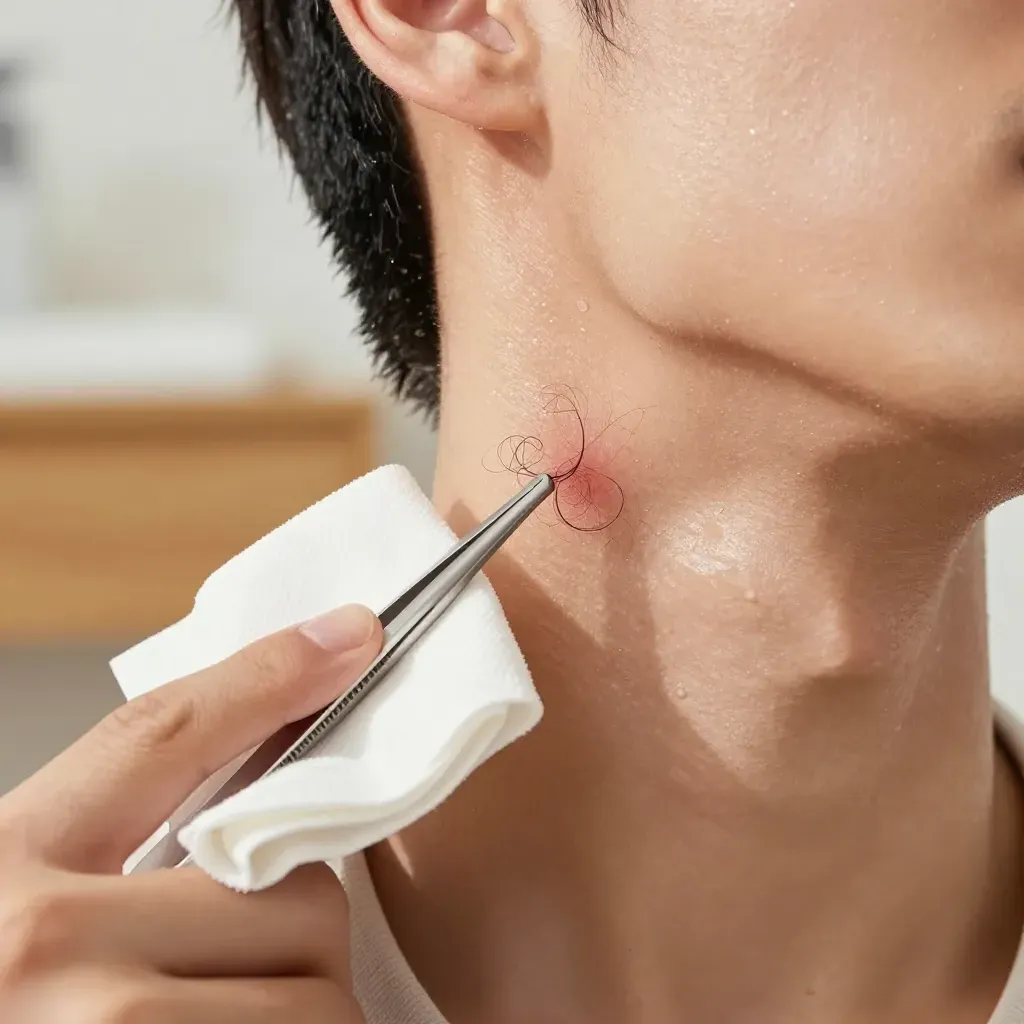
How do you remove an ingrown neck hair safely? | Apply a warm compress for 5-10 minutes to soften the skin then use sterile tweezers to gently lift the visible hair loop without plucking it from the root. |
How can I prevent ingrown hairs on my neck? | Shave after a warm shower with a sharp blade in the direction of hair growth and exfoliate 2-3 times weekly with salicylic acid. |
When should I see a doctor for an ingrown neck hair? | Seek professional care if the bump grows larger after a week spreads redness oozes thick pus or causes fever and swollen lymph nodes. |
Does laser hair removal help with ingrown neck hairs? | Laser hair removal eliminates ingrowns permanently by reducing hair growth so no hair can grow inward. |
What causes ingrown neck hair and who is at risk
Why the neck is prone to ingrown hairs
Neck hair is typically coarse and curly, especially in men. Regular shaving or trimming cuts hair at a sharp angle, creating a pointed tip that can easily pierce the skin. Tight collars and shirt necks rub against the area, causing irritation. Sweat and oil from the skin mix with dead cells, clogging follicles and redirecting hair growth.
Primary causes of ingrown neck hair
- Curly hair texture: naturally curls back into skin after cutting.
- Shaving too close: razor cuts hair below skin surface, leaving a sharp, tapered end that grows sideways.
- Clogged follicles: dead skin cells and sebum block the pore, forcing hair to grow sideways or curl back.
- Skin irritation: from shaving creams, aftershaves, or fabric friction inflames the area, making it easier for hair to re-enter.
- Infection: picking or popping ingrown hairs introduces bacteria, causing inflammation and potential scarring.
Who is most at risk
- Men with curly hair: pseudofolliculitis barbae affects up to 80% of African American men who shave.
- Frequent shavers: daily shaving increases trauma to skin and hair.
- Sensitive skin: more prone to inflammation and clogged pores.
- Tight clothing: constant friction from collars or scarves irritates follicles.
- Ethnic background: higher incidence in people of African, Middle Eastern, and South Asian descent due to hair structure.
Safe Methods for Removing Ingrown Neck Hairs
Removing an ingrown neck hair the wrong way causes infection and scarring. Use these methods in order from least invasive to most.
- Clean the area with warm water and antibacterial soap first
- Apply a warm compress for 3-5 minutes to soften skin
- Never dig blindly into the skin
- Stop if you see blood or pus
Warm Compress Method
Best for early-stage ingrowns where the hair is barely visible under the skin. Hold a warm damp cloth against the bump for 5-10 minutes twice daily. This softens the skin and helps the hair break through naturally. Most shallow ingrowns resolve in 2-3 days with this alone.
Tweezer Extraction
Only use when the hair loop is visible at the surface. Do not dig for hidden hairs.
Step | Action |
|---|---|
1 | Sterilize pointed tweezers with rubbing alcohol |
2 | Gently pull the hair loop upward |
3 | Do not pluck the hair from the root |
4 | Apply antiseptic after removal |
Salicylic Acid Treatment
Apply a 2% salicylic acid solution directly to the bump once daily. It exfoliates dead skin cells trapping the hair. Works well for multiple ingrowns across the neck. Results show in 3-5 days. Pair with a moisturizer to prevent dryness.
Exfoliation
Use a gentle scrub or chemical exfoliant 2-3 times weekly on the neck area. This removes dead skin buildup that blocks hair follicles. Stop exfoliating if the skin becomes red or irritated.
For stubborn or infected ingrown neck hairs that wont respond to home treatment check out our full guide on removing ingrown hairs or learn how to tackle deep ingrown hairs safely.
Preventing Ingrown Hairs After Removal
Prevention starts before you even remove the hair. Proper preparation and aftercare stop ingrowns before they start.
Pre-Shave Preparation
Always soften the hair and skin first. Shave after a warm shower when pores are open. Apply a pre-shave oil or gel to create a protective barrier. Never shave dry skin.
Shaving Technique
How you shave matters more than the tool. Use a sharp, clean blade. Shave in the direction of hair growth, not against it. Use single strokes. Do not stretch the skin taut.
Do | Don't |
|---|---|
Use a sharp razor | Press hard on the skin |
Shave with the grain | Shave against the grain |
Rinse blade after each stroke | Reuse the same spot on the blade |
Replace blades every 5-7 shaves | Shave over the same area repeatedly |
Post-Shave Care
Rinse with cool water to close pores. Pat skin dry. Apply an alcohol-free moisturizer with ingredients like aloe or ceramides. For the neck, use a non-comedogenic product to avoid clogging pores.
Daily Habits for Prevention
- Exfoliate 2-3 times per week with a gentle chemical exfoliant like salicylic acid
- Wear loose clothing that doesn't rub the neck area
- Keep the neck clean but avoid harsh soaps that dry skin
- Consider switching to an electric trimmer instead of a blade razor
For persistent ingrown issues, explore professional options like laser hair removal which reduces hair growth and thus ingrown risk. Learn more about how laser treatment affects ingrown hairs.
Best Products for Ingrown Neck Hair Treatment
The right product speeds up healing and stops ingrowns from returning. Focus on ingredients that exfoliate and reduce inflammation.
Chemical Exfoliants
Salicylic acid and glycolic acid are the top choices. They dissolve dead skin cells trapping the hair beneath the surface.
Product Type | Key Ingredient | Best For |
|---|---|---|
Toner | 2% salicylic acid | Daily prevention |
Serum | Glycolic acid 5-10% | Active ingrowns |
Pad | Lactic + salicylic acid | Convenient application |
Lotion | Urea 10% | Dry sensitive skin |
Anti-Inflammatory Treatments
Infected or painful ingrowns need more than exfoliation. Look for products with benzoyl peroxide or tea tree oil. These reduce redness and kill bacteria that cause infection. Apply a thin layer directly to the bump once daily.
Moisturizers
Dry skin makes ingrowns worse. The neck needs hydration to keep hair follicles flexible. Use fragrance-free formulas with ceramides or hyaluronic acid. Avoid thick greasy creams that clog pores.
Tools
- Pointed stainless steel tweezers for visible hair loops
- Soft-bristle face brush for gentle mechanical exfoliation
- Warm compress cloth for softening the skin before extraction
For a non-exfoliant approach check out the best hair removal creams for ingrown hairs. If products arent enough, learn about using laser treatment directly on ingrown hairs for a permanent solution.
When to Seek Professional Help for Ingrown Neck Hairs
Some ingrown neck hairs will not resolve with home treatment. Know the warning signs before infection spreads or scarring becomes permanent.
Signs You Need Professional Care
- Bump grows larger after 5-7 days of home treatment
- Redness spreads beyond the immediate area
- Thick white or yellow pus drains from the bump
- Fever or swollen lymph nodes near the neck
- Pain increases instead of decreasing
- Scar tissue forms or the skin remains darkened
- Multiple ingrowns appear in the same spot repeatedly
What Professionals Can Do
A dermatologist or aesthetician safely extracts deep ingrown hairs without causing trauma. They use sterile instruments and proper technique. For infected cases they may prescribe topical or oral antibiotics. They also offer cortisone injections to reduce inflammation quickly.
Provider | Service | Best For |
|---|---|---|
Dermatologist | Medical-grade extraction, prescriptions | Infected or severe cases |
Aesthetician | Extraction, chemical peels | Mild to moderate ingrowns |
Laser Specialist | Permanent hair reduction | Chronic recurring ingrowns |
Considering Permanent Solutions
If ingrowns keep returning despite proper care laser hair removal eliminates the problem at the source. With no hair to grow inward ingrowns stop entirely. The neck responds well to laser treatment. Most people need 6-8 sessions for lasting results.
Find out if laser hair removal is worth the investment or explore options in your area with our guides to top-rated laser hair removal clinics.