
Table of Contents
Ingrown pubic hairs happen when removed hair curls back into skin, causing bumps and infection. Treat mild cases at home with warm compresses and gentle extraction, but see a doctor for severe signs like pus or fever. Laser hair removal prevents them long-term by destroying follicles. Prevent recurrence with regular exfoliation, proper shaving, and loose clothing.
Question | Answer |
|---|---|
What causes ingrown pubic hairs? | Ingrown hairs occur after shaving, waxing, or plucking when sharp hair tips curl back into the skin, especially with curly hair or dead skin cell buildup. |
How can I safely remove an ingrown hair at home? | Apply warm compresses to soften skin, exfoliate gently, and use sterile tools to lift the hair tip only if visible, then soothe with antibacterial ointment. |
When should I see a doctor for an ingrown hair? | Seek medical help if the bump has pus, spreading redness, fever, or severe pain, or if home extraction fails or causes heavy bleeding. |
Does laser hair removal prevent ingrown hairs? | Yes, laser hair removal destroys hair follicles to stop regrowth, eliminating the root cause of ingrown hairs with long-term results after multiple sessions. |
What daily habits prevent ingrown hairs? | Exfoliate two to three times weekly, moisturize daily with fragrance-free lotion, shave with sharp blades in hair direction, and wear loose cotton underwear. |
What causes ingrown pubic hairs and how to spot them
Pubic hairs often become ingrown after removal because the sharp tip of a shaved or broken hair can curl back into the skin.
Curly or coarse hair naturally grows sideways making it more likely to re-enter the skin.
Dead skin cells can clog the hair follicle forcing the growing hair to grow underneath the skin.
Shaving against the grain or with a dull razor increases the risk.
Waxing and plucking remove hair from the root which can also cause it to grow back incorrectly.
Tight clothing rubs against the skin irritating follicles and trapping hairs.
Early signs include a small red or skin-colored bump that may itch or feel tender.
You might see a dark pinpoint where the hair is trapped under the skin.
The area can become more inflamed and painful if the hair does not emerge.
An infected ingrown hair shows increased redness swelling and pus.
A cyst can form if the ingrown hair is deep or long untreated appearing as a larger painful lump.
Early Sign | Infection Sign |
|---|---|
Small red bump | Large red swollen area |
Tender to touch | Very painful or warm |
Possible dark hair tip visible | Pus or yellow discharge |
Mild itching | Fever possible in severe cases |
Ingrown hairs are common in the pubic region due to thick curly hair and frequent removal.
Pseudofolliculitis barbae is the medical term for chronic ingrown hairs from shaving.
Safe at-home methods to remove an ingrown pubic hair
Stop shaving waxing or plucking the pubic area immediately.
Give the skin time to calm down before attempting extraction.
Prepare the affected skin
Soak a clean washcloth in warm water.
Apply the warm compress to the ingrown hair for 10 to 15 minutes.
Do this three times a day to reduce inflammation.
Warmth softens the top layer of skin.
This brings the trapped hair closer to the surface.
Gently exfoliate the area using a soft washcloth or a mild body scrub.
Rub the skin in small circular motions.
Exfoliation clears away dead skin cells blocking the hair follicle.
Extract the hair carefully
Wash your hands thoroughly with soap and warm water.
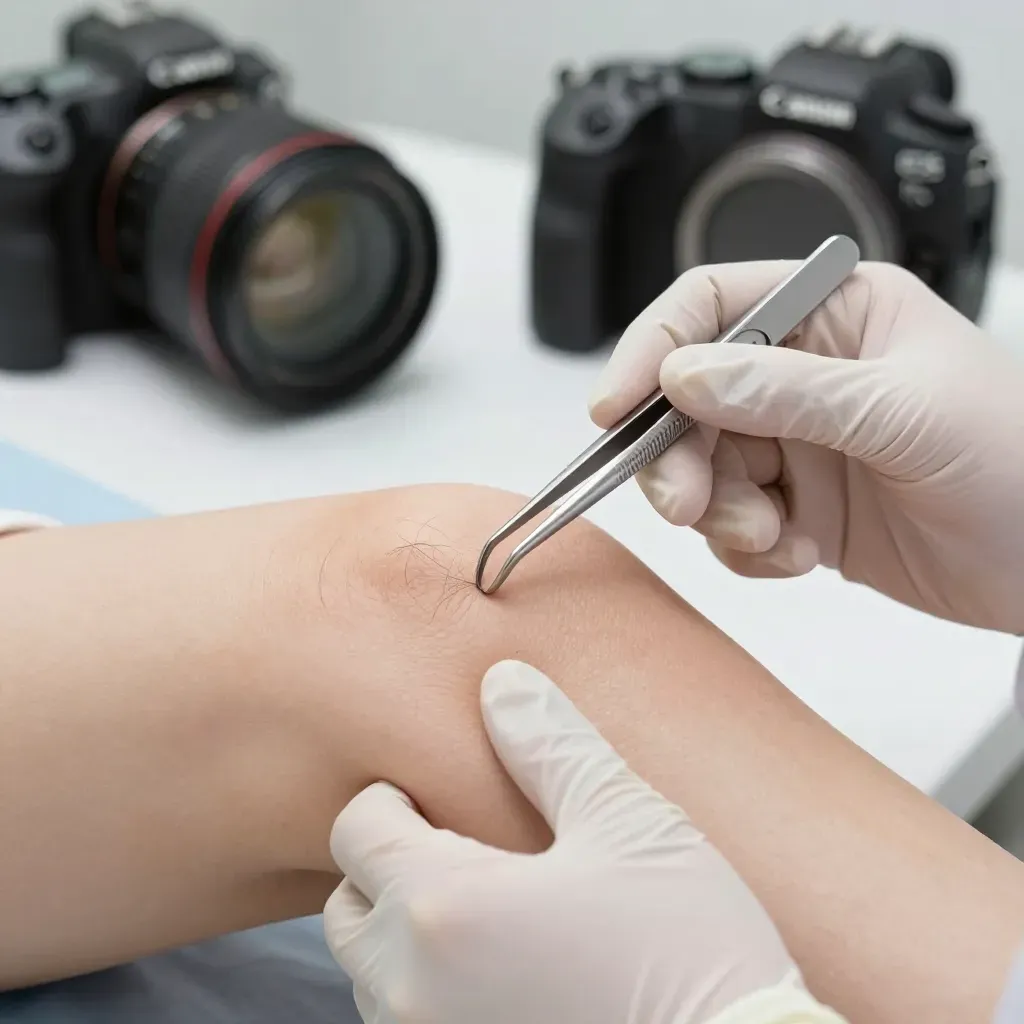
Sanitize a sharp needle or pointed tweezers with rubbing alcohol.
Locate the hair loop trapped under the skin.
Slide the sterile needle just under the visible hair loop.
Gently lift the needle upward to break the skin.
Pull the tip of the hair completely out from under the skin.
Do not dig into the skin if you cannot see the hair.
Leave the hair root intact after you pull the tip out.
Soothe and protect the area
Wash the area with mild soap and water.
Pat the skin dry with a clean towel.
Apply a thin layer of antibacterial ointment to prevent infection.
Use hydrocortisone cream to stop itching and reduce redness.
Wear loose underwear and clothing to avoid friction.
Common mistakes to avoid
- Never squeeze or pop the bump like a pimple.
- Do not use dirty or unsterilized tools.
- Never pluck the hair entirely from the root.
- Do not ignore signs of a worsening infection.
When to stop and see a doctor for infected hairs
Stop home treatment and see a doctor if the ingrown pubic hair shows signs of infection.
Do not try to remove deeply embedded hairs yourself.
Warning signs that need medical attention
- Bump grows larger than a pea within a few days.
- Redness spreads beyond the immediate area.
- Severe pain that does not improve with warm compresses.
- Pus or fluid draining from the bump.
- Strong odor coming from the infected area.
- Fever or chills accompanying the skin problem.
- The area feels hot to the touch.
- Swollen lymph nodes in the groin area.
When home removal becomes dangerous
Stop attempting removal if the hair is too deep to reach with a needle.
Stop if the area bleeds heavily when you try to extract the hair.
Stop if you feel uncertain about the correct technique.
Repeatedly irritating the same spot can make the problem worse.
What a doctor can do
A dermatologist or primary care doctor can safely remove deeply embedded hairs.
They use sterile surgical tools to extract the hair without damaging surrounding skin.
Doctors can drain large cysts that have filled with fluid.
They prescribe stronger medications than over-the-counter products.
A prescription antibiotic cream treats infected follicles faster.
Oral antibiotics may be necessary for severe bacterial infections.
Steroid injections can reduce large areas of inflammation quickly.
Emergency room visits
Go to urgent care if you develop a fever above 101 degrees Fahrenheit.
Seek immediate help if the infection spreads rapidly across the skin.
Bleeding that will not stop after applying pressure needs emergency care.
Signs of a skin abscess require prompt medical drainage.
How laser hair removal prevents ingrown pubic hairs long term
Laser hair removal destroys the hair follicle so hair cannot grow back into the skin.
This eliminates the root cause of ingrown pubic hairs completely.
The laser targets melanin in the hair shaft and heats the follicle to damage it permanently.
Most patients need 6 to 8 sessions for significant hair reduction in the pubic area.
Hair grows back thinner and finer after each session.
Thinner hair is far less likely to curl back into the skin.
Why laser beats traditional removal methods
Method | Ingrown Risk | Duration |
|---|---|---|
Shaving | Very high | 1 to 3 days |
Waxing | High | 2 to 4 weeks |
Plucking | High | 2 to 4 weeks |
Depilatory cream | Moderate | 1 to 2 weeks |
Laser | Very low | Months to permanent |
Laser also treats existing ingrown hairs by targeting the trapped hair beneath the skin.
The heat from the laser reduces inflammation around the affected follicle.
Existing bumps often flatten within days after a session.
What to expect during treatment
A trained technician applies a cooling gel to the pubic area.
The laser pulses across the skin targeting dark hair follicles.
Each session takes 15 to 30 minutes for the bikini zone.
Mild redness and swelling are normal after treatment.
Results appear gradually as treated hairs fall out over two to three weeks.
Professional clinic treatment works better than at-home devices for pubic hair.
Professional lasers use higher power settings that reach deeper follicles.
For the best results consider specialized pubic area laser treatment.
Check cost details before booking your first session.
Laser works best on dark hair and lighter skin but newer devices treat more skin tones safely.
Daily habits that stop ingrown hairs from coming back
The right daily habits make ingrown pubic hair removal unnecessary long term.
Consistent skincare routines keep the follicles clear and healthy.
Exfoliate regularly
Exfoliate the pubic area two to three times a week.
Use a gentle body scrub or a soft exfoliating glove in the shower.
Clearing dead skin cells stops them from trapping growing hairs under the surface.
Keep skin moisturized
Apply a fragrance-free moisturizer daily after bathing.
Hydrated skin stays soft and pliable.
Soft skin allows hairs to push through the surface easily without curling back.
Look for lotions containing salicylic acid or glycolic acid to keep follicles clear.
Upgrade your shaving routine
Replace razor blades after five to seven uses.
Dull blades cut hair at awkward angles and increase risk.
Always shave in the exact direction of hair growth.
Do not stretch the skin tight while pulling the razor.
Use a generous amount of shaving gel to create a smooth barrier.
Rinse the blade under running water after every single stroke.
Try a hair removal cream instead of a blade to avoid sharp hair tips.
Change your clothing choices
Wear loose underwear and breathable pants.
Tight clothing rubs against the skin and causes severe friction.
Friction forces hairs to curl back down into the follicle.
Choose breathable cotton fabrics to keep the area dry.
Give your skin regular breaks from hair removal to heal.
Learn how to remove ingrown hair after waxing if you prefer that method.
Understand if waxing removes ingrown hair or simply causes more bumps.