
Table of Contents
Ingrown hairs form when hair grows sideways or curls back into the skin, causing red, painful bumps. They commonly affect areas with coarse hair like the bikini line, face, neck, and legs. Prevention methods include exfoliation, proper shaving technique (shaving in the direction of hair growth), wearing loose clothing, and moisturizing. For home removal, use sterilized tweezers or a warm compress on visible hairs only. Chemical exfoliants like salicylic acid and glycolic acid help dissolve dead skin cells trapping hairs. Avoid digging into skin or forcing deep hairs out, as this causes infection and scarring. Severe or recurring ingrown hairs require professional extraction by a licensed esthetician or dermatologist. For permanent solution, laser hair removal destroys follicles entirely.
Question | Answer |
|---|---|
What causes ingrown hairs? | Shaving against the grain, curly hair texture, waxing trauma, tight clothing, and dead skin cell buildup cause hair to grow sideways into the skin. |
How do you prevent ingrown hairs? | Exfoliate regularly, shave in the direction of hair growth, wear loose clothing, and keep skin moisturized to prevent hair from trapping under the skin. |
What products treat ingrown hair bumps? | Salicylic acid, glycolic acid, tea tree oil, and benzoyl peroxide effectively treat ingrown bumps by exfoliating skin and reducing inflammation. |
When should you stop at-home removal? | Stop if the area becomes increasingly red, swollen, or warm; pus appears; pain intensifies; or the hair is deeply embedded and not visible. |
How do you permanently prevent ingrown hairs? | Laser hair removal permanently destroys hair follicles, eliminating the source of ingrown hairs for those with recurring issues. |
Understanding Ingrown Hairs: Causes and Prevention
Ingrown hairs occur when hair curls back or grows sideways into the skin instead of rising from the follicle. This causes red, painful bumps that may fill with pus. The condition commonly affects areas where hair is coarse or frequently removed, including the bikini line, face, neck, and legs.
Primary Causes
- Shaving against the grain or too close to the skin
- Curly or coarse hair texture
- Waxing and threading trauma to follicles
- Tight clothing that presses hair back into skin
- Dead skin cell buildup blocking hair exits
- Repeated friction from clothing or exercise
Prevention Strategies
Method | How It Helps |
|---|---|
Exfoliation | Removes dead skin cells blocking follicles |
Proper shaving technique | Shave in direction of hair growth |
Warm shower before hair removal | Opens pores and softens hair |
Loose-fitting clothing | Reduces friction and ingrown formation |
Moisturizing | Keeps skin supple, prevents ingrown trapping |
Who Gets Ingrown Hairs Most?
- People with curly or coarse hair textures
- Individuals with thick body hair
- Those who remove hair frequently
- People with sensitive skin prone to inflammation
Safe At-Home Removal Techniques for Ingrown Hairs
Tools & Preparation
- Sterilized fine-tip tweezers or a sterile needle
- Warm washcloth or compress
- Antiseptic (alcohol, povidone-iodine)
- Moisturizer or antibiotic ointment
Always wash hands and tools with hot soapy water. Alcohol-wipe tools before and after. Apply a warm compress for 5-10 minutes to soften skin and bring hair to surface.
Removal Methods Compared
Method | Steps | Risk Level |
|---|---|---|
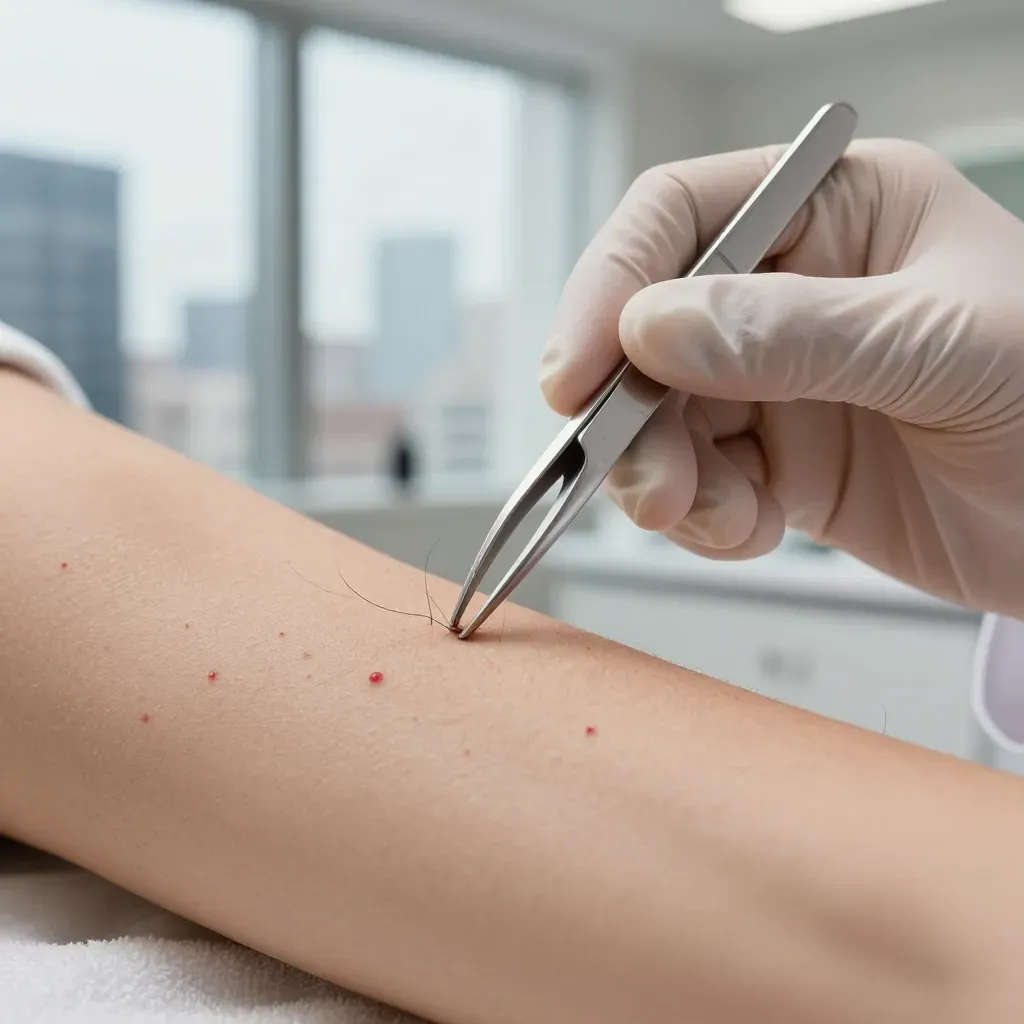
Tweezers | Gently grasp visible hair tip. Pull in direction of growth. Do not dig. | Low if done correctly. High if skin is broken. |
Needle/Stylus | Lift skin edge with needle tip. Guide hair out. Use only on surface-level hairs. | Medium. High infection risk if deep. |
Warm Compress | Apply 3-4 times daily. Encourages natural expulsion. | Very low. Slowest method. |
Exfoliation | Use gentle scrub or chemical exfoliant (salicylic acid). Removes dead skin barrier. | Low. Prevents new ingrowns, aids existing. |
Aftercare Steps
- Apply antiseptic to the area immediately after removal.
- Do not apply heavy creams or oils for 24 hours.
- Use a light, non-comedogenic moisturizer after 24 hours.
- Avoid tight clothing and friction on the area for 48 hours.
When to Stop
- Area becomes increasingly red, swollen, or warm
- Pus or yellow discharge appears
- Pain intensifies or red streaks spread from area
- Hair is deeply embedded and cannot be gently extracted
Seek a dermatologist for these signs. They can prescribe antibiotics or perform sterile extractions. For recurring issues, consider professional laser hair removal to eliminate the hair follicle entirely.
Best Products for Treating Ingrown Hair Bumps
Exfoliating Treatments
Chemical exfoliants dissolve dead skin cells trapping hairs. They prevent new ingrowns and clear existing ones.
Active Ingredient | How It Works | Best For | Considerations |
|---|---|---|---|
Salicylic Acid | Oil-soluble. Penetrates pores. Reduces inflammation. | Red, inflamed bumps. Oily skin. | Can dry skin. Start with 0.5-2%. |
Glycolic Acid | Water-soluble. Removes surface dead skin. | Surface-level bumps. Hyperpigmentation. | Sun sensitivity increases. Use SPF. |
Lactic Acid | Gentler exfoliant. Hydrates while exfoliating. | Sensitive skin. Mild ingrowns. | Weaker than other acids. |
Antibacterial & Soothing Options
- Tea Tree Oil: Natural antiseptic. Dilute to 5-10% in carrier oil. Apply directly to bump.
- Aloe Vera Gel: Soothes inflammation and redness. Use pure gel without alcohol.
- Benzoyl Peroxide: Kills bacteria. Reduces swelling. Use 2.5-5% spot treatment.
- Witch Hazel: Astringent. Reduces irritation. Alcohol-free versions only.
Prescription-Strength Solutions
For severe or persistent bumps, a dermatologist may prescribe:
- Retinoids (Tretinoin, Adapalene): Speed cell turnover. Prevent clogged follicles. Can cause initial irritation.
- Topical Antibiotics: Clindamycin or erythromycin for infected bumps.
- Combination Gels: Benzoyl peroxide + antibiotic (Epiduo).
Products to Avoid
- Heavy oils and butters (coconut oil, cocoa butter). They clog pores.
- Fragranced lotions and creams. They irritate inflamed skin.
- Petroleum jelly on active bumps. It traps bacteria and debris.
- Harsh physical scrubs on inflamed areas. They cause micro-tears.
For recurring ingrown hairs, consider laser hair removal. It destroys follicles permanently, eliminating the source.
Tools and Products Used for Ingrown Hair Removal
Professional estheticians like Jada Kennedy use specialized tools designed for safe and effective ingrown hair extraction. Understanding these tools helps distinguish professional methods from risky home attempts.
Professional Extraction Tools
- Tweezers: Fine-point precision tweezers with slanted or pointed tips allow estheticians to extract deeply embedded hairs without damaging surrounding skin.
- Extraction Hooks: Metal hooks specifically designed to loop around ingrown hairs and gently pull them from beneath the skin surface.
- Lancets: Small surgical blades used to create tiny openings for trapped hairs, typically by licensed professionals only.
- Comedone Extractor: Metal tool with a small loop on one end, useful for applying controlled pressure around ingrown bumps.
At-Home Tools (Use With Caution)
Tool | Purpose | Risk Level |
|---|---|---|
Sterile needles | Create tiny opening for extraction | High |
Clean tweezers | Gently pull visible ingrown hairs | Medium |
Warm compress | Softens skin, opens pores | Low |
Exfoliation gloves | Removes dead skin cells | Low |
Supporting Products
- Salicylic acid solutions: Help break down keratin buildup around ingrown hairs.
- Antibacterial cleansers: Prevent infection during and after extraction.
- Moisturizing serums: Tea tree oil and niacinamide products calm irritated skin post-extraction.
- Ingrown hair serums: Products containing glycolic or lactic acid gently exfoliate and prevent future ingrowns.
Tips for Safe Ingrown Hair Extraction at Home
While professional extraction by licensed estheticians like Jada Kennedy remains the safest option, certain at-home methods can help manage minor ingrown hairs when performed carefully.
Preparation Steps
- Cleanse the area thoroughly with warm water and antibacterial soap.
- Apply a warm compress for 5-10 minutes to soften skin and open pores.
- Sterilize all tools with isopropyl alcohol before use.
- Work in a well-lit area to see the ingrown hair clearly.
- Use a clean mirror and consider magnification for better visibility.
Extraction Guidelines
Do | Don't |
|---|---|
Wait until hair is visible above skin | Force deep or invisible hairs out |
Gently stretch skin taut while extracting | Dig or probe aggressively |
Pull in direction of hair growth | Pull against the grain |
Stop if significant pain occurs | Continue through bleeding or intense pain |
Post-Extraction Care
- Apply antiseptic or antibacterial ointment after extraction.
- Keep the area clean and dry for 24-48 hours.
- Avoid tight clothing that could irritate the spot.
- Apply a gentle, fragrance-free moisturizer.
- Monitor for signs of infection: increasing redness, pus, swelling, or fever.
When to Seek Professional Help
- Ingrown hairs that are deeply embedded or cystic.
- Multiple ingrown hairs in the same area.
- Signs of bacterial infection or cellulitis.
- Ingrown hairs that repeatedly recur in the same spot.
- Any time extraction causes excessive pain, bleeding, or skin damage.