
Table of Contents
This article provides a comprehensive guide to understanding, treating, and preventing ingrown hairs. It explains why some ingrown hairs become chronic, including factors like hair type, improper shaving techniques, and follicle damage. The article outlines safe at-home removal methods with proper preparation, sterilization, and extraction techniques, while warning against dangerous practices like squeezing or digging. Professional treatments such as laser hair removal and electrolysis are discussed as long-term solutions for persistent cases. Prevention strategies include correct shaving practices, regular exfoliation, and lifestyle adjustments. The article emphasizes recognizing signs of infection that require medical attention, including increasing redness, pus, fever, or severe pain, which may indicate serious complications like cellulitis or abscess formation.
Question | Answer |
|---|---|
What causes ingrown hairs to become chronic or severe? | Curly hair, improper shaving technique, follicle damage from repeated ingrown hairs, and deep embedding under the skin can all cause long-lasting ingrown hairs. |
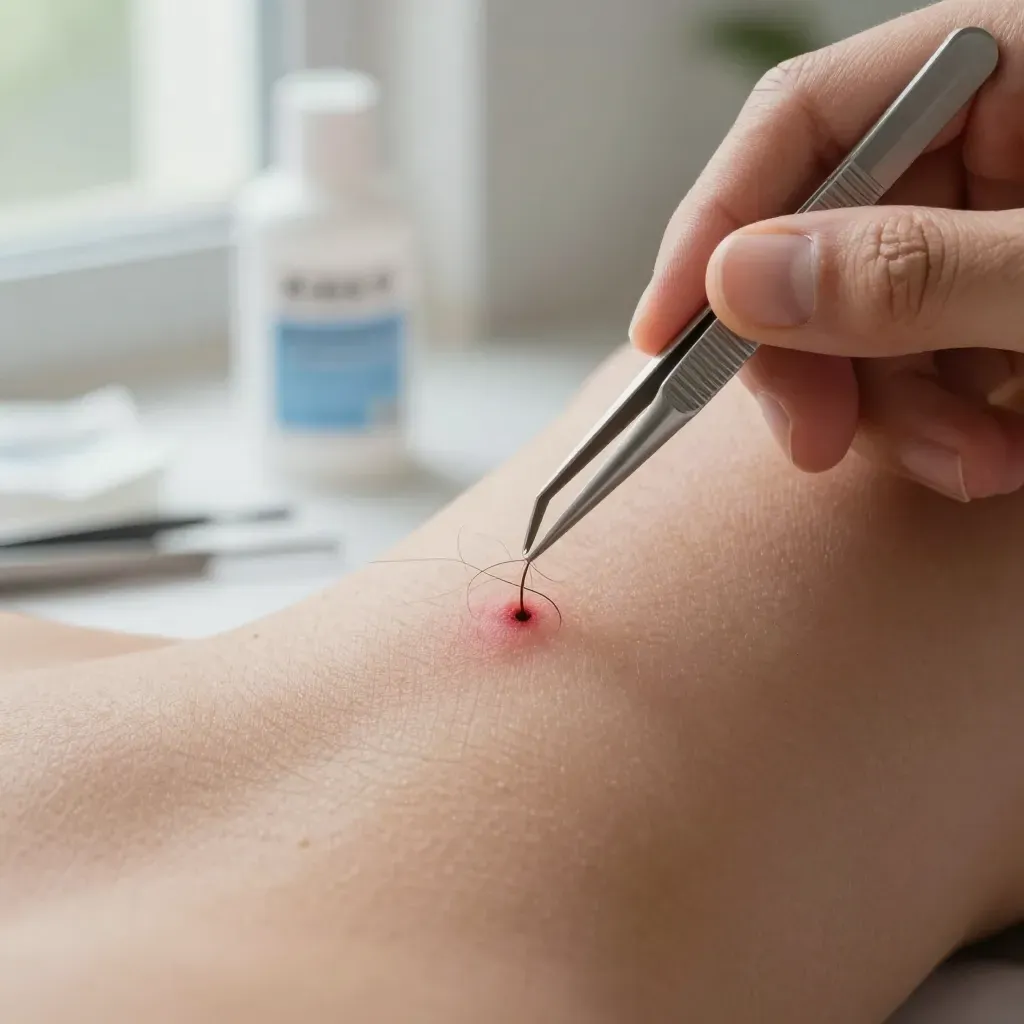
How do you safely remove an ingrown hair at home? | Clean the area, apply a warm compress, sterilize tools, gently lift the hair tip with a sterile needle, and pull in the direction of hair growth with tweezers. |
What professional treatments permanently remove ingrown hairs? | Laser hair removal and electrolysis destroy hair follicles to prevent future ingrown hairs, with laser requiring 6-8 sessions and electrolysis 8-12 sessions. |
How can you prevent ingrown hairs from recurring? | Shave in the direction of hair growth, use sharp razors, exfoliate regularly with salicylic or glycolic acid, and wear loose breathable clothing. |
When should you see a doctor for an ingrown hair? | Seek medical attention if you notice increasing redness, swelling, pus, fever, severe pain, or red streaks radiating from the bump, as these indicate infection. |
What makes an ingrown hair long-lasting and severe?
Several factors determine whether an ingrown hair becomes a long-standing problem.
Root Causes of Persistent Ingrown Hairs
- Hair type and curl pattern: Curly or coarse hair更容易弯曲并长回皮肤,这种头发更容易出现长期问题。
- Improper removal technique: Shaving too close or against hair direction creates sharper cut edges that penetrate skin easily.
- Follicle damage: Repeated ingrown hairs scar follicles, making future hairs struggle to exit properly.
- Deep embedding: Some hairs grow horizontally or curl completely under the skin surface.
Severity Indicators
Duration | Over 2-3 weeks indicates chronic problem |
|---|---|
Size | Bumps over 5mm suggest deep embedding |
Pain level | Persistent tenderness signals infection risk |
Recurrence | Same spot repeatedly affected shows follicle damage |
Why Some Ingrown Hairs Won't Surface
Long-standing ingrown hairs often fail to surface because:
- The hair tip已经完全卷曲在皮肤下形成圈状
- Thick outer skin layers (callus) trap hair underneath
- Chronic inflammation creates a pocket around the follicle
- Previous attempts to extract broke the hair, leaving fragments embedded
These factors combined create stubborn ingrown hairs that resist normal removal methods and require targeted treatment approaches.
Safe at-home techniques for removing chronic ingrown hairs.
Essential Preparation Steps
Never attempt removal on infected or highly inflamed skin. Wait until redness and pus subside. Cleanse the area with mild soap and water. Apply a warm compress for 5-10 minutes to soften skin and open the follicle. This step is critical for chronic cases where skin is thickened.
Tool Sterilization Protocol
- Sterilize tweezers and needles with rubbing alcohol or boil for 5 minutes.
- Wash hands thoroughly with soap before touching the area.
- Use a fresh, clean cloth or gauze pad during the procedure.
- Have antibiotic ointment and a bandage ready for aftercare.
Extraction Technique for Deep Ingrown Hairs
- Locate the hair tip: Use a magnifying mirror. Feel for the hard bump. The hair tip may be visible as a dark dot under the skin surface.
- Gentle needle lift: With a sterile needle, gently scrape the skin surface parallel to your skin. Do not dig. Aim to just expose the hair tip.
- Tweezer grasp: Once the tip is visible, use sterile pointed tweezers to grasp the hair as close to the root as possible.
- Steady removal: Pull in the direction of hair growth with steady, gentle pressure. Do not yank.
- Stop if resistance: If the hair breaks or won't budge, stop. Forcing it causes more damage and infection risk.
Aftercare to Prevent Recurrence
Action | Purpose |
|---|---|
Apply antibiotic ointment | Prevents infection in the open follicle |
Do not shave/wax area for 48 hours | Allows skin to heal without new irritation |
Wear loose clothing | Reduces friction and pressure on the site |
Use a chemical exfoliant (salicylic acid) after healing | Prevents dead skin buildup that traps hairs |
Critical Warnings
If you see increasing redness, swelling, pus, or feel feverish, stop and see a doctor. These are signs of a serious infection requiring oral antibiotics.
Professional treatments like laser for stubborn ingrown hairs.
How Laser Hair Removal Works
Lasers target melanin in the hair follicle. The light energy destroys the follicle's ability to produce hair. This prevents new hairs from forming, eliminating the root cause of future ingrown hairs. Multiple sessions are required to catch hairs in their active growth phase.
Effectiveness for Ingrown Hairs
Laser Type | Best For | Ingrown Hair Note |
|---|---|---|
Diode | Dark hair, light to medium skin | Highly effective at destroying the follicle |
Nd:YAG | Dark skin tones, all hair colors | Safe for dark skin; targets deeper follicles |
Alexandrite | Light to medium skin, dark hair | Very fast; excellent for large areas |
Laser is most effective on dark, coarse hair. It does not work on blonde, red, gray, or white hair. It treats existing ingrown hairs by destroying the follicle and prevents new ones from forming in the treated area.
Other Professional Options
- Electrolysis: Inserts a fine probe into the follicle and uses radiofrequency to destroy it. Works on all hair and skin colors. Tedious for large areas but 100% permanent.
- Professional extractions: A dermatologist or esthetician uses sterile needles and techniques to remove deep, chronic ingrown hairs safely, often with local anesthetic.
- Prescription retinoids (tretinoin): Applied topically, they speed up cell turnover, thinning the outer skin layer so trapped hairs can emerge more easily. Used as a maintenance treatment.
- Ingrown hair cyst removal: For large, deep cysts, a doctor may perform a minor surgical procedure to lance and drain the cyst, removing the embedded hair fragment.
Important Considerations
Number of Sessions | 6-8 for laser, 8-12 for electrolysis |
|---|---|
Cost Per Session | $150-$400 depending on area and clinic |
Downtime | Minimal; redness for a few hours |
Best For | Chronic, recurring ingrown hairs in the same area |
Prevention tips to avoid future ingrown hair after removal.
Shaving Technique Corrections
Most ingrown hairs occur from incorrect shaving habits. Shave in the direction of hair growth. Use a sharp, clean razor—replace blades after 5-7 uses. Do not shave too closely; leave a slight stubble. Apply a lubricating shaving cream or gel before shaving. Avoid tight clothing immediately after hair removal.
Exfoliation Strategy
Regular exfoliation prevents dead skin cells from clogging follicles. Use both mechanical and chemical methods:
- Mechanical: Use a soft loofah or konjac sponge. Gently scrub in circular motions. Do not over-scrub—causes micro-tears.
- Chemical: Apply products containing salicylic acid (2%) or glycolic acid (5-10%) 2-3 times weekly. These dissolve the outer skin layer, allowing hairs to exit freely.
Recommended Products
Product Type | Active Ingredient | Frequency |
|---|---|---|
Body wash | Salicylic acid 2% | Daily |
Moisturizer | Lactic acid or urea | Daily after shower |
Spot treatment | Benzoyl peroxide 2.5% | At first sign of bump |
Hair Removal Alternatives
- Electric trimmers: Cut hair above the skin surface. Reduces the sharp, angled edge that causes ingrown hairs.
- Depilatory creams: Dissolve hair at the skin level. Test on a small area first—can cause chemical burns in sensitive skin.
- Laser or electrolysis: Permanent solutions for chronic sufferers. Eliminates the hair follicle entirely.
Lifestyle Adjustments
- Wear loose, breathable fabrics like cotton—tight clothing traps moisture and forces hair back into skin.
- Shower immediately after exercise—sweat and friction increase ingrown hair risk.
- Keep skin moisturized—dry, flaky skin更容易堵塞毛囊。
- Avoid heavy oils or thick lotions on freshly shaved skin—they can trap hairs under the surface.
Early Intervention Protocol
When to see a doctor for infected or severe ingrown hairs.
Signs of Infection
Seek medical attention immediately if you notice any of these symptoms:
Symptom | Indicates |
|---|---|
Increasing redness, swelling, warmth | Cellulitis (spreading skin infection) |
Pus or yellow discharge | Bacterial infection requiring antibiotics |
Fever or chills | Systemic infection; go to urgent care |
Severe, throbbing pain | Deep abscess formation |
Red streaks radiating from bump | Potential sepsis; emergency care needed |
Medical Treatments a Doctor Can Provide
- Incision and drainage (I&D): A sterile procedure where a doctor makes a tiny cut to release pus and removes the embedded hair fragment. Often done with local anesthetic.
- Prescription antibiotics: Oral or topical antibiotics for bacterial infection. Complete the full course even if symptoms improve.
- Prescription-strength retinoids: Tretinoin cream to prevent new ingrown hairs by promoting skin cell turnover.
- Corticosteroid injections: For severe inflammation and swelling around the follicle.
- Laser or electrolysis referral: For chronic cases, a dermatologist can perform permanent hair removal to eliminate future ingrown hairs in the problem area.
Risks of Delaying Care
People with diabetes, compromised immune systems, or poor circulation are at higher risk for complications and should see a doctor at the first sign of infection.