
Table of Contents
A massive ingrown hair occurs when a hair strand grows back into the skin, forming large, painful bumps, cysts, or nodules. These typically develop in areas frequently shaved or waxed such as the neck, face, legs, armpits, and bikini line. Risk factors include curly or coarse hair, improper shaving technique, tight clothing, and frequent hair removal. Severe cases can become infected, showing signs like pus, spreading redness, and increasing pain. Treatment ranges from warm compresses and gentle exfoliation at home to professional extraction, antibiotics, or laser hair removal. Prevention focuses on proper shaving technique, regular exfoliation, loose clothing, and considering long-term solutions like laser hair removal for recurring cases.
Question | Answer |
|---|---|
What is a massive ingrown hair? | A massive ingrown hair is an extreme case where a hair strand grows back into the skin, creating large, painful bumps, cysts, or nodules that may become infected. |
Who is most at risk for severe ingrown hairs? | People with thick curly hair, darker skin tones, and those who shave frequently using multi-blade razors or incorrect techniques face higher risk. |
How do you treat a massive ingrown hair at home? | Apply warm compresses for 10-15 minutes several times daily, followed by gentle exfoliation after two days to help release the trapped hair naturally. |
When should you see a doctor for an ingrown hair? | Seek medical care if bumps do not improve after two weeks, you develop fever, spreading red streaks, severe pain, or recurring ingrown hairs in the same spot. |
How can you prevent ingrown hairs from coming back? | Use proper shaving technique by shaving with the grain, exfoliate regularly with salicylic acid, wear loose clothing, and consider laser hair removal for permanent reduction. |
What is a massive ingrown hair and how does it develop?
Definition of a Massive Ingrown Hair
A massive ingrown hair is an extreme case where a hair strand grows back into the skin, forming large, painful bumps, cysts, or nodules. Unlike common ingrown hairs, these are significantly larger, often deeply embedded, and may become infected. They typically appear in areas frequently shaved or waxed, including the neck, face, legs, armpits, and bikini line.
How It Develops
Ingrown hairs occur after hair removal. Shaving, waxing, or tweezing cuts hair at the skin’s surface but leaves the follicle intact. As new hair grows, it can curl back and penetrate the skin. This is more likely with curly or coarse hair types. The hair becomes trapped, causing inflammation and a raised bump.
- Hair removal technique: Shaving too closely, against the grain, or with a dull razor increases risk by creating sharp hair ends that can re-enter the skin.
- Hair characteristics: Thick, coarse, or curly hair naturally tends to curl back into the skin rather than growing outward.
- Skin and environmental factors: Clogged pores, dead skin buildup, and tight clothing trap hairs, forcing them back into the skin.
- Frequency of removal: Regular shaving or waxing prevents hairs from growing long enough to exit the skin naturally, raising ingrown hair chances.
- Skin tone: Individuals with darker skin are more prone to ingrown hairs and related issues like hyperpigmentation or scarring.
When an ingrown hair isn’t released early, it can grow larger and deeper. The hair may coil beneath the skin, forming a cyst or substantial nodule. Infection can cause swelling, pus, and increased pain. In severe cases, the hair becomes deeply embedded, requiring professional extraction to avoid scarring.
What causes ingrown hairs to become severe or infected?
Key Factors That Worsen Ingrown Hairs
Several factors escalate a standard ingrown hair into a severe or infected cyst. The longer a hair stays trapped, the worse the inflammation becomes.
Risk Factor | Why It Worsens the Condition |
|---|---|
Picking or squeezing | Breaks the skin barrier, introduces bacteria, causes deeper tissue damage and scarring |
Repeated shaving over the bump | Cuts the skin further, pushes the hair deeper, multiplies irritation |
Tight clothing friction | Presses the hair deeper into the follicle, restricts hair from surfacing |
Poor hygiene | Allows bacteria to colonize the blocked follicle, leading to pus formation |
Dead skin cell buildup | Seals the hair beneath the skin surface, creating an anaerobic environment for bacteria |
Signs of Infection
An infected ingrown hair develops beyond typical razor bump symptoms. Watch for these indicators:
- Significant swelling that extends beyond the original bump
- Pus-filled pustules with yellow or green discharge
- Increasing pain that worsens over days rather than improving
- Warmth radiating from the affected area
- Spreading redness or red streaks moving outward
- Fever in severe cases
Who Is Most at Risk
Certain people develop severe ingrown hairs more often. Those with thick curly hair face higher odds because the hair structure naturally coils back into the skin. People with darker skin tones experience ingrown hairs at higher rates and are more susceptible to complications like hyperpigmentation and keloid scarring. Frequent shavers who use multi-blade razors, shave against the grain, or skip prep steps also see more severe cases.
How to identify symptoms of a problematic ingrown hair?
Common Symptoms
Most ingrown hairs share recognizable symptoms. These indicate a hair is trapped beneath the skin surface.
- Small raised bumps with visible hair trapped inside
- Redness or brown discoloration around the affected follicle
- Mild to moderate itching
- Localized pain or tenderness
- General skin irritation
Signs of a Severe or Problematic Ingrown Hair
A typical ingrown hair resolves within one to two weeks. Symptoms that persist or worsen signal a deeper problem requiring attention.
Symptom | What It Indicates |
|---|---|
Large painful lump | Hair is deeply embedded, possible cyst formation |
Pus-filled blisters | Bacterial infection has set in |
Expanding swelling | Infection spreading to surrounding tissue |
Darkening or purple discoloration | Deep inflammation, potential scarring |
Hard nodule beneath the skin | Hair has coiled into a cyst over time |
Foul odor | Trapped bacteria causing an abscess |
When to See a Doctor
Some symptoms require immediate medical evaluation. Seek a healthcare provider if you notice:
- Bumps that do not improve after two weeks of home treatment
- Red streaks spreading from the affected area
- Fever or chills accompanying the bump
- Severe pain that limits movement
- Recurring ingrown hairs in the exact same spot
What are the best methods for treating massive ingrown hairs?
Home Treatment Methods
For mild to moderate cases, these at-home approaches can help release trapped hairs and reduce inflammation.
- Warm compress: Apply a warm washcloth to the affected area for 10-15 minutes, three to four times daily. This opens pores and softens the skin, helping the hair work its way out naturally.
- Gentle exfoliation: After two days of warm compresses, use a soft washcloth or exfoliating scrub with small circular motions. Remove dead skin cells that trap hairs without irritating the bump further.
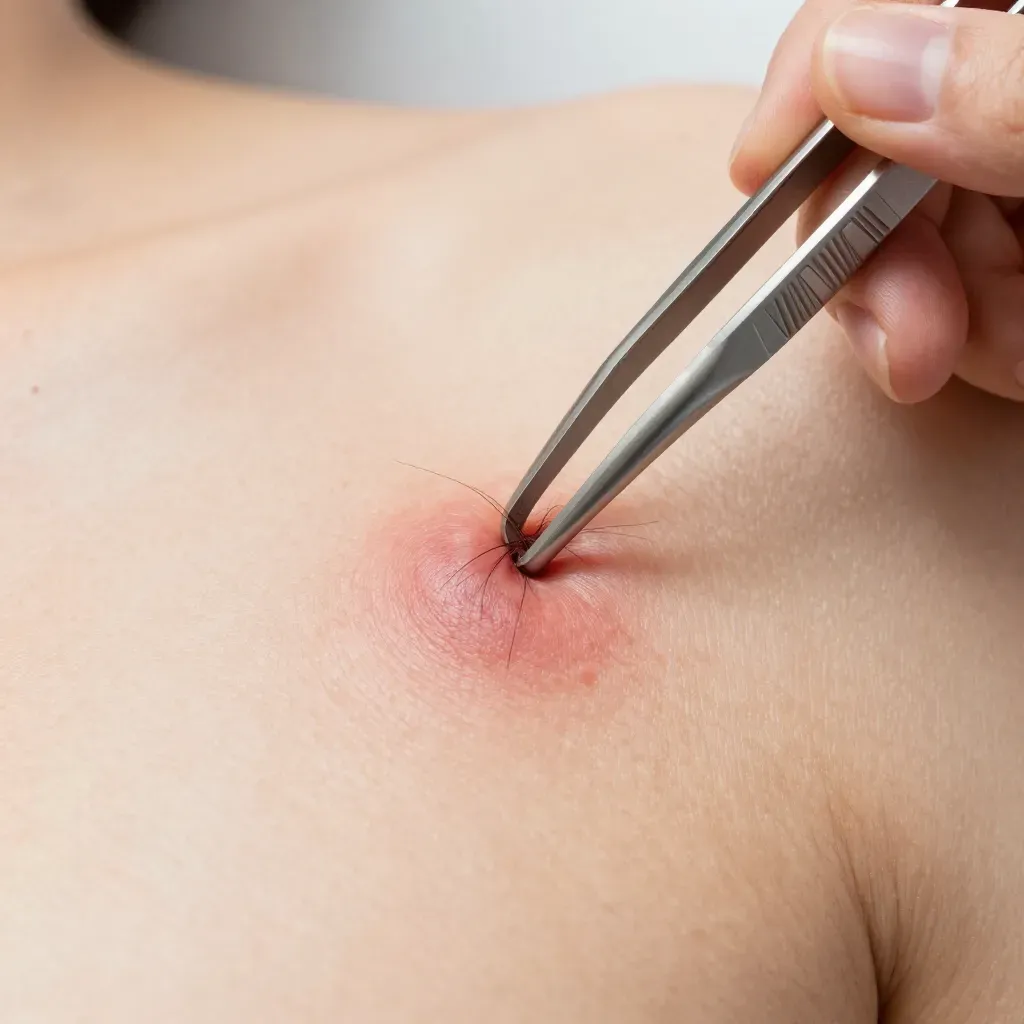
- Sterile extraction: If a hair loop is visible at the surface, disinfect the area with rubbing alcohol and gently lift the loop using sterile tweezers until one end releases from the skin.
- Adapalene gel: This over-the-counter retinoid helps exfoliate the skin layer by layer, gradually bringing the trapped hair to the surface over several weeks.
Professional Treatment Options
Severe or deeply embedded massive ingrown hairs require professional intervention to prevent scarring and infection.
Treatment | Description |
|---|---|
Antibiotic medications | Prescription topical or oral antibiotics reduce bacterial infection and inflammation |
Prescription retinoids | Stronger than OTC options, these accelerate skin cell turnover to free trapped hairs |
Steroid injections | Reduces severe inflammation and swelling in large bumps or cysts |
Professional extraction | A dermatologist makes a tiny incision and removes the embedded hair using sterile instruments |
Electrolysis | Permanently destroys hair roots using electrical current; ideal for recurring ingrown hairs |
Laser hair removal | Heat destroys pigmented cells; best for dark hair on any skin type with lasting results |
How can you prevent ingrown hairs from recurring?
Proper Shaving Technique
The way you shave is the most critical prevention factor. Follow these steps every time.
- Always wet skin and hair with warm water for 2-3 minutes before shaving.
- Apply a lubricating shave gel or cream; never shave dry.
- Use a sharp, clean single-blade razor. Dull blades tug hair and cause uneven cuts.
- Shave in the direction of hair growth (with the grain). Do not shave against it.
- Rinse the blade after every stroke. Do not press hard or stretch skin taut.
- Replace razor blades frequently, typically after 5-7 shaves.
Exfoliate and Moisturize Regularly
Dead skin cells trap hairs. Consistent exfoliation clears the path for hairs to emerge.
- Use a chemical exfoliant containing salicylic acid or glycolic acid 2-3 times per week. These dissolve dead skin without abrasive scrubbing.
- For physical exfoliation, use a soft washcloth or gentle scrub in circular motions. Avoid harsh scrubbing, which irritates.
- Moisturize daily with a non-comedogenic lotion. Hydrated skin is more elastic and less likely to trap hairs.
Clothing and Friction Management
External pressure and rubbing force hairs back into the skin.
- Wear loose-fitting clothing, especially in areas prone to ingrowns like the bikini line and underarms.
- Choose breathable, natural fabrics like cotton over synthetics that trap sweat and friction.
- After exercise, change out of tight workout clothes immediately.
Long-Term Hair Removal Solutions
For chronic, recurring ingrown hairs, consider permanent reduction methods.
Method | How It Prevents Ingrowns | Considerations |
|---|---|---|
Laser hair removal | Destroys hair follicles, preventing regrowth entirely | Multiple sessions needed; works best on dark hair, light skin |
Electrolysis | Destroys individual follicles with electrical current | Time-intensive for large areas; permanent results |
Depilatory creams | Dissolves hair at the skin's surface; no sharp cut | Can cause chemical irritation; patch test first |
Electric trimmer | Holds hair slightly longer than a razor, reducing sharp tips | Does not provide a close shave; good for maintenance |