
Table of Contents
Ingrown hairs happen when hair grows sideways into skin causing red bumps and inflammation from clogged follicles. Common causes include shaving against the grain waxing curly hair and tight clothing. Identify them by visible trapped hair pus-filled blisters or itching especially in areas like the bikini line and underarms. Treat mild cases with warm compresses gentle exfoliation and natural ingredients like tea tree oil or aloe vera. Prevent by shaving with the grain exfoliating regularly staying moisturized and wearing loose clothes. See a doctor for infected persistent or cystic ingrowns with options like antibiotics or laser hair removal for long-term prevention.
Question | Answer |
|---|---|
What causes ingrown hairs? | Ingrown hairs result from hair curling back into skin due to shaving waxing dead skin clogging follicles or naturally curly hair types. |
How can I identify an ingrown hair? | Look for small red bumps pus-filled centers dark spots itching or a dark line visible under the skin surface. |
What natural methods remove ingrown hairs? | Apply warm compresses exfoliate with sugar scrubs use tea tree oil or aloe vera and gently extract surface hairs with sterilized tweezers. |
How do I prevent ingrown hairs daily? | Shave in the direction of growth exfoliate 2-3 times weekly keep skin moisturized wear loose cotton clothing and avoid tight elastic after hair removal. |
When should I seek professional help? | Consult a doctor for severe pain spreading infection fever bumps lasting over a week or scarring as these may need medical extraction or antibiotics. |
What causes ingrown hairs and how to identify them.
Hair curls back or grows sideways into skin instead of rising up. Dead skin cells clog hair follicles. Trapped hair causes inflammation and bumps.
Common causes
- Shaving too close or against grain
- Waxing pulls hair from root creates irregular regrowth
- Dead skin blocks follicle openings
- Tight clothing creates friction traps hair
- Curly or coarse hair types more prone to curling inward
- Dry skin makes it hard for hair to break through surface
How to spot ingrown hairs
Symptom | What you see |
|---|---|
Red bumps | Small raised spots often in clusters |
Pus-filled blisters | White or yellow centers indicate mild infection |
Dark spots | Hyperpigmentation from healed ingrowns |
Embedded hair visible | Dark line trapped under skin surface |
Itching and tenderness | Discomfort around affected follicle |
High-risk areas
Bikini line face neck legs and underarms face highest risk. These zones experience frequent hair removal and friction from clothing.
When natural removal works
Mild ingrowns respond well to home remedies. Deep or infected hairs need professional treatment. Persistent cases across large areas may require laser hair removal to stop regrowth entirely.
Step-by-step natural removal techniques for ingrown hairs.
Warm compress method
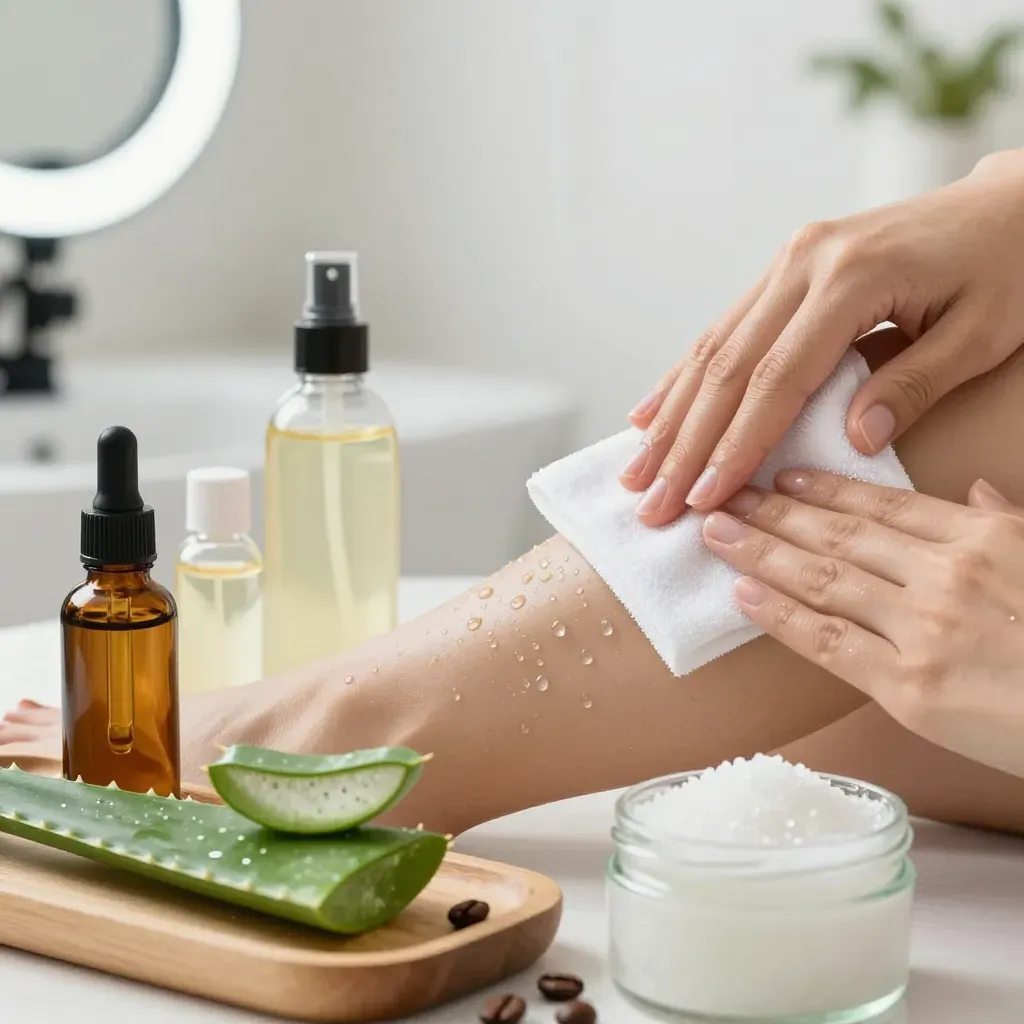
Soak clean cloth in warm water. Apply to ingrown area for 10-15 minutes. This softens skin and opens pores. Repeat 3-4 times daily. The heat brings hair closer to surface.
Exfoliation technique
- Mix sugar with honey or olive oil for natural scrub
- Gently massage in circular motions for 2-3 minutes
- Rinse with warm water
- Do this 2-3 times per week
- Avoid over-exfoliating which irritates skin
Tweezer extraction
Only attempt on visible hairs near surface. Sterilize tweezers with rubbing alcohol. Lift hair tip gently without digging into skin. Pull in direction of hair growth.
Natural soothing treatments
Ingredient | Application | Benefits |
|---|---|---|
Tea tree oil | Mix 1 drop with carrier oil apply spot treatment | Antibacterial reduces infection risk |
Aloe vera gel | Apply directly from plant or pure gel | Soothes inflammation calms skin |
Witch hazel | Apply with cotton pad after cleansing | Tightens pores reduces redness |
Coconut oil | Massage into affected areas | Moisturizes prevents dry skin blockage |
Important safety notes
Let skin heal naturally. Avoid shaving or waxing the area until bumps clear. Cover with loose clothing to reduce friction during recovery.
Best natural ingredients and products for treatment.
Top natural ingredients
Certain natural substances treat ingrown hairs effectively. They reduce inflammation fight infection and soften skin to free trapped hairs.
- Tea tree oil - Antibacterial kills bacteria in infected follicles
- Witch hazel - Astringent shrinks pores reduces swelling
- Aloe vera - Anti-inflammatory soothes irritation promotes healing
- Coconut oil - Moisturizes prevents dead skin buildup
- Apple cider vinegar - Exfoliates balances skin pH
- Honey - Natural antibacterial speeds up healing
- Sugar - Physical exfoliant removes dead skin cells
DIY treatment recipes
Recipe | Ingredients | How to use |
|---|---|---|
Sugar scrub | 1 cup sugar 1/2 cup coconut oil | Mix apply massage rinse |
ACV toner | 1 part ACV 3 parts water | Apply with cotton pad leave on |
Aloe treatment | Fresh aloe gel directly from plant | Apply wait 20 minutes rinse |
Tea tree spot treatment | 2 drops tea tree oil 1 tablespoon carrier oil | Dab on individual bumps |
Commercial natural products
Many ready-made products contain these ingredients. Look for those labeled hypoallergenic and fragrance-free.
What to avoid
- Harsh chemical peels on active ingrowns
- Products with synthetic fragrances
- Alcohol-based astringents that dry skin
- Scrubs with large rough particles
Daily habits to prevent ingrown hairs naturally.
Shave correctly to minimize skin trauma
Use a sharp single-blade razor. Shave in direction of hair growth. Apply warm water first to soften hair. Avoid stretching skin taut. Rinse razor after each stroke.
Do | Don't |
|---|---|
Shave with grain | Shave against grain |
Use moisturizing shave gel | Use dull razors |
Rinse blade frequently | Press razor hard into skin |
Replace razor every 5-7 shaves | Share razors |
Exfoliate gently but consistently
- Use natural sugar or coffee scrubs 2-3 times weekly
- Apply in circular motions for 60 seconds
- Focus on prone areas bikini line underarms
- Follow with cool rinse to close pores
- Never exfoliate broken or irritated skin
Hydrate skin every day
Dry skin creates barrier blocking hair emergence. Apply natural oils like jojoba or coconut after showering while skin damp. Drink plenty water. Use fragrance-free moisturizers daily.
Choose clothing that reduces friction
Tight elastic bands trap hairs. Synthetic fabrics cause sweat buildup. Wear loose cotton underwear. Avoid skinny jeans for long periods. Change out of workout clothes immediately after exercise.
Post-hair removal care matters
Let skin breathe. Skip makeup or lotions on freshly treated areas for 12 hours. Use clean cotton sheets to reduce nighttime friction.
When to seek professional help for severe ingrown hairs.
Warning signs that need a doctor
Some ingrown hairs become too deep or infected for natural remedies to fix. Recognize these red flags early.
- Large painful bumps spreading across skin
- Pus that smells bad or looks dark yellow
- Fever or warmth radiating from the area
- Bumps that dont improve after 7-10 days
- Scarring or dark spots from repeated ingrowns
- Cyst formation under the skin
Professional treatment options
Treatment | What it does | Best for |
|---|---|---|
Dermatologist extraction | Sterile removal of deep trapped hair | Single deep ingrown |
Prescription antibiotics | Clears bacterial infection | |
Retinoid creams | Speeds cell turnover unclogs follicles | Chronic recurring ingrowns |
Chemical peels | Removes dead skin layer | Large area treatment |
Laser hair removal | Destroys follicle stops regrowth | Permanent prevention |
Why laser is the long-term fix
Natural methods treat symptoms. Laser targets the root cause. Light energy destroys hair follicles so hair cant grow back or curl inward. Most people need 6-8 sessions. Results last months to years depending on skin and hair type.
Specific problem areas
Bikini line ingrowns are notoriously stubborn due to coarse hair and friction. Underarm cysts from ingrowns often need medical drainage. Facial ingrowns risk visible scarring without proper treatment.
Dont wait until infection spreads. Early professional care saves pain money and permanent skin damage.