
Table of Contents
Old ingrown hairs trap deep under skin from blocked follicles. The body builds scar tissue or cysts around trapped hair. Soften skin with warm compresses before extraction. Use sterile tools to gently lift the hair out. See a doctor for infected or deep cysts. Laser hair removal destroys follicles to stop ingrowns permanently.
Question | Answer |
|---|---|
How do you remove a deep ingrown hair | Soften skin with warm water then use sterile tweezers to gently pull the hair free |
When should a doctor check an ingrown hair | Visit a doctor for severe pain large hard bumps pus or spreading red streaks |
Why do old ingrown hairs form hard bumps | The immune system builds tough scar tissue and walls off the trapped hair creating a firm nodule |
Will laser treatment prevent ingrown hairs | Laser treatment destroys hair follicles completely so hair cannot grow back inward |
Why Old Ingrown Hairs Get Stuck Deep Under Skin
The Hair Growth Cycle Goes Wrong
Old ingrown hairs happen when hair curls back into the skin instead of growing out. Dead skin cells block the follicle opening. Hair keeps growing under the surface with nowhere to go.
New ingrown hairs sit near the top. Old ones push deeper over time. The body sees the hair as a foreign object. It builds scar tissue around it. This traps the hair even more.
What Makes Ingrown Hairs Worse
- Shaving too close cuts hair below the skin surface
- Tight clothing rubs and traps hairs against skin
- Curly or coarse hair types curl back into follicles easier
- Dead skin buildup blocks hair from breaking through
- Picking or squeezing causes more inflammation and scarring
How Deep Can They Go
Time determines depth. A fresh ingrown hair sits 1-2mm under skin. An old ingrown hair from months or years ago can embed much deeper.
Age of Ingrown | Typical Depth | Removal Difficulty |
|---|---|---|
Days old | Near surface | Easy |
Weeks old | 1-3mm deep | Moderate |
Months old | 3-5mm deep | Hard |
Years old | 5mm+ or cyst | Needs professional help |
The Body Walls Off the Hair
Your immune system fights the trapped hair. White blood cells rush to the area. This creates pus and inflammation. Over time the body forms a cyst or nodule around the hair. This epidermoid cyst walls off the hair making removal harder.
Scar tissue builds around old ingrown hairs. This fibrous tissue feels firm unlike fresh ingrown hairs that feel soft. The scar tissue makes it impossible for the hair to work itself out naturally.
Blood supply to the area changes too. Old ingrown spots often look darker or lighter than surrounding skin. This hyperpigmentation comes from chronic inflammation damaging melanin production.
Soften the Area Before Attempting Old Ingrown Hair Removal
Why Softening Matters
Old ingrown hairs sit trapped under hardened skin and scar tissue. Forcing extraction without prep causes pain and skin damage. Softening opens pores and loosens the follicle. The hair has a better chance of releasing cleanly.
Warm Compress Method
Soak a clean washcloth in hot water. Wring it out. Press it against the ingrown area for 10-15 minutes. Reheat when it cools. Do this for 30 minutes total before attempting removal.
The heat softens skin and reduces inflammation. Blood flow increases to the area. This helps push the hair toward the surface.
Exfoliation Opens the Way
After warming, gently exfoliate the skin. Use a soft washcloth or mild chemical exfoliant. Salicylic acid works well. It dissolves dead skin cells blocking the follicle.
- Apply warm compress for 10-15 minutes
- Gently rub with soft cloth in circular motions
- Rinse with cool water
- Pat dry with clean towel
Products That Help
Product | How to Use |
|---|---|
Glycolic acid serum | Apply nightly to dissolve dead skin |
Tweezers | Use only after skin is warm and soft |
Sterile needle | Lift skin covering hair gently |
Tea tree oil | Reduce bacteria before extraction |
Time the Prep Right
Showering works perfectly. The steam and water naturally soften skin. Attempt extraction immediately after showering while skin is still warm and pliable.
Skip this prep if you have an infected cyst. Redness, swelling, and pus mean leave it alone. See a dermatologist for professional ingrown hair removal instead.
Safe Extraction Steps for Deep Embedded Ingrown Hairs
Gather Your Tools
You need sterile equipment for safe old ingrown hair removal.
Dirty tools cause infections and make the problem worse.
- Rubbing alcohol or antiseptic wipe
- Sterile needle or lancet
- Pointed tweezers
- Clean gauze or cotton pad
Gather everything before you start.
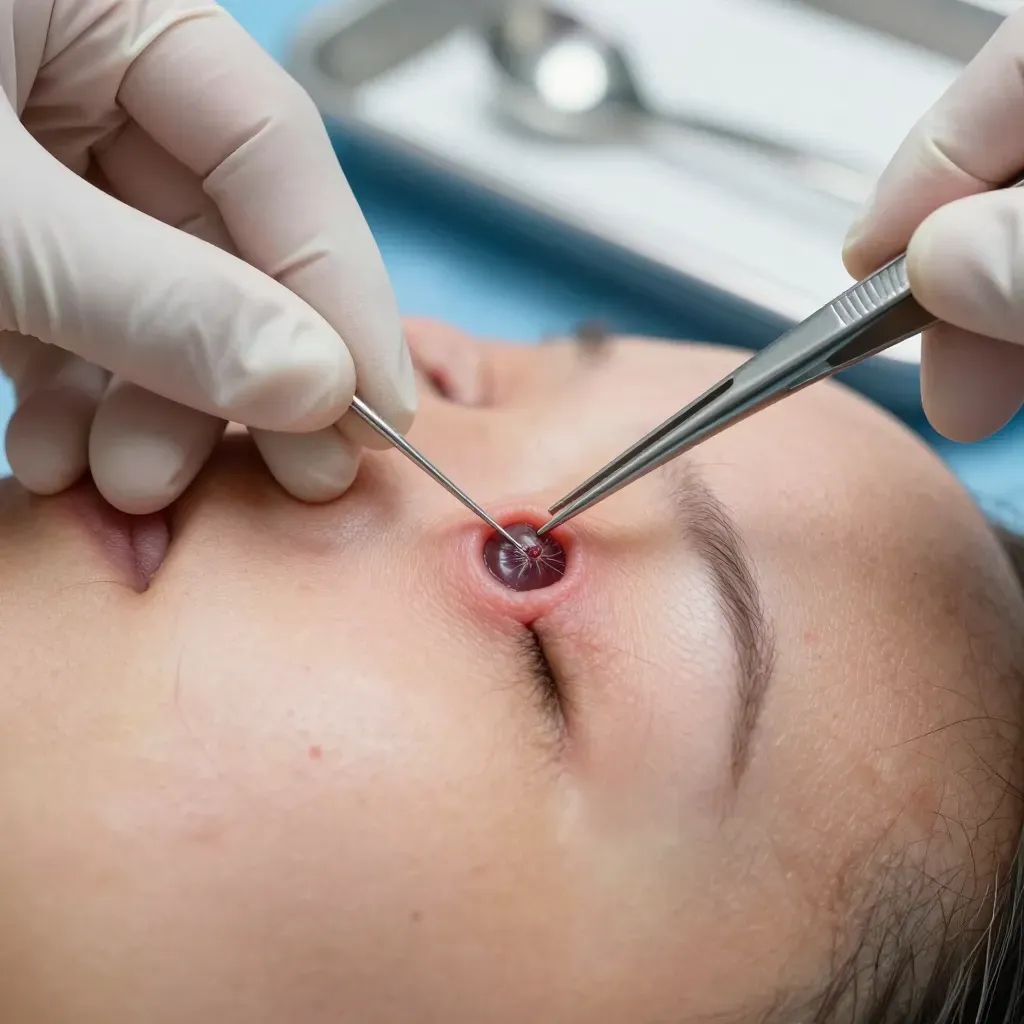
The Extraction Process
Follow these steps exactly.
Rushing causes skin damage and scarring.
- Wash hands thoroughly with soap and warm water
- Wipe the affected area and your tools with rubbing alcohol
- Locate the hair loop or dark spot under the skin
- Slide the sterile needle just under the skin surface to hook the hair
- Gently lift the needle upward to break the skin flap
- Grab the exposed hair with pointed tweezers
- Pull the hair out slowly in the direction of growth
Do vs Do Not
Do | Do Not |
|---|---|
Pull in the direction of hair growth | Yank the hair out sideways |
Use sharp sterile tools | Use dull or dirty tweezers |
Stop if you feel resistance | Dig deep into surrounding tissue |
Post-Extraction Care
Clean the open pore immediately with antiseptic.
Apply an antibacterial ointment to prevent infection.
Keep the area clean and dry for 24 hours.
Avoid tight clothing over the area while it heals.
Do not shave over the extracted spot until it fully heals.
Consider using the best ingrown hair removal product to soothe the skin and prevent future bumps.
When to See a Doctor for an Old Ingrown Hair Cyst
Warning Signs That Need a Professional
See a doctor immediately if you notice these symptoms around an old ingrown hair.
- Increasing redness, swelling, or warmth
- Pus or foul odor coming from the spot
- Severe throbbing pain
- The bump is large, hard, and growing
- Fever or red streaks spreading from the area
- The cyst won't drain or heal on its own
Why Home Extraction Fails for Cysts
A true cyst has a thick wall. Squeezing or poking it pushes bacteria deeper. This causes a serious infection. The hair is completely enclosed. You cannot grab it with tweezers. Digging blindly creates a large wound and permanent scar.
What a Doctor Will Do
A dermatologist or licensed esthetician uses sterile tools in a clean environment.
Professional Step | Purpose |
|---|---|
Numbing cream or injection | Prevents pain during the procedure |
Sterile incision | Opens the cyst wall precisely |
Complete sac removal | Removes the entire cyst wall to prevent regrowth |
Antibiotic prescription | Treats or prevents infection if needed |
Who to See and Where to Go
For a simple infected ingrown hair, see a dermatologist. For a large or recurrent cyst, a dermatologist is essential. Some licensed medical estheticians under doctor supervision can also perform extractions. For immediate care, an urgent care clinic can drain an abscess but may not remove the cyst wall. Search for an ingrown hair removal clinic with experienced professionals.
Do not wait. An infected cyst can spread. It can lead to cellulitis or sepsis. Early professional treatment prevents complications and scarring.
Stop Ingrown Hairs From Coming Back With Laser Treatment
How Laser Targets Hair Follicles
Laser hair removal uses selective photothermolysis. The laser emits a specific wavelength of light absorbed by melanin in the hair follicle. This light energy converts to heat, damaging the follicle and inhibiting future growth. Over multiple sessions, hair becomes finer and sparser until it stops growing entirely.
Why This Prevents Ingrown Hairs
Ingrown hairs occur when hair curls back into the skin. Dead skin cells block the follicle, trapping the hair. By destroying the follicle, laser removal eliminates the source of ingrown hairs. No hair means no chance for it to grow inward. This is especially effective for curly or coarse hair that commonly causes ingrowns.
Laser Types for Ingrown-Prone Skin
Laser Type | Best For | Skin Tone Range | Notes |
|---|---|---|---|
Diode | Light to medium skin, dark hair | Fitzpatrick I-IV | Most common for body hair removal. Effective on coarse hair. |
Nd:YAG | Dark skin tones | Fitzpatrick V-VI | Longer wavelength penetrates deeper, less melanin absorption. Safe for darker skin. |
IPL | Light skin, dark hair | Fitzpatrick I-III | Broad-spectrum light. Less precise but more affordable. At-home devices use IPL. |
For those with darker skin prone to ingrowns, Nd:YAG lasers are safest. At-home IPL devices like those from top brands for dark skin can help maintain results between professional sessions.
Expected Results and Sessions Needed
Complete removal requires 6-8 sessions spaced 4-6 weeks apart. Hair grows in cycles; laser only affects active growth phase. Each session reduces hair density by 10-30%. After initial series, annual touch-ups maintain smooth skin. Cost per session varies by area; professional treatments average $150-$400 per session.
Important Aftercare Steps
Post-laser care prevents irritation and ingrowns:
- Apply sunscreen daily. Treated skin is sun-sensitive.
- Exfoliate gently 2-3 times weekly with chemical exfoliants like salicylic acid.
- Avoid heat, sweating, and tight clothing for 24-48 hours.
- Moisturize with non-comedogenic products.
- Do not pick or scrub the area.
For detailed aftercare guidelines, see this aftercare guide.