
Table of Contents
Ingrown hairs look like pimples but form differently and need different treatment. Pimple poppers fail on ingrowns because they press downward on hair trapped parallel to the skin causing tearing infection and scarring. Safe home removal requires warm compresses sterile tweezers and gentle extraction in the direction of hair growth. For chronic or severe ingrown hairs laser hair removal destroys the follicle permanently preventing future ingrowns especially in shaving areas like the bikini line underarms and neck.
Question | Answer |
|---|---|
Why don't pimple poppers work on ingrown hairs? | Pimple poppers apply downward pressure that cannot grip a hair shaft trapped parallel beneath the skin. |
How do you safely remove an ingrown hair at home? | Apply a warm compress to soften the skin then use sterilized tweezers to pull the hair in its growth direction. |
Can laser hair removal prevent ingrown hairs? | Yes laser destroys the hair follicle so no hair can grow and curl back into the skin. |
What happens if you squeeze an ingrown hair? | Squeezing can push the hair deeper tear the skin introduce bacteria and cause infection or scarring. |
Ingrown hairs resemble pimples but need different treatment.
Ingrown hairs curl back into the skin instead of growing outward. They look like small red bumps or whiteheads. Easy to confuse with pimples.
Pimples form from clogged pores with dead skin cells and oil. Ingrown hairs form when hair gets trapped beneath the skin surface. Different cause means different fix.
How to tell them apart
Feature | Pimple | Ingrown Hair |
|---|---|---|
Shape | Raised bump or whitehead | Bump with visible hair loop |
Location | Face chest back | Shaving areas legs bikini underarms |
Texture | Soft or firm | Firm often tender |
Contents | Pus and oil | Trapped hair shaft |
Pattern | Random | Follows hair growth direction |
Why pimple popper tools fail here
Pimple poppers use a flat loop to press down and extract pus. That works for acne. Ingrown hairs sit deeper under skin. The loop cannot grip a buried hair shaft. Pressing harder damages surrounding tissue.
Using a pimple popper on an ingrown hair often tears the skin. Creates an open wound. Bacteria enter. Infection follows.
- Popping spreads bacteria from hands to broken skin
- Pressure pushes the hair deeper making extraction harder
- Scarring risk increases with repeated squeezing
- Dark spots form from post-inflammatory hyperpigmentation
Ingrown hair removal hurts more when done wrong. The area is already inflamed. Aggressive tools add trauma.
Need the right approach. Proper ingrown hair removal starts with softening the skin and exposing the hair first. Not brute force.
Pimple poppers can cause infection and worsen ingrown hairs.
Metal pimple poppers apply direct downward pressure. This method works for extracting pus from acne. Ingrown hairs sit differently. The trapped hair lies parallel to the skin surface. A pimple popper cannot reach it.
What goes wrong
- Crushing the follicle wall spreads inflammation
- Forcing contents deeper into skin layers
- Introducing Staphylococcus bacteria from skin surface
- Creating micro-tears that bleed and ooze
Infection signs to watch for
Symptom | Normal | Infected |
|---|---|---|
Redness | Fading after 2-3 days | Spreading outward |
Swelling | Slight bump | Larger tender mass |
Pus | Small amount | Thick yellow or green |
Pain | Mild discomfort | Throbbing that worsens |
Fever | None | Body warmth around site |
Infected ingrown hairs develop into painful nodules. Some become ingrown hair cysts that require medical drainage.
Why it keeps coming back
Popping breaks the hair shaft but leaves the follicle intact. The follicle keeps producing hair. Without addressing the root cause, the same hair curls again. Each cycle causes more skin damage.
Multiple ingrown hairs in one area signal chronic inflammation. Professional extraction removes the entire hair without crushing surrounding tissue.
Sterile technique matters. Home pimple poppers are not sterile. Professional tools are autoclave消毒. The difference in infection risk is significant.
Safe home removal uses warm compresses and clean tweezers.
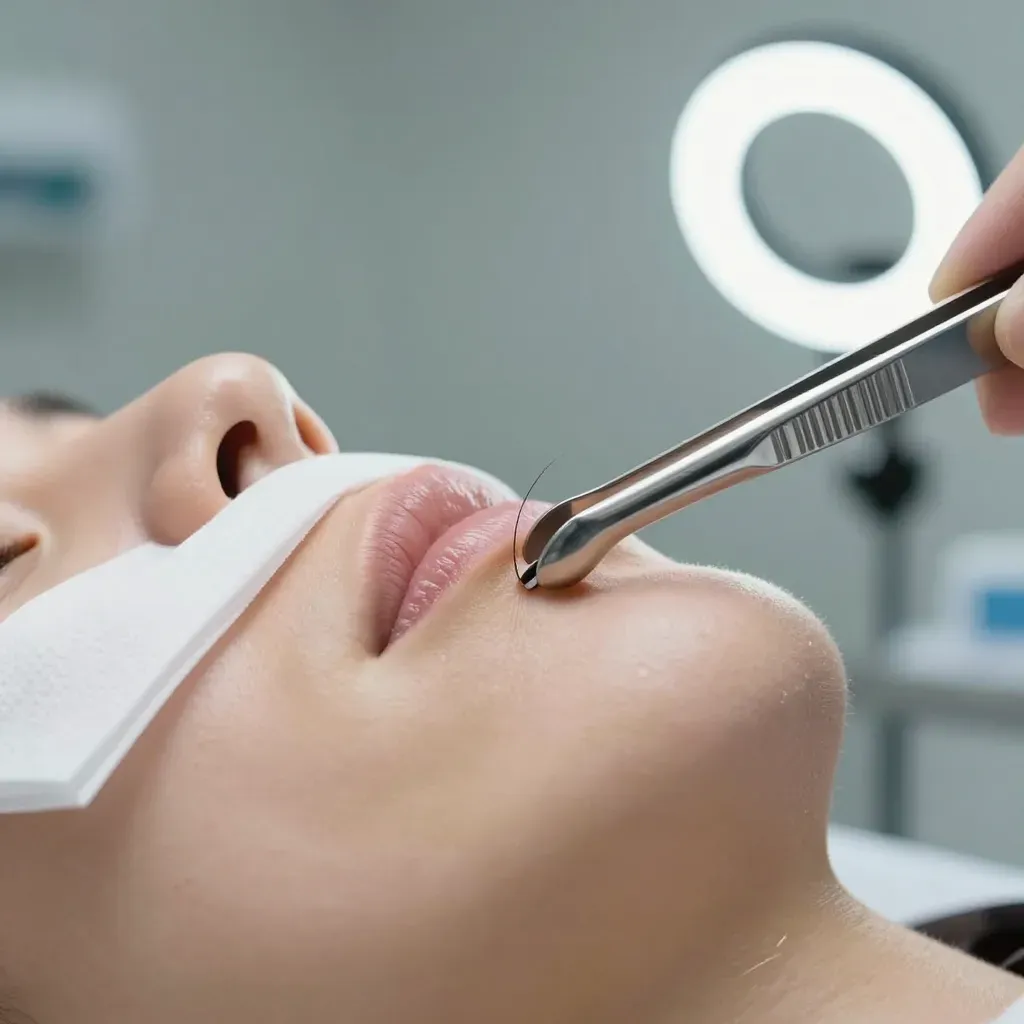
A warm compress softens the skin and hair shaft. This brings the ingrown hair to the surface. It reduces inflammation and pain before extraction.
Prepare the area and tools
Sterilize tweezers before and after each use. Clean tools prevent infection.
Method | Time | Effectiveness |
|---|---|---|
Rubbing alcohol soak | 10 minutes | High |
Boiling water | 5 minutes | High |
Flame sterilization | Seconds | Medium may weaken tips |
Wash hands with soap. Clean the skin with an antiseptic wipe. Apply a warm wet cloth for 3-5 minutes. Repeat until skin softens.
Step-by-step extraction
- Hold skin taut with one hand
- Use pointed tweezers to gently grasp hair base
- Pull in the direction of hair growth
- Do not dig or break the hair
- Stop if skin tears
Curved-tip tweezers work best for curved hairs. Straight tips suit shallow hairs. Never use needle-nose pliers. They crush the follicle.
After extraction care
The tiny hole needs protection. Apply an antibiotic ointment like polysporin. Cover with a bandage if clothing rubs the area. Change the bandage daily.
Do not shave or wax the area for 48 hours. Exfoliate gently after 24 hours with a salicylic acid pad. This prevents dead skin from trapping new hairs.
See a professional for deep embedded hairs. Those require sterile incision and extraction.
Home removal works for fresh, superficial ingrowns. Chronic or cystic ingrowns need medical help. Attempting those at home often leads to cysts and scars.
Laser hair removal offers long-term ingrown hair prevention.
Laser hair removal destroys the hair follicle. No follicle means no hair to become ingrown. This breaks the cycle of repeated ingrown hairs.
How lasers prevent ingrown hairs
Laser light targets melanin in hair. Heat destroys the follicle. Treated follicles stop producing hair permanently after multiple sessions. Without hair growth, ingrown hairs cannot form.
Hair Type | Best Laser | Sessions Needed |
|---|---|---|
Dark coarse | Diode Nd:YAG | 6-8 |
Medium | Alexandrite | 6-8 |
Dark skin | Nd:YAG 1064nm | 8-10 |
Light hair | Limited results | Not recommended |
Best areas for ingrown hair patients
- Bikini and Brazilian
- Underarms
- Neck and beard line
- Legs
- Chest and back
These areas see the most ingrown hairs from shaving. Laser treatment eliminates the root cause.
What to expect
Each session takes 15-60 minutes depending on area size. Most people need 6-10 sessions spaced 4-6 weeks apart. Hair reduces progressively. Some regrowth occurs between sessions but finer and lighter.
Mild redness and swelling last a few hours. Use gentle deodorant after underarm treatment.
Is it worth the cost
Full body laser costs vary by location and clinic. Consider the long-term savings on razors, ingrown hair treatments, and skin products.
Choose a certified clinic with experience treating ingrown hairs. Proper laser settings prevent burns and ensure results.
Consider laser treatment for persistent or severe ingrown hairs.
How Laser Treatment Works
Laser hair removal targets the hair follicle with concentrated light. The pigment in the follicle absorbs the light energy. This damages the follicle and slows or stops future hair growth. For ingrown hairs this means fewer hairs to curl back into the skin.
Key Benefits for Ingrown Hairs
Laser treatment directly addresses the root cause of ingrown hairs: the hair itself. By reducing hair density and thickness it prevents new ingrowns from forming. It also eliminates the need for shaving or waxing which often trigger ingrowns.
Laser Type | Best For | Ingrown Hair Benefit |
|---|---|---|
Diode | Darker skin tones | Effective on coarse hair common in bikini/brazilian areas |
Nd:YAG | Dark skin tones | Deep penetration targets follicles without affecting skin pigment |
Alexandrite | Light to medium skin tones | Fast treatment good for larger areas like legs or back |
Important considerations before choosing laser:
- Skin & Hair Color: Lasers target pigment. Dark hair on light skin is ideal. Newer lasers like Nd:YAG work on darker skin.
- Multiple Sessions: Hair grows in cycles. You need 4-6 sessions spaced weeks apart to catch all follicles.
- Cost: Full brazilian packages range from $200-$400 per session. Total cost varies by clinic and area size.
- Aftercare: Avoid sun exposure and heat for 48 hours. Use gentle exfoliation to prevent new ingrowns between sessions.
- Professional Only: At-home devices are less powerful. They may help maintenance but not for severe cases. See can you do laser hair removal at home.
For chronic ingrown hairs especially in the bikini line laser offers a long-term solution. Consult a certified technician. They can assess your skin type hair color and recommend the right laser. This ensures safety and effectiveness.