
Table of Contents
Professional ingrown hair extraction prevents infection and scarring that DIY methods often cause. Dermatologists and licensed estheticians use sterile tools to remove trapped hairs safely and can prescribe antibiotics or cortisone injections for severe cases. For permanent results laser hair removal destroys the follicle entirely eliminating future ingrown hairs at the source. Choosing the right clinic means verifying licenses reading reviews and ensuring they use FDA-approved medical-grade equipment.
Question | Answer |
|---|---|
Why shouldn't I remove a deep ingrown hair myself? | DIY extraction introduces bacteria and pushes the hair deeper causing infection and scarring. |
How does a professional extract an ingrown hair? | They use a sterile lancet to make a tiny opening then lift the hair out with medical forceps. |
Can laser hair removal stop ingrown hairs permanently? | Yes lasers destroy the follicle so no hair grows back and ingrown hairs cannot form. |
How many laser sessions are needed for results? | Major improvement shows after three sessions with full results typically after four to six. |
What should I look for in an ingrown hair clinic? | Check for licensed staff FDA-approved equipment positive reviews and always book a consultation first. |
Why you need a professional for deep ingrown hairs
Risks of DIY Extraction
Trying to remove a deep ingrown hair yourself often makes things worse. Using non-sterile tools introduces bacteria. This can cause a serious infection. Picking or squeezing can push the hair deeper into the skin. It also damages surrounding tissue. This leads to worse inflammation and permanent scarring. You risk creating a larger, more painful cyst.
Professional Extraction Techniques
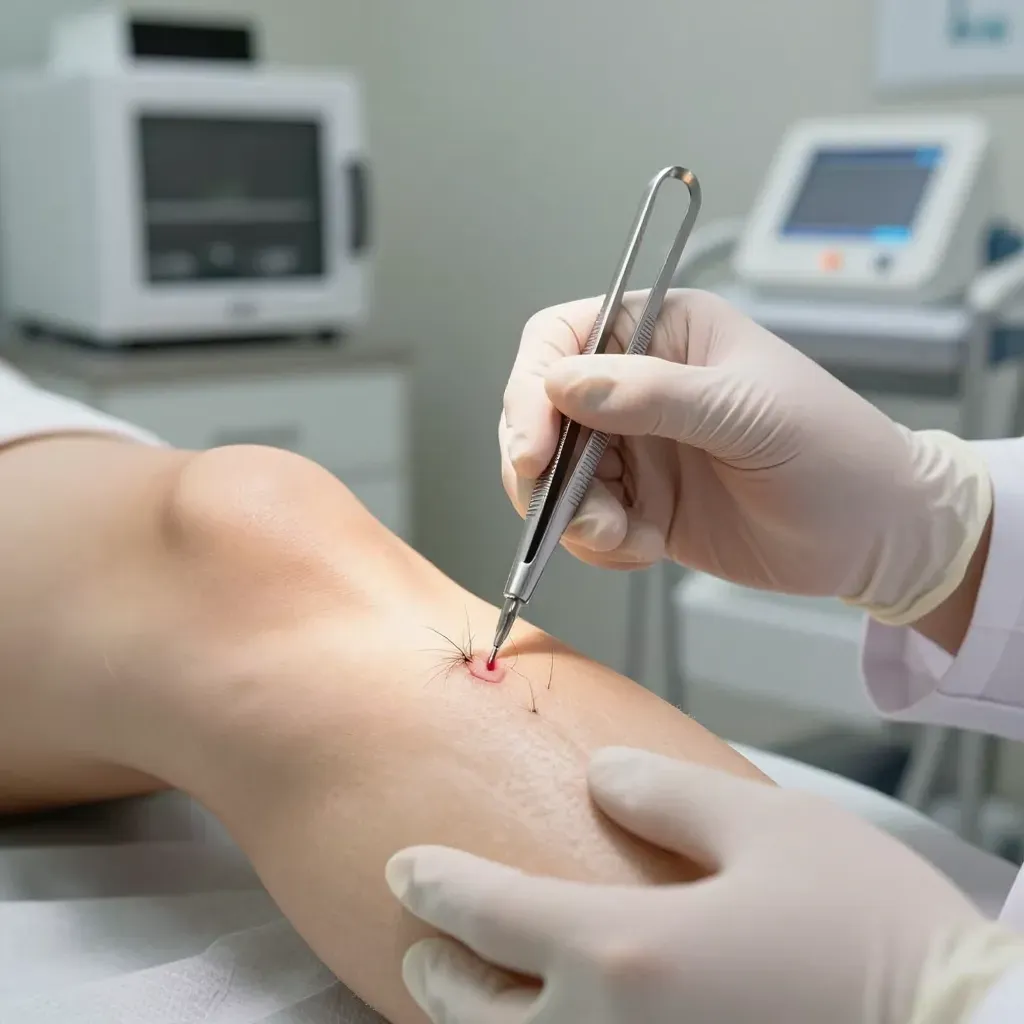
A dermatologist or licensed esthetician uses sterile, pointed tools. They make a tiny, precise incision. This allows the hair to be removed completely without damaging the follicle. They know the correct angle to avoid further injury. Professionals can also treat an existing infection with topical or oral antibiotics. They may use a corticosteroid injection to reduce severe swelling fast.
Signs You Need a Professional
See a professional if you notice any of these:
- Severe pain or throbbing
- Pus or drainage
- A large, firm bump that won't heal
- Recurring ingrown hairs in the same spot
- Excessive redness or swelling spreading from the area
DIY Method | Professional Method |
|---|---|
Razor, tweezers, needle | Sterile, medical-grade tools |
High infection risk | Aseptic technique prevents infection |
Often breaks hair, leaving fragment | Removes entire hair shaft |
Can cause scarring | Minimizes tissue damage |
No infection treatment | Can prescribe antibiotics if needed |
What to expect during a professional extraction session
Consultation and Preparation
Your provider examines the affected area. They assess the depth and severity of the ingrown hairs. The skin must be completely clean. The technician wipes the area with a medical-grade antiseptic. To minimize discomfort, a topical numbing cream is often applied. This takes effect in just a few minutes.
The Extraction Process
The professional uses a sterile lancet or fine needle. They create a tiny, controlled opening directly above the trapped hair. Specialized medical tweezers gently lift the hair loop out from under the skin. The goal is to release the trapped shaft. They usually avoid plucking the hair completely unless the follicle is severely inflamed. Releasing the tension provides immediate relief.
- Skin assessment and hygienic cleaning
- Topical numbing cream application
- Sterile opening of the skin surface
- Gentle extraction with pointed forceps
- Application of antibacterial ointment
Immediate Aftercare
The technician applies a soothing antiseptic or cortisone cream. This reduces redness and prevents bacterial growth. You can resume normal daily activities right away. Mild tenderness is normal but fades quickly. Avoid hot showers and tight clothing for the first 24 hours to prevent irritation.
Procedure Stage | What Happens |
|---|---|
Prep | Skin evaluation, antiseptic cleaning and numbing |
Extraction | Sterile lancet opens skin, forceps release trapped hair |
Finish | Clean up and application of healing ointments |
How laser hair removal stops future ingrown hairs permanently
Eliminating the source of the problem
Shaving and waxing leave sharp hair tips under the skin. These tips curl and pierce the skin wall. Laser treatments destroy the follicle completely. A dead follicle cannot grow new hair. No hair growth means zero ingrown hairs.
Lasers target pigment in the hair shaft. Heat absorbs into the root. This disables the follicle permanently. Thick coarse hair responds fastest. This hair type causes the worst ingrown bumps.
Method | Ingrown Risk |
|---|---|
Shaving | Very high |
Waxing | High |
Depilatory creams | Moderate |
Laser hair removal | Zero |
Treatment timeline
You need multiple sessions for clear skin. Hair grows in different cycles. Treatments catch each cycle. You will see major improvement after three sessions.
- Session 1-3: Active hair reduction
- Session 4-6: Follicle destruction
- Post-treatment: Smooth bump-free skin
Why lasers beat topical treatments
Creams and exfoliants only fix existing bumps. They cannot stop new hair from growing wrong. Lasers stop hair growth entirely. This provides a permanent fix. You stop buying expensive scrubs and acids.
Medical lasers work better than home devices. Clinics use high power machines. These target deep follicles safely. Check out laser hair removal for ingrown hair to learn more.
How to find the best ingrown hair clinic near you
Check qualifications and reviews
Only visit licensed dermatologists or certified laser technicians. Verify credentials on state medical board websites. Untrained staff can cause burns or worsen infections. Read recent patient reviews carefully. Look for feedback specifically about ingrown hair treatment near you.
- Board-certified dermatologist on staff
- Valid state licensing visible in clinic
- Hundreds of positive reviews mentioning extraction services
- Before and after photos of real patients
Technology matters
Top clinics invest in FDA-approved equipment. Older machines cause unnecessary pain and inconsistent results. Ask about their laser types during your consultation. Modern diode and Nd:YAG lasers work safely on all skin tones.
What to Verify | Why It Matters |
|---|---|
Medical-grade lasers | Effective permanent follicle destruction |
Sterile extraction tools | Prevents serious staph infections |
Patch test availability | Confirms safe settings for your skin |
Cortisone injections | Instant relief for severe inflamed cysts |
Book a consultation first
Never commit to a full treatment package upfront. A reputable clinic evaluates your skin first. They determine your hair type and skin tone. They explain the exact process and total cost. Avoid clinics using high-pressure sales tactics.
Compare local pricing
Prices vary drastically by city and clinic reputation. Request itemized quotes from at least three locations. Factor in the total number of sessions required. A slightly higher per-session rate might save money long-term if fewer sessions are needed. Cheapest is rarely best when dealing with skin health.