
Table of Contents
Pubic ingrown hair cysts form when hair curls back into skin and gets trapped by dead cells creating inflammation and fluid buildup. Risk factors include coarse curly hair frequent shaving tight clothing and hormonal changes. Small uninfected cysts can be safely removed at home using sterile tweezers warm compresses and antiseptic but picking or squeezing introduces staph bacteria and worsens infection. Prevention means exfoliating regularly wearing loose cotton underwear shaving with grain and keeping hair slightly longer. Large cysts over 5mm lasting more than 2 weeks or showing red streaks fever foul pus or rapid growth need immediate medical treatment to prevent abscess or sepsis. Laser hair removal destroys follicles permanently eliminating the root cause of recurring cysts.
Question | Answer |
|---|---|
What causes pubic ingrown hair cysts? | Hair curls back into the skin and gets trapped by dead cells causing inflammation and fluid buildup. |
How do you safely remove an ingrown hair cyst at home? | Apply warm compresses to soften skin then use sterile tweezers to pull the hair in its growth direction without digging. |
When should you see a doctor for a pubic cyst? | See a doctor immediately if the cyst is larger than 1cm shows red streaks causes fever or contains foul-smelling pus. |
Can laser hair removal prevent ingrown hair cysts? | Yes laser hair removal destroys the follicle so hair cannot grow back and curl under skin. |
Causes of pubic ingrown hair cysts and risk factors.
Hair curls back and grows into skin instead of rising out. Dead skin cells block the follicle. Trapped hair creates inflammation. Fluid builds. A cyst forms under skin surface.
Pubic area prone due to coarse curly hair and friction from clothing.
Common causes
- Shaving too close with dull blades
- Plucking or waxing against hair growth direction
- Tight underwear or pants creating constant friction
- Dead skin cell buildup clogging follicles
- Excessive sweat trapping debris in pores
Risk factors
Factor | Why it matters |
|---|---|
Curly coarse hair | Naturally bends back into skin easier |
Thick pubic hair | More likely to get trapped under skin |
Frequent shaving | Sharp cut edge can pierce follicle wall |
Dark skin tones | Higher risk of pseudofolliculitis barbae |
Hormonal changes | Increases hair growth and oil production |
Obesity | Extra skin folds trap moisture and hair |
What makes cysts worse
Picking squeezing or scratching the bump introduces bacteria. Staph infection spreads fast in warm moist areas. The cyst grows larger and more painful. Pus fills the sac. Skin turns red and hot to touch.
Some people get recurring cysts in same spots. Scar tissue forms. Each cycle makes removal harder and infection risk higher.
Laser hair removal eliminates the root cause by destroying follicles so hair cant grow back or curl under skin.
Step-by-step safe removal process at home.
Only attempt removal on small uninfected cysts. Stop immediately if you see spreading redness pus or fever.
Preparation
Tool | Purpose |
|---|---|
Sterile fine-tip tweezers | Grab hair without damaging skin |
Antiseptic (alcohol or povidone-iodine) | Disinfect skin and tools |
Warm clean washcloth | Soften skin open pore |
Sterile needle (optional) | Gently tease open surface if needed |
Antibiotic ointment | Prevent infection post-removal |
Removal Steps
- Wash hands and pubic area with gentle soap. Pat dry.
- Soak warm washcloth apply to cyst for 5-10 minutes. Repeat 2-3 times daily until skin softens.
- Sterilize tweezers with rubbing alcohol. Let air dry.
- Using good light gently stretch skin taut.
- If hair tip visible use tweezers to grasp hair as close to skin as possible. Pull in direction of hair growth with steady even pressure.
- If hair not visible use sterile needle to very gently lift a tiny flap of skin over the cyst opening. Do not dig or pierce deeply. Aim only to expose the hair tip.
- Once hair is free pull it out completely. Do not break it.
- If cyst does not release hair easily stop. Forcing it damages tissue.
Aftercare
- Apply small amount antibiotic ointment to spot.
- Keep area clean dry. Wear loose cotton underwear.
- Do not shave or wax the area for 2-3 weeks.
- Apply warm compress daily for 2 days to reduce swelling.
If hair removed successfully the cyst will shrink over days. The skin may stay slightly raised for weeks as it heals.
When to Stop
Symptom | Action |
|---|---|
Severe pain or throbbing | Stop. See doctor. |
Red streaks from area | Stop. Infection spreading. |
Pus or foul odor | Stop. Already infected. |
Fever chills | Stop. Seek emergency care. |
Cyst larger than pea or hard | Stop. Needs professional drainage. |
Professional treatments like laser remove follicles permanently preventing new cysts from forming.
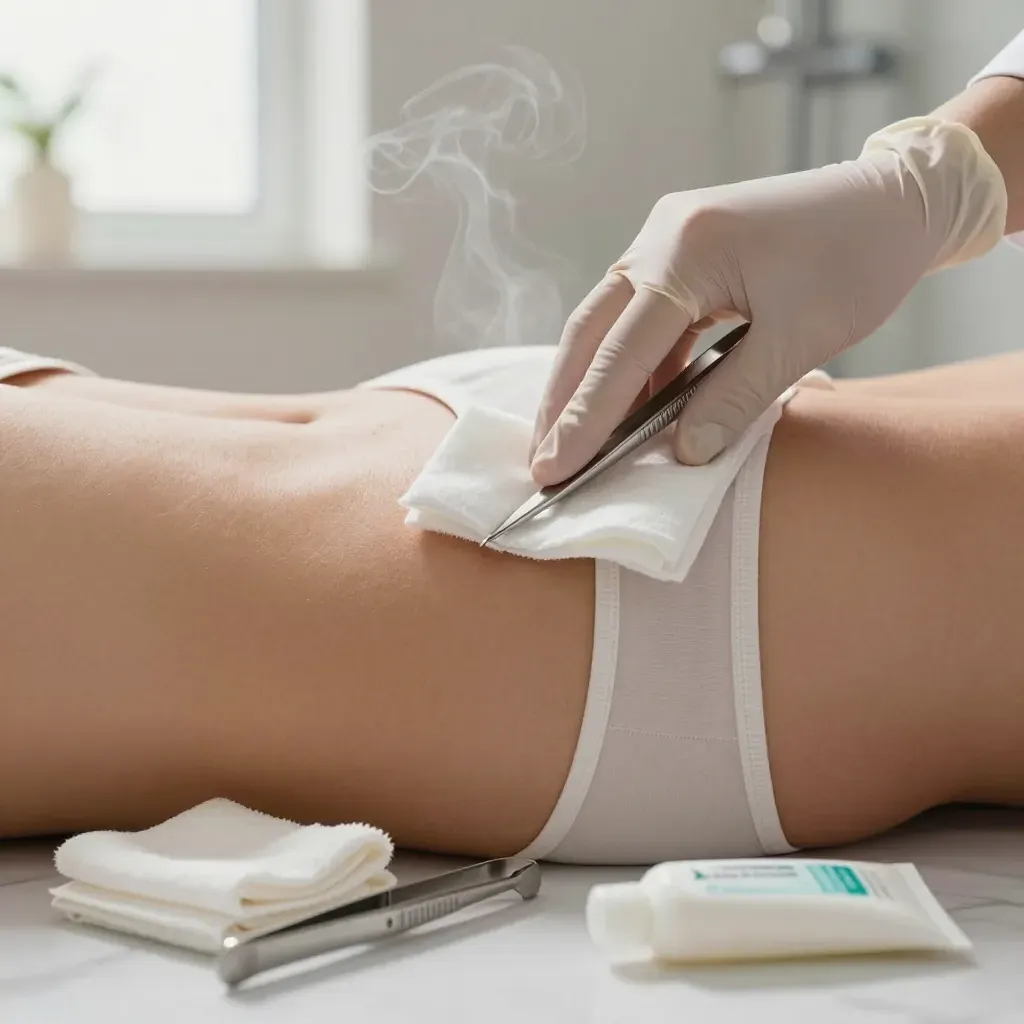
Essential tools and products for effective removal.
Using the right tools prevents infection and tissue damage. Improper tools cause scarring and worsen cysts.
Core Removal Tools
Tool | Specifications | Use |
|---|---|---|
Tweezers | Fine-tip, pointed, stainless steel | Grab hair precisely |
Needle | Sterile, 22-25 gauge | Lift skin edge only |
Washcloths | Clean, soft cotton | Apply warm compresses |
Sterilization & Antisepsis
- Rubbing alcohol (70% isopropyl)
- Povidone-iodine solution
- Antibacterial hand soap
- Disposable gloves (non-latex)
Aftercare Products
- Antibiotic ointment (bacitracin, polysporin)
- Fragrance-free moisturizer (ceramide-based)
- Hydrocolloid bandage (for large openings)
- OTC hydrocortisone cream (1% for redness)
Prevention Products
Use these between removal sessions to stop new cysts.
- Chemical exfoliant: salicylic acid or glycolic acid toner
- Retinol cream (start low concentration 0.25%)
- Non-comedogenic moisturizer with ceramides
- Loose cotton underwear
What to Avoid
Product/Tool | Risk |
|---|---|
Regular scissors or razors | Cuts skin spreads bacteria |
Pimple extractors | Pushes cyst deeper causes rupture |
Fragranced lotions | Clogs pores irritates skin |
Harsh scrubs | Micro-tears increase ingrown risk |
Home lancet kits | Unsanitary improper depth control |
Professional laser clinics use medical-grade tools with sterile protocols for safe extractions.
Emergency Supplies
Keep these nearby during removal.
- Sterile gauze pads
- Medical tape
- Cold pack (wrapped in cloth)
- Hydrogen peroxide (3% for initial rinse only)
Replace washcloths after each use. Discard needles and gloves immediately. Clean tweezers with alcohol then store in sealed case.
For recurring cysts laser hair removal destroys follicle removing need for constant extraction.
Prevention tips to avoid future cysts.
Stopping ingrown hairs before they form cysts works better than treating them after.
Hair Removal Changes
- Stop shaving completely for 2-4 weeks after cyst heals. Let hair grow out first.
- When you resume shaving use a single-blade safety razor with sharp new blade.
- Shave in direction of hair growth only. Never against grain.
- Leave hair 1-2mm longer. Do not shave to the root.
- Switch to laser hair removal. Permanently destroys follicle so hair never curls back.
Daily Skincare Routine
Action | Frequency | Product type |
|---|---|---|
Gentle cleanse | Daily | Fragrance-free body wash |
Exfoliate | 2-3x weekly | Salicylic acid 2% or glycolic acid 5% |
Moisturize | Daily | Non-comedogenic ceramide cream |
Apply retinol | Nightly (after healing) | 0.25-0.5% concentration |
Clothing & Friction Control
- Wear loose cotton underwear. Avoid synthetic tight fabrics.
- Change out of wet swimsuits or workout clothes immediately.
- Avoid tight jeans and pants for 1-2 weeks after cyst heals.
- Use powder-free talc-free powder to reduce moisture.
Lifestyle Factors
- Stay hydrated. Skin cell turnover slows when dehydrated.
- Maintain healthy weight. Less friction in skin folds.
- Manage hormonal fluctuations. Talk to doctor if cycles cause flare-ups.
- Quit smoking. Impairs skin healing and circulation.
Early Intervention
At first sign of ingrown hair bump:
- Apply warm compress for 5 minutes 2-3x daily.
- Use salicylic acid spot treatment to soften skin.
- Stop tight clothing on that area.
- Do not pick or squeeze. Let it work itself out.
If bumps recur frequently laser treatment eliminates the problem at the source by destroying hair follicles.
Signs that require professional medical treatment.
Home removal works for small uninfected cysts. Some situations need medical intervention fast.
Infection Red Flags
Symptom | Urgency level |
|---|---|
Red streaks spreading from cyst | Emergency |
Fever above 100.4F or chills | Emergency |
Throbbing pain not relieved by OTC meds | Same day |
Yellow green pus with foul odor | Same day |
Swollen lymph nodes in groin | Same day |
Hot to touch skin around cyst | Within 24 hours |
Rapidly growing lump | Within 24 hours |
Cyst Characteristics That Need a Doctor
- Hard solid lump that does not move under skin
- Diameter larger than 1cm
- Present for more than 2 weeks without change
- Recurring in exact same spot multiple times
- Deep under skin with no visible hair or opening
- Bleeding that does not stop after 10 minutes pressure
When to See Which Professional
Provider | Best for |
|---|---|
Primary care doctor | Infected cyst needing oral antibiotics |
Dermatologist | Recurring cysts, scarring, atypical growths |
Urgent care | Fast-growing infection, severe pain |
Emergency room | Fever, red streaks, signs of sepsis |
What Doctors Can Do That You Cannot
- Incision and drainage with sterile surgical tools
- Inject corticosteroid to shrink inflamed cyst
- Prescribe oral antibiotics for deep infection
- Excise entire cyst wall to prevent return
- Biopsy tissue if growth looks abnormal
After professional treatment laser hair removal prevents new cysts from forming by targeting follicles in the treated area.
Cost of ignoring warning signs includes abscess formation, scarring, permanent skin damage, and in rare cases bloodstream infection.