
Table of Contents
Pubic ingrown hair cysts form when hair curls back into the skin, causing the body to encase it in a cyst wall. Main causes include shaving against growth, waxing, dead skin cells, tight clothing, and curly hair. Treat small cysts at home with warm compresses, salt soaks, and gentle exfoliation, but never squeeze them. See a doctor for large, painful, or infected cysts, or if home care fails. Prevention focuses on proper shaving techniques, avoiding high-risk hair removal, and considering laser hair removal for a permanent solution.
Question | Answer |
|---|---|
What causes pubic ingrown hair cysts? | Hair curling back into the skin triggers the body to form a protective cyst wall around it. |
How can I treat an ingrown hair cyst at home? | Use warm compresses, salt water soaks, and avoid squeezing or picking at the cyst. |
When should I see a doctor for a pubic cyst? | Seek medical care if the cyst is large, very painful, shows signs of infection, or doesn't improve after a week. |
What's the best way to prevent future cysts? | Shave with the grain, avoid tight clothing, or get laser hair removal for a permanent fix. |
What causes pubic ingrown hair cysts to form
Pubic ingrown hair cysts start when hair curls back or grows sideways into the skin instead of rising up. The body treats this trapped hair like a foreign invader. It builds a cyst wall around it.
Main causes
- Shaving against hair growth direction
- Waxing or plucking that breaks hair below skin surface
- Dead skin cells clogging hair follicles
- Tight underwear or clothing trapping sweat and bacteria
- Curly or coarse pubic hair that bends back into skin
- Friction from physical activity
How cysts develop
An ingrown hair forms first. The area gets inflamed. Bacteria enter the follicle. A pus-filled sac builds under the skin. This becomes a cyst.
Risk factors
Factor | Why it matters |
|---|---|
Curly hair texture | Hair tips curve back into skin easily |
Frequent shaving | Sharp hair edges pierce skin as they regrow |
Dry skin | Dead cells block follicle openings |
Poor hygiene | Bacteria multiply in sweat and oils |
Hormonal changes | Increased oil production clogs pores |
Cyst vs regular ingrown hair
A regular ingrown hair causes a small red bump. A cyst forms a larger round lump under the skin. Cysts feel firm and may contain thick yellow fluid. They often hurt more and last longer.
Squeezing or picking at ingrown hairs makes cysts worse. It pushes bacteria deeper into the tissue. This causes larger infections and possible scarring in the pubic area.
Safe home remedies to treat ingrown hair cysts in the pubic area
Warm compress
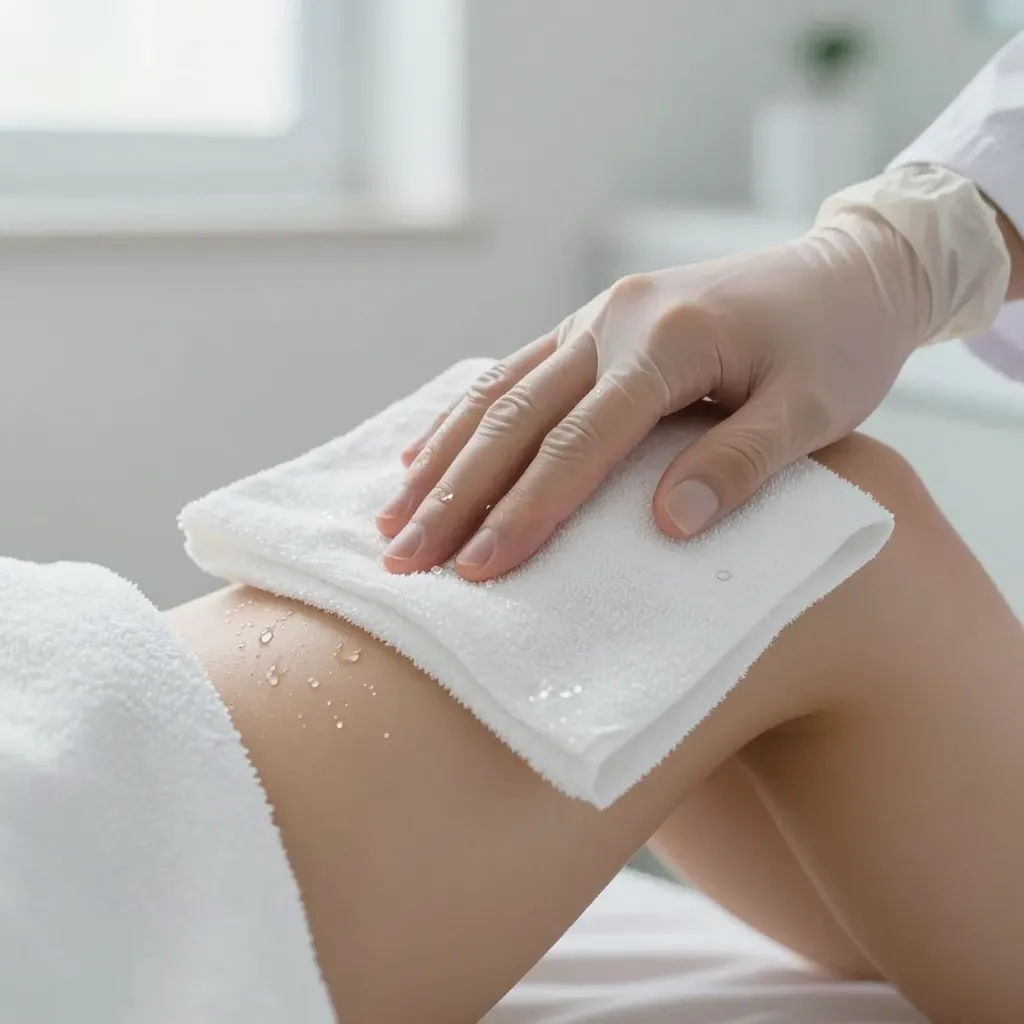
Apply a warm compress to the cyst for 10-15 minutes three times daily. Heat softens the skin and draws the hair closer to the surface. It reduces swelling and helps the cyst drain naturally.
Salt water soaks
Mix one teaspoon of salt in a cup of warm water. Soak a clean cloth and hold it on the cyst for 10 minutes. Salt kills bacteria and reduces inflammation.
Exfoliation
- Use a soft washcloth in gentle circular motions
- Apply a mild salicylic acid solution to the area
- Exfoliate every other day not daily
- Stop if skin becomes red or raw
Topical treatments
Treatment | How to use |
|---|---|
Tea tree oil | Dilute 1 drop in a carrier oil apply twice daily |
Antibacterial ointment | Thin layer after cleaning cover with bandage |
Aloe vera gel | Apply directly to soothe irritation |
Witch hazel | Dab on cyst with cotton ball to reduce swelling |
Some people use lavender oil for ingrown hairs due to its anti-inflammatory properties. Always dilute essential oils before applying to pubic skin.
What to avoid
- Never squeeze or pop the cyst
- Do not use tweezers to dig out the hair
- Skip harsh scrubs on sensitive skin
- Stop shaving the area until the cyst heals
For stubborn or recurring cysts consider switching hair removal methods. Proper ingrown hair removal technique matters. Many people turn to laser hair removal for ingrown hairs as a long-term fix that eliminates the root cause entirely.
How to properly extract an ingrown hair from a cyst
Extracting an ingrown hair from a cyst requires patience and sterile technique. The cyst must be soft and the hair visible before attempting removal. Never force it.
When extraction is safe
- Hair is visible just under the skin surface
- Cyst has softened from warm compresses
- No severe redness or spreading infection
- Pain is mild to moderate
Step-by-step extraction
- Wash hands with antibacterial soap for 60 seconds
- Clean the area with rubbing alcohol
- Apply fresh warm compress for 10 minutes
- Sterilize a needle and tweezers with alcohol
- Gently pierce the skin above the trapped hair
- Use tweezers to pull the hair out in one smooth motion
- Clean area with antiseptic and apply antibiotic ointment
Tools needed
Item | Purpose |
|---|---|
Sterile needle | Create small opening for hair access |
Pointed tweezers | Grip and pull ingrown hair cleanly |
Rubbing alcohol | Sanitize tools and skin |
Antibiotic ointment | Prevent infection after extraction |
Clean gauze | Apply pressure and protect wound |
Aftercare
Keep the area clean and dry for 24 hours. Apply fresh antibiotic ointment twice daily. Avoid tight clothing that rubs the spot. Do not shave for at least one week.
For deeper cysts or hairs that refuse to surface do not persist. Ingrown hair cyst treatment may require professional drainage. Repeated home extraction attempts cause scarring and chronic cyst formation.
When you should see a doctor for pubic cyst removal
Home treatment works for most pubic ingrown hair cysts. Some cases need medical intervention to prevent serious complications.
Warning signs
- Cyst grows larger than 1 cm across
- Severe throbbing pain that disrupts daily activity
- Fever or chills develop
- Red streaks spread from the cyst outward
- Foul-smelling yellow or green discharge
- No improvement after 7 days of home care
- Cyst keeps returning in the same spot
What a doctor can do
Procedure | What it involves |
|---|---|
Incision and drainage | Numbs area cuts cyst open removes pus and trapped hair |
Corticosteroid injection | Reduces severe inflammation and swelling fast |
Antibiotic prescription | Treats bacterial infection that home remedies cannot clear |
Surgical excision | Removes the entire cyst wall to prevent regrowth for chronic cases |
Types of doctors to visit
- Primary care physician for simple drainage
- Dermatologist for recurring or complex cysts
- Urgent care for fast-growing painful infections
- OB-GYN for cysts near vaginal or labial areas
If you keep getting ingrown hair cysts the problem is your hair removal method. Laser hair removal stops ingrown hairs by destroying the follicle so hair cannot grow back and curl under the skin. Discuss this option with a dermatologist or licensed laser technician.
How to prevent future ingrown hair cysts from developing
Prevention starts with changing how you remove pubic hair and caring for the skin daily.
Shaving best practices
- Always shave in the direction of hair growth
- Use a single-blade razor to reduce skin irritation
- Soak the area in warm water for 5 minutes before shaving
- Apply shaving cream or gel never dry shave
- Rinse the blade after each stroke
- Replace blades every 3-5 uses
Hair removal alternatives ranked by cyst risk
td>Depilatory cream
Daily skin care
Exfoliate the pubic area 2-3 times per week using a gentle scrub or chemical exfoliant. Moisturize daily with a non-comedogenic lotion. Wear loose cotton underwear to reduce friction and sweat buildup.
Long-term solution
The most effective way to stop ingrown hair cysts permanently is to stop hair growth. Laser hair removal targets ingrown hairs by destroying the follicle at the root. No follicle means no hair can curl back into the skin. Brazilian laser hair removal sessions clear the entire pubic area in 6-8 treatments for most people.
For those who want to try at-home options first the best bikini hair removal to avoid ingrown hairs minimizes skin contact and cuts. But for chronic cyst sufferers laser remains the only permanent fix.