
Table of Contents
Ingrown hairs happen when hair curls back into the skin causing red bumps pain and pus. Dead skin buildup clogging hair follicles and improper shaving cause most cases. At-home tools like fine-tip tweezers and salicylic acid exfoliants remove shallow ingrowns safely. Sterilize all tools and skin before extraction to prevent staph infections and scarring. Professional treatments like dermatologist extractions and laser hair removal handle severe recurring cases permanently. Prevention through regular exfoliation single-blade shaving and moisturizing stops most ingrowns before they start.
Question | Answer |
|---|---|
What tool removes ingrown hairs best at home? | Fine-tip sterilized tweezers combined with salicylic acid exfoliants work best for visible ingrown hairs. |
Can laser hair removal stop ingrown hairs permanently? | Yes laser treatment destroys the hair follicle so no hair can grow back and become ingrown. |
How do you prevent infection during ingrown hair extraction? | Sterilize tweezers with rubbing alcohol and clean the skin with antibacterial soap before and after removal. |
Does shaving against the grain cause ingrown hairs? | Yes shaving against the grain cuts hair below the skin surface where it curls inward and becomes trapped. |
When should you see a doctor for an ingrown hair? | See a doctor if bumps grow into large cysts redness spreads fast or you develop a fever. |
Ingrown hairs occur when hair grows sideways into the skin causing painful bumps and inflammation.
Why hair grows inward
Dead skin cells build up.
Debris clogs the hair follicle.
Trapped hair cannot push through.
It curls back and pierces the skin.
Shaving cuts hair below the surface.
Tight clothing rubs sensitive areas.
Friction forces hair tips backward.
Coarse curly hair experiences this most.
Hair naturally coils as it grows.
Body reaction and symptoms
Your immune system detects the hair.
It attacks the hair shaft.
This creates painful inflammation.
The area swells and turns red.
Bacteria enter the open follicle.
Infection creates pus.
You feel intense itching.
- You see hard red bumps.
- Blisters fill with white pus.
- Skin darkens over time.
- You spot the trapped hair.
The need for extraction
Inflammation stops when you extract the hair.
You need the right tool to remove ingrown hairs safely.
Fingers add bacteria to the wound.
Squeezing ruptures the follicle wall.
This causes permanent scarring.
Sharp tweezers lift the hair out.
The right tool hooks the hair.
It avoids tearing skin tissue.
Exfoliating tools free trapped hairs early.
Proper tools stop pain fast.
Skin heals quickly after extraction.
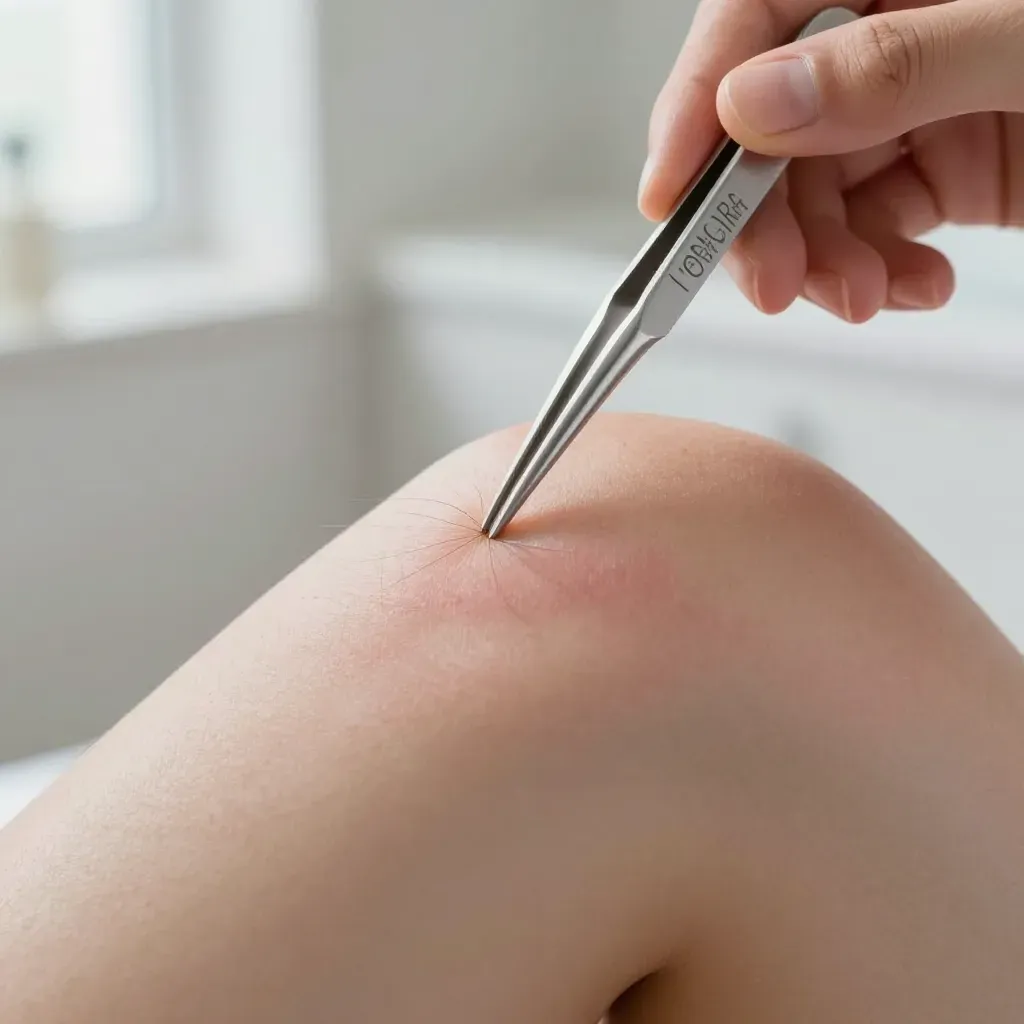
At-home tools like fine-tip tweezers and exfoliating scrubs can effectively remove existing ingrown hairs.
Fine-tip tweezers
Use slanted or pointed tweezers.
Sterilize them with rubbing alcohol first.
Wash your face and hands thoroughly.
Apply a warm compress to soften skin.
This opens the pore and eases extraction.
Position tweezers to grip the hair base.
Gently pull in the hair's growth direction.
Do not dig or tear the skin.
Use a magnifying mirror for precision.
Follow with an antiseptic like tea tree oil.
- Ideal for single, visible ingrown hairs.
- Works best on raised bumps with exposed hair.
- Prevents infection when used correctly.
Exfoliating scrubs and brushes
These tools free trapped hairs before they embed.
Use chemical exfoliants with salicylic acid.
Salicylic acid dissolves dead skin cells.
It unclogs follicles without scrubbing.
Physical brushes with soft bristles buff skin.
They dislodge hairs curling inward.
Exfoliate 2-3 times per week.
Never exfoliate an already inflamed bump.
This worsens irritation and spreads bacteria.
Combine exfoliation with proper shaving technique.
Tool Type | Best For | Key Note |
|---|---|---|
Salicylic acid wash | Prevention, mild cases | Use daily in shower |
Exfoliating glove | Body ingrowns | Use with gentle pressure |
Silicone bristle brush | Sensitive skin | Less abrasive than scrubs |
Combining tools for best results
First exfoliate to free shallow ingrowns.
Then use tweezers only on stubborn hairs.
This two-step process reduces skin trauma.
Always moisturize after treatment.
Hydrated skin heals faster.
See a dermatologist for ingrown hair removal if tools fail.
They can perform sterile extractions.
Replace tweezers when tips become misaligned.
Dull tools slip and damage skin.
Consistent use prevents new ingrowns.
Professional tools such as laser hair removal and dermatologist extractions treat severe or recurring cases.
Dermatologist extractions
Doctors use sterile surgical tools.
They numb the area.
They lance the skin with a sterile needle.
They drain trapped pus.
They lift the hair out completely.
This stops severe pain instantly.
Medical grade professional ingrown hair removal prevents blood infections.
It stops deep tissue scarring.
Doctors prescribe antibiotic cream.
Healing starts immediately.
Laser hair removal technology
Lasers target melanin in hair.
Light beams destroy the root.
The follicle dies completely.
No hair grows back.
No hair means no ingrown hairs.
Clinics use this tool to remove ingrown hairs permanently.
Patients need multiple sessions.
Treatments work best on dark hair.
Laser Type | Skin Tone | Target Area |
|---|---|---|
Nd:YAG | Dark skin | Deep follicles |
Diode | Light to medium | Coarse hair |
Alexandrite | Fair skin | Large areas |
When to seek professional help
Home tools fail sometimes.
Skin gets infected.
You need a doctor.
- Bumps grow into large cysts.
- Redness spreads fast.
- You run a fever.
- Pain stops you from moving.
Stop using at-home tweezers.
Book a clinic visit.
Clinics offer laser hair removal and ingrown hairs treatment plans.
They treat chronic cases fast.
Professional tools provide permanent solutions.
Always sterilize tools and skin before removal to prevent infection and scarring.
Why sterilization matters
Bacteria live on your skin naturally.
Dirty tools transfer germs into open pores.
Ingrown hairs create wounds.
Germs enter through these wounds.
Staph infections cause serious problems.
You may develop boils or abscesses.
Scarring happens when infection reaches deep tissue.
Your skin permanently discolors.
Keloids form on some skin types.
Sterilization stops all of this.
Sanitizing your tools
Clean tweezers with soap and water first.
Wipe them with rubbing alcohol.
Let them air dry completely.
Boil metal tools for 5 minutes.
Use UV sterilizer boxes for electric devices.
Never use someone else's tweezers.
Check tool tips for rust or damage.
Replace bent or dull tweezers immediately.
td>Deep disinfection
Preparing your skin
Wash the affected area with antibacterial soap.
Use warm water to open pores.
Pat skin dry with clean towel.
Apply isopropyl alcohol with cotton pad.
Wait 30 seconds for it to evaporate.
Never apply alcohol on broken or bleeding skin.
Use gentle, fragrance-free products.
Avoid harsh chemicals before extraction.
Post-removal care
Apply antiseptic ointment after extraction.
Cover with sterile bandage for 24 hours.
Watch for increasing redness or swelling.
Seek medical help if pus drains.
Clean the area twice daily until healed.
Prevent ingrown hairs by exfoliating regularly and using proper shaving or hair removal techniques.
Exfoliation routine
Dead skin cells block hair follicles.
Remove them before hair gets trapped.
Exfoliate 3 times per week.
Use chemical exfoliants for sensitive skin.
Salicylic acid penetrates pores deep.
Glycolic acid dissolves surface debris.
Physical scrubs work on tougher body skin.
Use loofahs on legs and arms.
Apply gentle pressure only.
Over-scratching damages the skin barrier.
Stop if skin turns raw or red.
- Morning exfoliation before shaving works best.
- Night exfoliation lets skin recover while you sleep.
- Alternate chemical and physical methods.
Shaving technique matters
Shave in the direction of hair growth.
Never shave against the grain.
Use a single-blade razor.
Multi-blade razors cut hair below skin level.
Short hair below the surface curls inward.
Soften hair with warm water for 3 minutes.
Apply shaving cream or gel liberally.
Never dry shave.
Use light strokes.
Do not press hard.
Rinse the blade after every pass.
Replace blades after 5 uses.
Alternative hair removal methods
Shaving causes most ingrowns.
Switch methods to stop the cycle.
Method | Ingrown Risk | Why |
|---|---|---|
Shaving | High | Cuts hair below surface |
Waxing | Medium | Weak hairs break off |
Depilatory cream | Low | Dissolves hair at skin level |
Laser removal | None long-term | Destroys the follicle |
Depilatory creams dissolve hair without cutting.
They leave no sharp edge to curl back.
Hair removal cream gets rid of ingrown hairs by keeping follicles clear.
Laser treatment eliminates the problem permanently.
No follicle means no ingrown hair possible.
Moisturize daily to keep skin flexible.
Dry skin traps hairs more easily.
Wear loose clothing in areas prone to ingrowns.