
Table of Contents
Ingrown hairs occur when hair curls back into the skin, causing red bumps, pain, and inflammation. Using the wrong tools like fingers or dull tweezers makes the problem worse by spreading bacteria and tearing skin tissue. Proper tools for ingrown hair removal include precision tweezers (slant, pointed, or curved tips), exfoliating brushes, and chemical exfoliants like salicylic and glycolic acid. Safe extraction requires sterilization with alcohol, heat treatment to open pores, gentle exfoliation, and pulling hair in its growth direction. Prevention focuses on regular exfoliation 2-3 times weekly, proper tool hygiene, and avoiding aggressive digging or squeezing. Build a complete tool kit with extraction and exfoliation tools plus antiseptic after-care products for effective home treatment.
Question | Answer |
|---|---|
Why do ingrown hairs happen? | Ingrown hairs occur when hair curls back into the skin instead of growing outward, often due to dead skin blocking follicles or improper shaving techniques. |
What tools are best for removing ingrown hairs? | Precision tweezers with sharp tips, soft bristle brushes, and chemical exfoliants like salicylic acid work best for safe ingrown hair removal. |
How do I prevent infection when extracting ingrown hairs? | Sterilize tools with 70% isopropyl alcohol, wash hands with antibacterial soap, and apply antiseptic after extraction to prevent bacterial infection. |
What mistakes should I avoid when treating ingrown hairs at home? | Avoid digging blindly, squeezing the area, using dull tweezers, and skipping sterilization, as these cause scarring, deep cysts, and worsened infections. |
When should I see a professional for ingrown hairs? | Seek professional help for deep cysts, severe pain, visible pus, or infections that do not respond to proper home care within a few days. |
What are ingrown hairs and why proper tools matter.
Ingrown hairs curl back into skin.
Dead skin traps hair follicles.
Red bumps pain and inflammation follow.
Correct tools for ingrown hair removal fix this fast.
Picking with fingers makes it worse.
Blocked pores trigger razor bumps.
Curly hair types face higher risks.
Shaving tightens skin leaving sharp hair edges.
Hair pierces the follicle wall.
Why wrong tools fail
Random tweezers crush hair.
Fingers add bacteria.
Squeezing tears skin tissue.
- Fingernails spread staph bacteria
- Dull tweezers break hair below skin
- Picking causes dark hyperpigmentation
- Squeezing creates deep cysts
Why proper tools matter
Specialty tools give exact control.
Pointy tips slide under hair loops.
Textured grips stop slipping.
Stainless steel keeps bacteria away.
Extraction requires visibility and reach.
Tools must navigate small surface areas.
Blind extraction ruins healthy tissue.
Precision ends the growth cycle safely.
- Sharp precision tips grab exact hair
- Curved ends protect skin surface
- Sterile materials lower infection risk
- Proper grip prevents accidental gouging
Wrong vs right tool comparison
Action | Wrong Tool Result | Right Tool Result |
|---|---|---|
Grip | Slips tearing skin | Holds hair firm |
Tip shape | Crushes follicle | Lifts hair out |
Hygiene | Spreads bacteria | Easy sterilization |
Healing | Leaves deep scars | Fast clear healing |
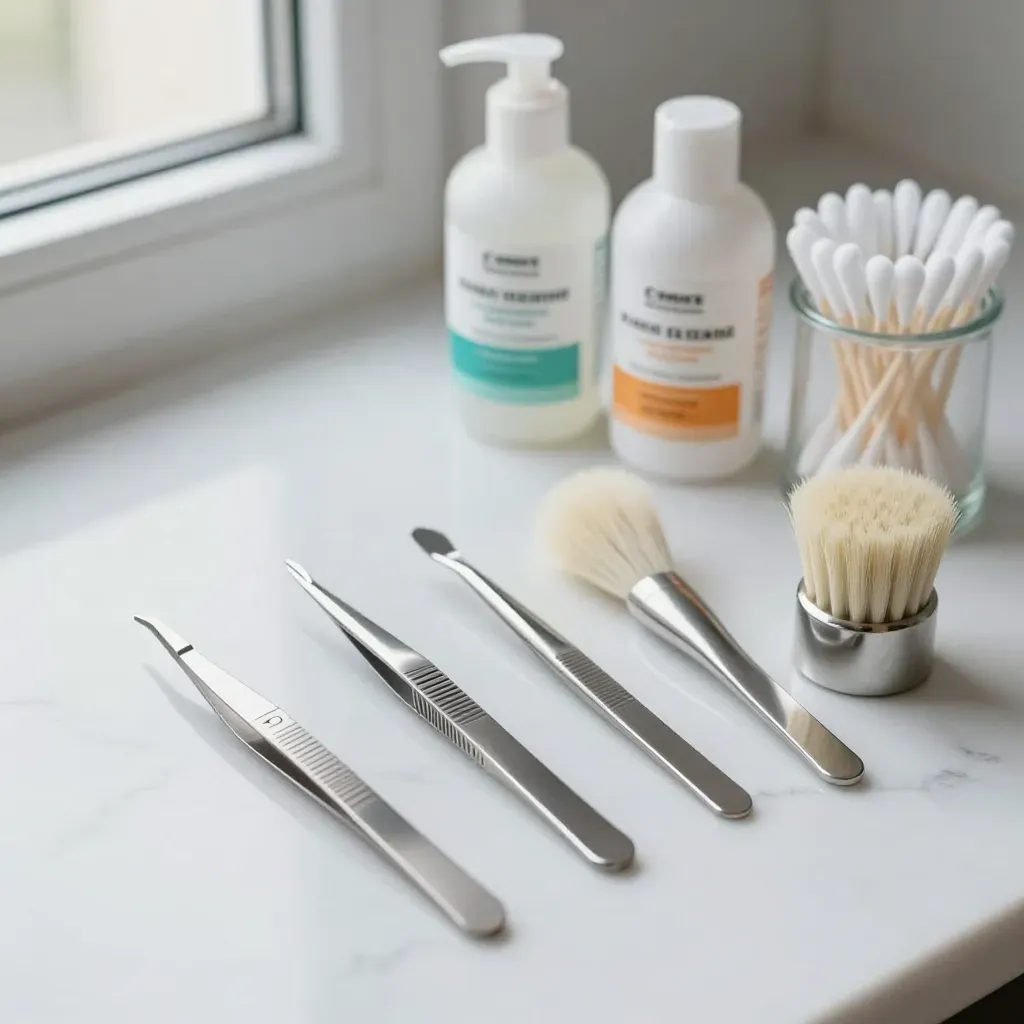
Key tools like tweezers, brushes, and exfoliators for removal.
Precision tweezers for extraction
Slant tip tweezers grip flat hairs.
Pointed tips isolate single ingrown hairs.
Curved tips protect surrounding skin.
Stainless steel resists corrosion.
Fine tips reach deep follicles.
- Slant tweezers: best for general extraction
- Pointed tweezers: ideal for tiny facial hairs
- Curved tweezers: reduce skin puncture risk
- Always clean with alcohol after use
Exfoliating brushes for prevention
Bristle brushes lift dead skin cells.
Soft bristles suit sensitive areas.
Firm bristles work on tough skin.
Dry brushing before showering unclogs pores.
Wet brushing with cleanser enhances exfoliation.
- Natural bristle: gentle daily use
- Synthetic bristle: hygienic, dries fast
- Long handle: reaches back and sides
- Use circular motions, not scrubbing
Chemical and physical exfoliators
Salicylic acid dissolves follicle blockages.
Glycolic acid smooths skin surface.
Physical scrubs with round beads buff skin.
AHA/BHA serums prevent new ingrowns.
Apply after hair removal, not on open wounds.
- Leave-on treatments: 2% salicylic acid
- Rinse-off scrubs: use 2-3 times weekly
- Chemical pads: convenient for bikini line
- Avoid harsh walnut shell scrubs
Tool selection by body area
Area | Best Tool | Why |
|---|---|---|
Bikini | Curved tweezers + salicylic acid | Curves follow skin shape, acid reduces inflammation |
Face | Pointed tweezers + soft brush | Precision for small areas, gentle on delicate skin |
Legs | Slant tweezers + firm brush | Covers larger areas, handles thicker skin |
Underarms | Slant tweezers + chemical exfoliant | Moist area prone to infection, chemical safer than physical |
Hygiene and storage
Disinfect tweezers with rubbing alcohol.
Replace brush heads every 3 months.
Store tools in dry containers.
Never share personal extraction tools.
Wash hands before every use.
Step-by-step safe usage techniques for ingrown hair tools.
Preparation phase
Clean the area with warm water.
Soak a cloth in hot water.
Press cloth against skin for 3 minutes.
Heat opens pores and softens skin.
Sterilize your tool to remove ingrown hairs with rubbing alcohol.
Wash hands with antibacterial soap.
Exfoliation technique
Apply gentle pressure in circles.
Work outward from the ingrown site.
Brush for 30 seconds max.
Rinse with lukewarm water.
Exfoliation releases trapped hair loops.
- Use soft bristle brush on face
- Use firm bristle brush on legs
- Stop if skin turns red
- Never scrub active pimples
Tweezer extraction steps
Identify the hair loop under skin.
Slide pointed tip under the loop.
Lift gently until hair breaks surface.
Grip hair shaft firmly.
Pull in the direction of hair growth.
Never dig for invisible hairs.
Step | Action | Warning |
|---|---|---|
1 | Clean skin | Hot water only |
2 | Sterilize tool | 91% alcohol best |
3 | Exfoliate surface | Light pressure |
4 | Lift hair loop | Don't puncture skin |
5 | Pull straight out | Follow hair direction |
Common mistakes to avoid
Digging causes scarring.
Squeezing pushes hair deeper.
Reusing dirty tools spreads bacteria.
Skipping heat treatment makes skin resist.
Rushing tears skin tissue.
- Never force deep extraction
- Stop if blood appears
- Don't pluck hair from root
- Avoid repeated attempts on same spot
Post-extraction care
Apply antiseptic to the area.
Use witch hazel to reduce redness.
Dab salicylic acid on the pore.
Keep area clean for 24 hours.
Avoid tight clothing over treated spots.
How to prevent infection and skin damage with these tools.
Sterilize tools every time
Boil metal tweezers for 5 minutes before use.
Wipe extraction tools with 70% isopropyl alcohol.
Let tools air dry on a clean paper towel.
Dirty tools introduce dangerous staph bacteria.
Store tools in a sealed dry container.
- Wash hands with antibacterial soap first
- Use fresh cotton pads for alcohol application
- Replace worn out or dull tweezers immediately
- Never share tools with another person
Avoid skin damage during extraction
Never dig blindly into your skin.
Stop immediately if you see blood or clear fluid.
Pull hairs gently in their growth direction.
Aggressive picking causes permanent hyperpigmentation.
Limit extraction attempts to prevent severe bruising.
Action | Damage Risk | Safe Method |
|---|---|---|
Digging | Tissue tearing | Lift visible hair loop only |
Squeezing | Deep scarring | Apply warm compress instead |
Root plucking | Empty folliculitis | Snip hair at skin surface |
Post-removal infection prevention
Wash treated areas with antibacterial soap.
Apply a warm compress to calm red skin.
Dab witch hazel over the open pore.
Keep the treated area totally clean and dry.
Wear loose clothing to minimize sweat and friction.
When to see a professional
Deep cysts require professional ingrown hair removal.
Severe pain needs medical evaluation.
Pus indicates a worsening bacterial infection.
Dermatologists extract deep hairs safely without scarring.
Build a proper ingrown hair removal tool kit for sterile home use.
Top recommended tools for effective ingrown hair treatment.
Best tweezers for extraction
Stainless steel slant tweezers offer the best grip for most ingrown hairs.
Look for fine, sharp points to loop under hair.
Curved tips protect skin from accidental pokes.
High-quality tweezers last years with proper care.
- Tweezerman Slant Tweezer: industry standard, excellent grip
- Anastasia Beverly Hills Pointed Tweezer: ideal for tiny facial hairs
- Revlon Curved Tip Tweezer: safer for sensitive bikini area
- Magnetic tweezers: keep grip secure on metal tools
Exfoliation tool recommendations
Soft bristle brushes for daily facial exfoliation.
Firm bristle brushes for tougher leg and arm skin.
Chemical exfoliants like salicylic acid pads for hard-to-reach areas.
Exfoliating gloves provide full coverage on large areas.
Tool Type | Best For | Key Feature |
|---|---|---|
Soft Bristle Brush | Face, neck | Gentle, daily use |
Firm Bristle Brush | Legs, arms | Removes dead skin buildup |
Salicylic Acid Pads | Bikini, underarms | Chemical exfoliation, no scrubbing |
Exfoliating Gloves | Full body | Quick coverage in shower |
Specialty tools for stubborn ingrowns
Ingrown hair erasers have a looped wire to lift hair.
Dermaplaning tools for superficial hair removal.
Magnifying lamps improve visibility on small areas.
Sterile lancets for extremely deep, stubborn hairs (use with caution).
- Differin Ingrown Hair Relief: combines treatment with extraction aid
- Tweezerman Ingrown Hair Spot Treatment: targets inflammation
- Brow Lash Studio Ingrown Hair Eliminator: loop tool for easy lifting
- Use magnifier only after steam, never on dry skin
Preventive tool kits
Build a kit with multiple tool types for different body areas.
Include both extraction and exfoliation tools.
Add antiseptic and soothing after-care products.
Keep all tools sterile and organized.
A complete ingrown hair removal tool kit stops new ingrowns before they start.