
Table of Contents
This comprehensive guide covers everything about ingrown hairs - from causes to prevention. Ingrown hairs occur when dead skin cells clog follicles, trapping hair that curls back into the skin, creating tender red bumps. People with curly hair, those who shave closely, wear tight clothing, or wax frequently face higher risk. Common problem areas include the beard, bikini line, underarms, and legs. The article provides detailed preparation steps including cleaning, softening skin with warm compresses, sterilizing tools, and gentle exfoliation. It then walks through a safe extraction method using sterilized tweezers, followed by proper aftercare using antibiotic ointment and avoiding heavy products. Key prevention tips include avoiding tight clothing, shaving in the direction of hair growth, and keeping skin moisturized to reduce dead skin buildup.
Question | Answer |
|---|---|
What causes ingrown hairs? | Dead skin cells clog hair follicles, trapping hair that curls back into the skin instead of growing outward. |
Who is most at risk for ingrown hairs? | People with curly or coarse hair, those who shave closely, wear tight clothing, or wax frequently are at highest risk. |
How do you safely remove a deep ingrown hair? | Clean and soften the area, sterilize tweezers, expose the hair tip, then gently pull in the direction of hair growth without yanking. |
What should you apply after removing an ingrown hair? | Apply antibiotic ointment immediately, then use witch hazel or salicylic acid to keep the follicle clear as it heals. |
How can you prevent ingrown hairs? | Avoid tight clothing, shave in the direction of growth with sharp blades, exfoliate regularly, and keep skin moisturized. |
What causes hairs to grow under the skin
Dead skin cells clog the hair follicle opening.
The hair gets trapped and curls back into the skin instead of growing outward.
This creates a raised bump often red and tender.
Common causes
- Tight clothing rubbing against skin
- Shaving too close or with dull blades
- Curly or coarse hair types curl more easily
- Dead skin buildup blocking the follicle
- Waxing or plucking that breaks the hair shaft
- Excessive sweating and friction
High-risk areas
Area | Why |
|---|---|
Beard and neck | Thick coarse hair curls fast |
Bikini line | Tight underwear plus shaving |
Underarms | Friction from clothing and sweat |
Legs | Frequent shaving direction errors |
Scalp | Tight hats or repeated traction |
Curly hair is the biggest risk factor.
The hair shape makes it bend back into the follicle before breaking through the surface.
Dry skin adds to the problem.
Less moisture means more dead skin cells sitting on top of the follicle.
Shaving against the grain cuts the hair below the skin line.
When it regrows it may not find the follicle opening.
Same thing happens with waxing if the hair breaks mid-shaft instead of pulling from the root.
Any method that leaves a sharp edge under the skin raises the chance of an ingrown hair forming.
How to prepare the area before removal
Proper preparation prevents infection and makes extraction easier.
Skipping this step causes more skin damage and deeper ingrowns.
Step 1: Clean the skin
- Wash hands with soap and water.
- Cleanse the area with mild soap and warm water.
- Pat dry with a clean towel.
Step 2: Soften the skin and hair
Method | Time | Best for |
|---|---|---|
Warm compress | 5-10 minutes | Most areas |
Hot shower steam | 3-5 minutes | Large areas like back |
Warm bath soak | 10-15 minutes | Bikini line or legs |
Softening opens the follicle and brings the hair tip closer to the surface.
Step 3: Sterilize your tools
- Use tweezers with a fine pointed tip.
- Wipe tweezers with rubbing alcohol before and after.
- Sterilize a needle or lancet if needed for deep hairs.
Step 4: Exfoliate gently
Use a soft washcloth or gentle chemical exfoliant like salicylic acid.
Remove dead skin cells blocking the follicle opening.
Do this after softening but before extraction.
Step 5: Assess readiness
Look for a visible loop or tip of hair at the skin surface.
The area should feel soft not hard or inflamed.
If the skin is very red, swollen, or has pus stop and wait.
What to avoid before removal
- Do not shave the area right before. This irritates skin.
- Do not use harsh scrubs. They cause micro-tears.
- Do not apply thick ointments. They clog pores.
- Do not pick at the bump. This pushes hair deeper.
Step-by-step method to pull out deep ingrown hairs
Gather tools first. You need pointed tweezers, a sterile needle or lancet, rubbing alcohol, cotton pads, and antibiotic ointment.
1. Sterilize everything
- Wash hands thoroughly with soap.
- Wipe tweezers and needle with alcohol.
- Let tools air dry on a clean surface.
2. Soften the area again
Apply a warm compress for 5 minutes.
This further softens skin and may bring the hair tip up naturally.
3. Expose the hair
>Lift the skin slightly to see the hair shaft
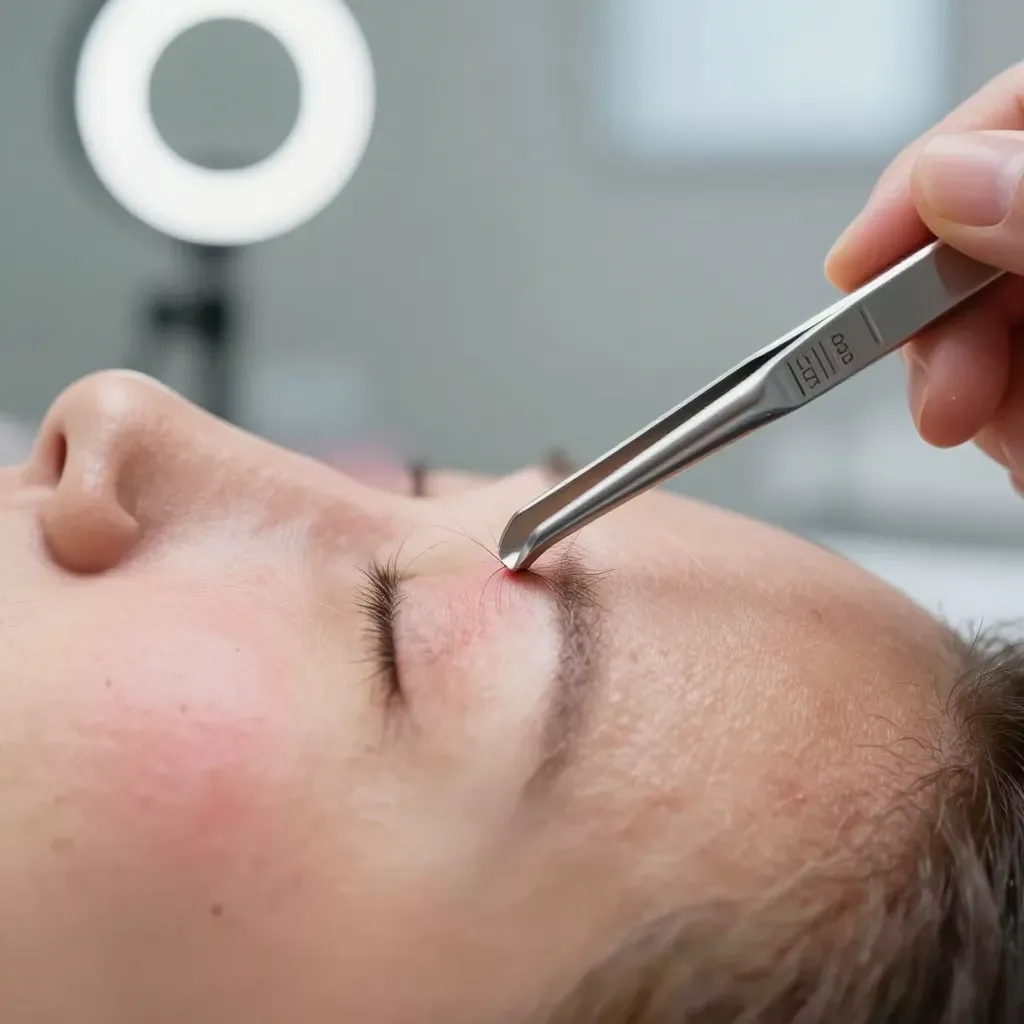
4. Grasp and extract
Use tweezers to grab the hair as close to the root as possible.
Hold the skin taut with your free hand.
Pull steadily in the direction the hair is growing.
Do not yank or twist. This breaks the hair.
5. Treat the wound
- Clean the area with alcohol or mild soap.
- Apply a thin layer of antibiotic ointment.
- Do not re-cover with a bandage unless clothing rubs it.
6. Aftercare for 24-48 hours
- Wash gently twice daily.
- Apply more ointment if dry.
- Avoid tight clothing over the spot.
- Do not shave or wax the area for 3-5 days.
When to use a lancet
A sterile diabetic lancet can make a precise puncture.
Press it straight down just enough to penetrate the skin surface over the hair.
Then use tweezers to grip the exposed hair tip.
This is less traumatic than using a needle.
Signs you went too deep
- Excessive bleeding that won't stop
- Severe pain during extraction
- Hair breaks off under the skin
- Large tear in the skin
If any happen, clean thoroughly and monitor for infection.
What to apply after removal to prevent infection
The goal is to keep the open follicle clean and speed healing without clogging the pore.
Best treatments by stage
Stage | Product | Why |
|---|---|---|
Immediately after | Antibiotic ointment | Kills bacteria on contact |
First 24 hours | Hydrogen peroxide or witch hazel | Cleans out debris |
Days 2-3 | Salicylic acid solution | Keeps pore clear as skin heals |
Days 3-7 | Aloe vera gel | Soothes and reduces inflammation |
Top product recommendations
- Bacitracin or Neosporin ointment. Apply thin layer right after extraction.
- Witch hazel on a cotton pad. Dab gently no rubbing.
- 2% salicylic acid toner. Prevents new dead skin from blocking the healing follicle.
- 100% pure aloe vera gel. Cool it in the fridge for extra relief.
- Tea tree oil diluted with carrier oil. Natural antibacterial option.
What to avoid
- Heavy creams or petroleum jelly. These clog the follicle and trap bacteria.
- Alcohol-based aftershaves. Too harsh on open skin.
- Makeup or foundation over the area. Introduces bacteria.
- Perfumed lotions. Irritate the wound.
- Scratching or picking at scabs. Delays healing and causes scarring.
How to apply correctly
Wash hands before touching the area.
Use a clean cotton swab or pad for each application.
Dab the product on gently. Do not rub.
A thin layer is enough. More product does not mean faster healing.
Signs of infection to watch for
- Increasing redness spreading outward
- Warmth around the area after 24 hours
- Yellow or green pus
- Fever or chills
- Swelling that gets worse not better
If you see any of these signs, stop home treatment and see a doctor.
Oral antibiotics may be needed if the infection has spread under the skin.