
Table of Contents
Professional ingrown hair removal requires specialized tools, controlled technique, and strict sterilization protocols unavailable at home. Urban clinics use extractor loops, fine-tip tweezers, magnifying loupes, and sterile needles to lift and remove hair without tearing skin or causing scarring. The extraction process follows a precise sequence: cleanse with antiseptic, soften skin with warm compress, locate the hair path under magnification, create a micro-incision if needed, and guide the hair out in its natural growth direction. Aftercare is critical for preventing infection and scarring - keeping the area clean, applying antibiotic ointment, avoiding tight clothing and sweating for 48 hours, and monitoring for infection signs. Professional help should be sought immediately for infected ingrowns, cystic formations, sensitive areas like the face or genitals, failed home attempts, or underlying health conditions like diabetes that increase complication risks.
Question | Answer |
|---|---|
What tools do professionals use for ingrown hair removal? | Professionals use sterile extractor loops, fine-tip tweezers, magnifying loupes, and disposable needles to safely lift and remove hair without skin damage. |
Why does professional extraction prevent scarring? | Professionals apply controlled pressure from the side and pull hair in its natural growth direction, avoiding the micro-tears and trauma caused by ripping or digging. |
What should I avoid during the first 48 hours after extraction? | Avoid sweating, swimming, shaving, tight clothing, sun exposure, and touching the area with unwashed hands to prevent infection and scarring. |
When should I see a professional instead of attempting home removal? | Seek professional help for spreading redness, pus, fever, cystic ingrowns, sensitive areas like the face or genitals, or if you have diabetes or immune disorders. |
How can I prevent ingrown hairs from recurring? | Exfoliate 2-3 times weekly with chemical exfoliants, shave in hair growth direction, use single-blade razors, and consider laser hair removal for permanent results. |
Urban ingrown hair removal videos show professional extraction methods
Essential Tools of the Trade
Professional videos highlight specialized instruments not found at home. These tools ensure precision and minimize scarring.
Tool | Purpose |
|---|---|
Sterile Extractor (Loop/Spoon) | Gently lifts hair without tearing skin |
Fine-Tip Tweezers | Removes hair fragment after initial lift |
Antiseptic Solution (e.g., Hibiclens) | Cleans area pre and post-procedure |
Magnifying Loupes | Provides close-up visibility for deep ingrowns |
Disposable Needle (Fine) | Creates tiny opening for trapped hair access |
Step-by-Step Extraction Process
Videos break down the consistent protocol used in urban clinics.
- Skin is cleansed with surgical-grade antiseptic.
- A warm compress may soften skin first.
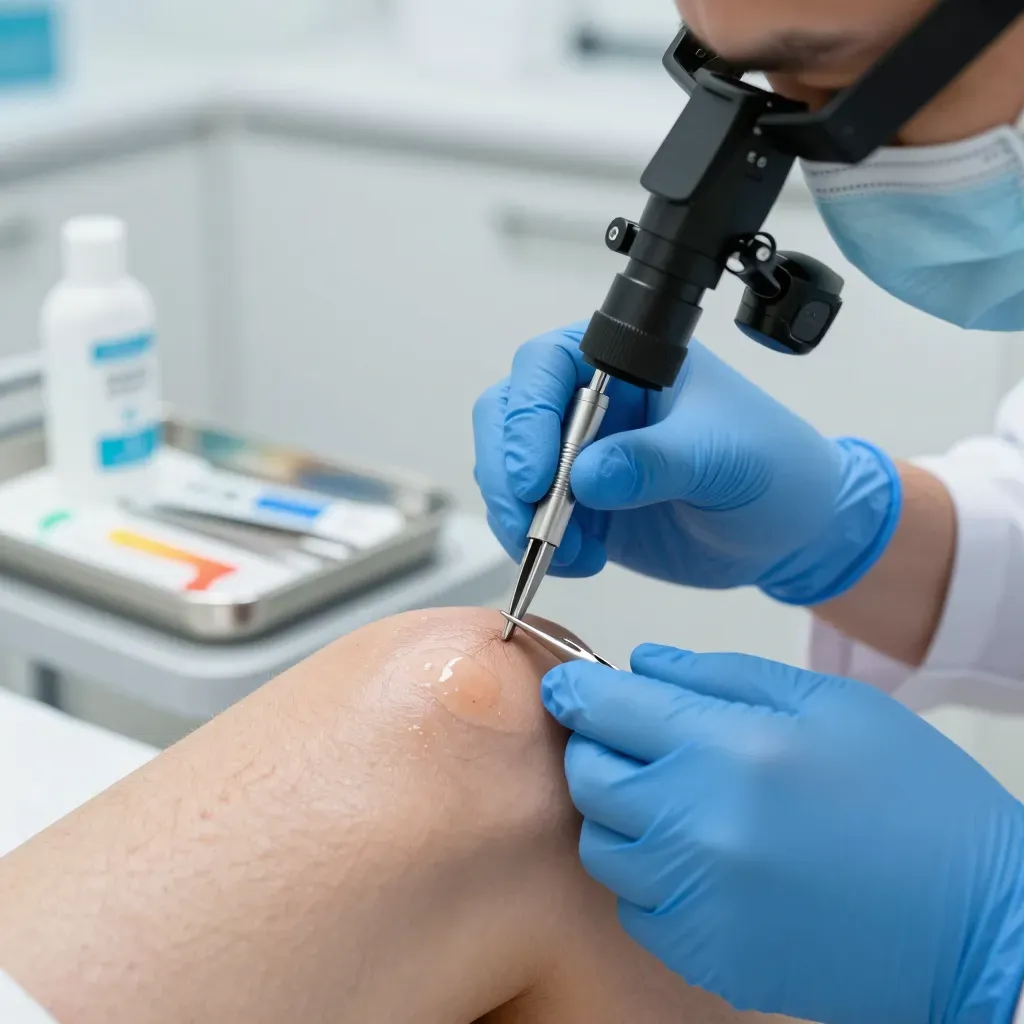
- The practitioner uses a magnifier to locate the hair's entry point.
- If needed, a sterile needle makes a micro-incision parallel to hair growth.
- The extractor tool applies gentle pressure from the side, not the top.
- The hair is guided out in its natural direction using tweezers.
- Area is treated with antibiotic ointment and a sterile bandage.
Safety and Sterilization Protocols
Every video stresses non-negotiable hygiene. Practitioners wear gloves. All metal tools are autoclaved. Single-use items like needles and extractor tips are discarded after one client. The treatment bed is wiped with medical disinfectant between appointments. This prevents cross-contamination and infection—a primary risk with DIY attempts.
Aftercare Demonstrated
Videos don't end at extraction. They show immediate aftercare: applying a thin layer of bacitracin or mupirocin ointment. A loose bandage for 24 hours. Patients are instructed to avoid tight clothing, sweating, and sun exposure for 48 hours. They're told to watch for signs of infection: increasing redness, pus, or fever. Follow-up is often recommended for recurring problem areas.
Why Urban Clinics Invest in Training
City-based technicians handle high volumes of cases. Videos reveal their refined technique from repetition. They can distinguish between a simple ingrown and a developing cyst. They know when to stop and refer to a dermatologist. This expertise prevents complications like keloid scarring or severe infection common with improper home removal.
What to expect from a professional ingrown hair removal session
Initial Consultation
Upon arrival, a brief consultation occurs. The technician examines the ingrown hair. They classify it as simple or cystic. Your skin type, sensitivity, and treatment history are discussed. This assessment selects the safest extraction method.
Preparation Phase
The area is cleaned with surgical antiseptic. A warm compress softens the skin for 2-3 minutes. The practitioner wears sterile gloves and uses magnifying loupes. Tools are arranged on a sterile tray.
Extraction Procedure
Under magnification, the hair's entry point is located. A sterile needle may create a micro-incision. An extractor loop lifts the hair from the side. Fine-tip tweezers remove it in the growth direction. Each ingrown takes 30-60 seconds.
Stage | Details |
|---|---|
Cleanse | Antiseptic wipe disinfects |
Soften | Warm compress opens pores |
Locate | Magnifier finds hair path |
Incise | Micro-cut with sterile needle |
Extract | Loop tool and tweezers remove hair |
Treat | Antibiotic ointment applied |
Pain and Comfort
Discomfort is minimal, often a slight pinch. Numbing cream is available for sensitive zones. The procedure is swift. Cooling gel may be used.
- Topical anesthetic applied 15 mins prior
- Quick extraction reduces pain duration
- Breathing techniques aid relaxation
Aftercare Protocol
Antibiotic ointment is applied post-extraction. A loose bandage may cover the area. Written instructions are provided: keep clean, avoid tight clothes and sweating for 48 hours. Monitor for infection: redness, swelling, pus, fever. Contact the clinic if symptoms worsen.
Follow-Up and Prevention
Chronic ingrowns may require multiple sessions. Severe cysts might need a dermatologist referral. Prevention includes regular exfoliation and proper shaving. The clinic may suggest specific maintenance products.
Tools and techniques used in urban clinics for ingrown hairs
Essential Extraction Instruments
Urban clinics use precision tools designed for safe removal. These differ significantly from home remedies.
Tool | Primary Use |
|---|---|
Sterile extractor loop/spoon | Lifts hair from beneath skin without tearing |
Fine-tip surgical tweezers | Grasps and removes hair fragment completely |
Disposable 30-gauge needle | Creates a micro-opening for trapped hair access |
Magnifying head loupes (2.5x-5x) | Provides clear visibility of hair path and root |
Medical-grade antiseptic | Pre-procedure skin cleansing (e.g., chlorhexidine) |
Controlled Extraction Technique
The technique prioritizes skin integrity over speed. Practitioners follow a strict sequence.
- Apply warm compress to soften skin and open pore.
- Disinfect area thoroughly with antiseptic wipe.
- Use magnifier to trace hair's original growth direction.
- If tip is buried, insert needle parallel to hair, not downward.
- Place extractor loop at hair's side, apply gentle upward pressure.
- Use tweezers to grasp hair at its emergence point.
- Pull slowly in the exact direction of natural growth.
Sterilization & Safety Protocol
Every tool and surface undergoes rigorous decontamination.
- Reusable metal tools are autoclaved after each client.
- Needles, extractor tips, and gloves are single-use only.
- Treatment bed is wiped with hospital-grade disinfectant between clients.
- Practitioners wash hands and don fresh gloves for each procedure.
- All consumables (gauze, ointment) are from sterile packaging.
Aftercare Application
Immediate post-extraction care prevents infection and scarring.
- Apply a thin layer of bacitracin or mupirocin ointment.
- Cover with a loose, non-stick bandage if friction is likely.
- Provide written instructions: keep clean, avoid tight clothing, no sweating for 48 hours.
- Advise signs of infection: spreading redness, pus, fever.
- Schedule follow-up for recurrent areas or cystic ingrowns.
Technology Integration
Many urban clinics pair extraction with preventive tech. They may use a gentle IPL or laser on surrounding hair to reduce regrowth direction changes. Some offer digital dermoscopy to document hair pattern before and after treatment, showing clients the root cause and resolution.
Aftercare tips following ingrown hair extraction
First 48 Hours
The most critical window for preventing infection. Follow these steps exactly.
- Keep the treated area clean and dry.
- Leave the initial bandage on for at least 4-6 hours.
- Apply antibiotic ointment twice daily as directed.
- Avoid touching the area with unwashed hands.
- Do not apply makeup, lotion, or perfume near the extraction site.
- Skip tight clothing that rubs against the treated zone.
Week One Recovery
Healing continues beneath the surface. Proper care now prevents scarring.
Day | Action |
|---|---|
1-2 | Ointment application, keep dry, monitor for redness |
3-4 | Switch to gentle fragrance-free moisturizer if healed |
5-7 | Light exfoliation with a soft washcloth only if skin is closed |
Activities to Avoid
- Sweating: no gym, running, or hot yoga for 48 hours.
- Swimming: pools and hot tubs introduce bacteria to open skin.
- Shaving: wait at least 5-7 days near the extraction site.
- Sun exposure: UV rays darken healing tissue causing hyperpigmentation.
- Picking: do not scratch or pick at any scab that forms.
Infection Warning Signs
Know when to call the clinic or see a doctor immediately.
- Increasing redness spreading beyond the extraction point.
- Thick yellow or green pus draining from the site.
- Swelling that worsens after 48 hours.
- Fever or chills developing after treatment.
- A hard, warm lump forming under the skin.
Long-Term Prevention
Stop ingrowns from returning with a consistent routine.
- Exfoliate 2-3 times weekly with a chemical exfoliant (salicylic or glycolic acid).
- Shave in the direction of hair growth, never against it.
- Use a single-blade razor to reduce hair curl-back.
- Moisturize daily to keep skin supple and hairs penetrating easily.
- Consider laser hair removal for chronic problem areas. Permanent ingrown hair removal eliminates the root cause entirely.
When to seek professional help instead of home removal
Signs of Infection
Redness spreading beyond the ingrown, pus (yellow/green), fever, or increasing pain means bacteria have invaded. These require medical treatment.
Symptom | Why It's Serious |
|---|---|
Spreading redness | Indicates cellulitis, needs antibiotics |
Pus drainage | Active infection, may need drainage |
Fever/chills | Systemic infection, emergency care |
Worsening pain/swelling | Deepening abscess |
If you see these, contact an ingrown hair removal clinic immediately.
Deep or Cystic Ingrown Hairs
- Hair completely buried, forming a hard lump under skin.
- No visible hair tip or loop.
- Skin stretched, shiny, tender to touch.
- Often requires sterile incision and full root extraction.
- Home digging pushes hair deeper or fragments it.
Sensitive Areas
- Face: high risk of noticeable scarring and keloids.
- Genitals: high bacterial load, need sterile environment.
- Underarms: constant moisture, friction,infection prone.
- These zones demand expert technique to avoid complications.
Failed Home Attempts
- You've already picked, squeezed, or dug at it.
- Skin is broken, bleeding, or more irritated.
- Hair fragment remains after multiple tries.
- Area is more painful and swollen than initially.
- Stop now. A pro can still extract with minimal scarring.
Underlying Health Conditions
- Diabetes: high infection risk, slow healing.
- Immune disorders (e.g., HIV, chemotherapy): body fights infection poorly.
- Poor circulation (e.g., peripheral artery disease): delays healing.
- Skin conditions (eczema, psoriasis): compromised barrier.
- These conditions make even minor ingrowns serious. Always use a clinic.