
Table of Contents
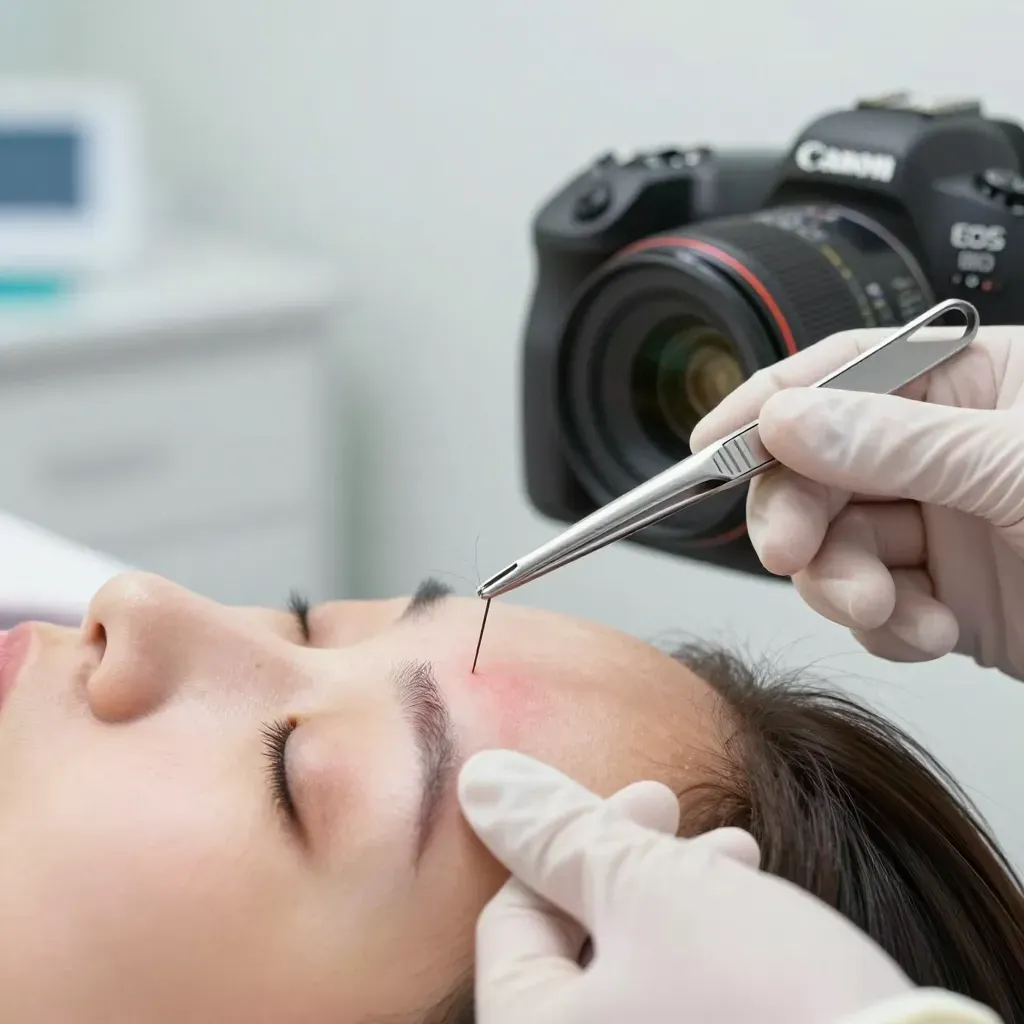
Ingrown hair extraction videos dominate social media feeds offering satisfying visuals but dermatologists warn against imitating aggressive removal techniques seen online.
Safe home extraction requires warm compresses chemical exfoliants and sterile needles to gently lift trapped hairs without digging.
Preventing future ingrowns demands better shaving habits like using single-blade razors shaving with hair growth and applying chemical exfoliants.
Switching to permanent solutions like laser hair removal eliminates the root cause entirely.
Consult a board-certified dermatologist immediately if you spot infection signs like spreading redness pus or intense pain.
Question | Answer |
|---|---|
Why do people watch ingrown hair removal videos? | Viewers experience psychological satisfaction and ASMR-like relief from watching trapped hairs get extracted. |
What is the safest way to remove an ingrown hair at home? | Soften skin with a warm compress exfoliate dead skin and use a sterile needle to gently lift the visible hair loop. |
How do you stop ingrown hairs from forming? | Shave in the direction of hair growth with a single-blade razor and exfoliate regularly with salicylic acid. |
When should a doctor treat an ingrown hair? | Seek medical help for ingrown hairs showing infection signs like spreading redness warmth or pus. |
Why video ingrown hair removal clips captivate millions.
Video ingrown hair removal clips dominate YouTube and TikTok. Millions watch these extraction videos daily. The trend started as a natural evolution from pimple popping content.
Dr Pimple Popper helped push ingrown hair extraction into the mainstream. Her TikTok clips show long beard hairs sliding out with a single needle pass. Other creators like the Tweezist specialize in close-up removal content that racks up millions of views.
What drives the obsession
- Psychological satisfaction from seeing a problem fully resolved
- The dramatic reveal of unexpectedly long trapped hairs
- ASMR-like quality of extraction sounds
- Relief felt vicariously through the person being treated
One viral clip shows six years of hair growth pulled from a single pore on a man's shoulder. That 30-second video sums up the entire appeal. Viewers describe the experience as oddly satisfying and addictive.
Top platforms for extraction content
Platform | Content style | Notable creators |
|---|---|---|
YouTube | Long compilations 10-16 min | Ingrown Hair Lab |
TikTok | Short clips under 60 sec | Dr Pimple Popper |
Raw unedited footage | r/popping community |
The precision required for safe removal adds tension. A sterile needle breaks the skin. Tweezers grasp the base. One firm pull upward. The hair comes free. Clean simple satisfying.
Not all clips show proper technique though. Some creators dig aggressively which risks infection and scarring. Dermatologists warn viewers not to replicate what they see online without understanding sterile protocol.
The fascination is real but the takeaway should be practical. Watch for entertainment. Learn about the condition. But leave complex removals to a professional.
Safe techniques for extracting trapped hairs at home.
Most ingrown hairs resolve on their own within 4-6 weeks. If you want to speed things up start with the least invasive methods first.
Step-by-step at-home removal
- Apply a warm damp washcloth for 10-15 minutes to open pores and soften skin
- Use a chemical exfoliator with salicylic or glycolic acid to clear dead skin cells
- Gently scrub the area with a soft-bristled toothbrush and soap
- If the hair is visible use a sterile needle to lightly lift the hair loop
- Grasp the base with clean tweezers and pull firmly upward
Dermatologists prefer needles over tweezers for the initial step. Tweezers tempt you to dig. Needles give better control and less damage.
The three strikes rule
Attempt removal a maximum of three times. If the hair won't come free stop. Digging deeper causes infection and scarring. Book a dermatologist visit instead.
Method comparison
Method | Best for | Risk level |
|---|---|---|
Warm compress | Early stage bumps | None |
Chemical exfoliant | Hairs near the surface | Low |
Needle lift | Visible hair loops | Medium |
Tweezer pull | Hairs fully above skin | Medium |
After any removal wash the area with warm soapy water. Apply a warm compress again if irritation persists. Avoid shaving the spot until it fully heals.
For stubborn or deeply embedded ingrown hairs on sensitive areas like the pubic region or legs consider skipping extraction entirely and switching to a permanent ingrown hair removal solution like laser treatment.
How to prevent future razor bumps and irritation.
Prevention beats treatment every time. Most ingrown hairs trace back to how you remove hair and how you care for skin afterward.
Shaving habits that stop ingrowns
- Shave in the direction of hair growth not against it
- Use a single-blade razor instead of multi-blade cartridges
- Keep the blade sharp and clean
- Never pull your skin taut while shaving
- Apply shaving gel or cream to reduce friction
Multi-blade razors cut hair below the skin surface. When the hair regrows it has no clear path out. Single blades cut at surface level which drastically reduces trapped hairs.
Daily skincare routine
Step | Product type | Why it matters |
|---|---|---|
Exfoliate | Salicylic or glycolic acid | Clears dead skin that blocks follicles |
Moisturize | Non-comedogenic lotion | Keeps skin barrier healthy |
Soothe | Aloe or witch hazel | Reduces post-shave inflammation |
Switch your hair removal method
The most effective prevention is stopping the root cause. A hair trimmer leaves length above skin so nothing curls back. Depilatory creams dissolve hair without cutting. Both eliminate the mechanism that creates ingrowns.
Laser hair removal targets the follicle and stops growth for good. No hair means no ingrown hairs ever. It works especially well for people with curly hair who suffer chronically. At-home laser devices make this accessible without clinic visits.
Wear loose breathable clothing in areas prone to ingrowns. Tight fabrics create friction and trap sweat which clogs pores. Cotton and moisture-wicking fabrics help keep follicles clear.
When to seek professional dermatological help.
Most ingrown hairs heal without intervention. Some cases need a doctor. Know the warning signs.
Signs of infection
- Increased redness spreading outward from the bump
- Swelling that worsens instead of improving
- Warmth radiating from the affected area
- Pus or yellow discharge
- Pain that intensifies over time
- Fever or chills accompanying the skin issue
Infected ingrown hairs can develop into abscesses or cysts requiring medical drainage. Do not squeeze or attempt extraction on any bump showing these symptoms.
When home methods fail
Situation | Timeframe | Action needed |
|---|---|---|
Mild bump no infection | 4-6 weeks | Stop shaving wait it out |
Deep ingrown not surfacing | 2+ weeks | See a dermatologist |
Recurring ingrowns same area | Ongoing | Discuss permanent removal |
Suspected cyst formation | Immediate | Medical evaluation |
What dermatologists do differently
Board-certified dermatologists use sterile instruments and local anesthesia when needed. They can extract deep ingrowns without damaging surrounding tissue. They also prescribe topical or oral antibiotics for infected follicles.
For chronic cases doctors recommend long-term solutions. Laser hair removal destroys follicles permanently. Electrolysis targets individual hairs regardless of color. Both methods eliminate the root cause entirely.
People with dark skin face higher ingrown hair risk due to curved hair follicles. A dermatologist familiar with diverse skin types can tailor treatment to minimize hyperpigmentation and keloid scarring.
Your primary care doctor can handle basic cases. Complex or recurring ingrown hairs warrant a specialist. Ask for a referral to a board-certified dermatologist for the best outcome.