
Table of Contents
People watch ingrown hair removal videos for control and cost savings but risk infection and scarring. Videos range from safe professional demos to dangerous amateur extractions. Look for credentials, sterile tools, and aftercare. See a professional for signs of infection. Laser hair removal offers a permanent fix.
Question | Answer |
|---|---|
Why do people watch ingrown hair removal videos? | They want an immediate, cheap solution and to reduce fear of the unknown. |
What is the biggest risk of following amateur DIY videos? | High risk of infection and scarring from non-sterile tools and poor technique. |
How can you spot a safe extraction video? | The presenter shows credentials, uses sterile tools, cleans the skin, and includes aftercare. |
When should you see a professional instead of DIY? | With pus, fever, severe pain, spreading redness, or a recurring bump. |
What is a permanent solution for chronic ingrown hairs? | Laser hair removal destroys the follicle to prevent regrowth. |
Why people watch ingrown hair removal videos before treating themselves
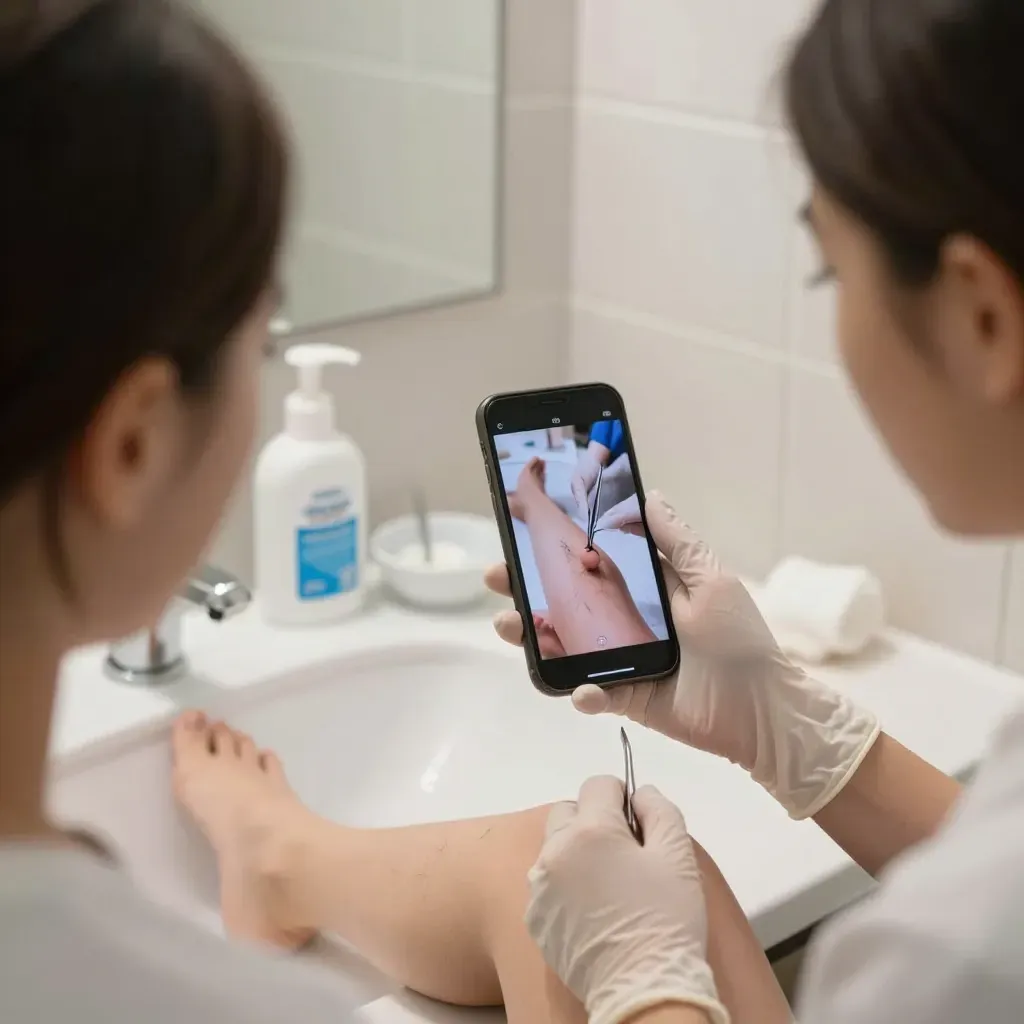
People watch ingrown hair removal videos primarily for control and cost. They want to solve the problem themselves immediately without waiting for or paying a professional. Videos offer a sense of empowerment over their own skin care.
The psychological draw
- Instant gratification. See a bump and want it gone now. Videos promise a quick fix.
- Fear of the unknown. Not knowing what's under the skin causes anxiety. Watching demos reduces that fear.
- Mistrust of professionals. Some believe estheticians or doctors will upsell unnecessary treatments or be too expensive.
- Social proof. Millions of views on a video make the method seem safe and effective.
Education is another major driver. Viewers learn to identify a true ingrown hair versus a cyst or infection. They study proper tool sterilization and extraction angles. This knowledge feels like protection against a bad outcome.
What they hope to gain | What the video often shows | The reality gap |
|---|---|---|
Save money | A simple 30-second extraction with a tweezer | Hidden costs: sterile tools, antiseptic, aftercare products. Time spent learning and repeating. |
Avoid pain | Quick, clean pulls with minimal discomfort | Improper technique causes more pain, bleeding, and deeper trauma to the follicle. |
Prevent scarring | Perfect healing with no marks | Incorrect pressure or dirty tools lead to hyperpigmentation, scars, or repeated ingrowns. |
The desire for privacy also plays a role. People with ingrowns in sensitive areas like the bikini line or neck may feel too embarrassed to book a salon appointment. They seek discreet, at-home solutions from anonymous online sources.
Ultimately, these videos provide a script. Viewers follow a step-by-step process they can control. This reduces the helplessness of dealing with a painful, unsightly bump. However, the script often omits critical warnings about when to stop and seek help.
Types of ingrown hair removal videos you will find online
Online videos fall into distinct categories, each with a different goal and reliability. Recognizing the type helps you judge the content's safety and usefulness.
Professional demonstrations
Licensed estheticians or dermatologists film these. They show proper sanitation, correct tool angle, and aftercare. The focus is on education and minimizing trauma. These are the safest to emulate but often lack the dramatic "pop" viewers seek.
Amateur DIY tutorials
Filmed at home with phone cameras. The presenter uses unsterile tools like sewing needles or regular tweezers. These videos prioritize extraction over safety. They rarely show proper disinfection of the skin or tools. High risk of infection and scarring.
Medical explanation and diagnosis
Doctors or nurses explain the difference between an ingrown hair, a cyst, or an abscess. They describe symptoms of infection. These videos discourage self-removal for deep or inflamed bumps. They direct viewers to seek professional care.
Product review and demonstration
These focus on specific tools: extractor pens, tweezers, or exfoliating products. The reviewer tests the item on themselves or a model. The goal is to sell or evaluate a product, not teach a universal technique. Results depend heavily on skin type and hair texture.
ASMR and extreme extraction
High-definition, close-up videos of large or numerous ingrowns being removed. The audio is amplified for satisfaction. This genre is for entertainment, not instruction. It often ignores the pain, bleeding, and inflammation that follow such extractions.
Video Type | Presenter | Primary Focus | Risk Level for Viewer Emulation |
|---|---|---|---|
Professional demo | Esthetician, dermatologist | Sanitation, technique, aftercare | Low (if tools are sterile) |
Amateur DIY | Untrained individual | Extraction speed and "pop" | High (infection, scarring) |
Medical explanation | Doctor, nurse | Diagnosis, when to see a pro | Very Low (advises against self-removal) |
Product review | Influencer, reviewer | Tool or product effectiveness | Medium (depends on product safety) |
ASMR/Extreme | Content creator | Satisfaction, viewer engagement | Very High (unrealistic, dangerous) |
Many platforms now restrict or label videos that show dangerous skin practices. However, the most popular ones often skirt these rules. Viewer discretion is critical.
What to look for in a safe and helpful extraction video
Not all extraction videos teach safe methods. Knowing which red flags to avoid and which signals indicate a credible source will protect your skin from unnecessary damage.
Signs the video is credible
- Presenter shows professional credentials or training.
- Skin is cleaned with antiseptic before and after extraction.
- Tools are sterilized or single-use.
- The video explains when not to attempt removal.
- Aftercare instructions are included.
Red flags to watch for
- Use of non-sterile tools like paper clips, safety pins, or ungloved fingers.
- No skin preparation shown before digging into the bump.
- Deep extraction attempted without numbing or professional setting.
- Presenter ignores signs of infection like pus, excessive redness, or fever.
- No mention of when to stop and seek medical help.
Safe Practice | Unsafe Practice |
|---|---|
Saline or antiseptic wipe on skin | No cleaning shown or mentioned |
Sterile lancet or extractor tool | Sewing needle, paper clip, or bobby pin |
Minimal pressure to lift hair | Forceful digging or squeezing |
Mentions pain threshold and stopping point | Ignores pain or bleeding |
Applies antibiotic ointment after | Leaves wound exposed without aftercare |
What the video should cover
The best extraction videos walk through the full process: identifying the ingrown, preparing the skin, using the right tool at the correct angle, releasing the hair, and applying aftercare. They should clearly state that certain ingrowns require a professional. Superficial, accessible hairs are the only ones suitable for careful at-home removal.
Common mistakes people make after watching removal tutorials
Viewers mimic what they see but miss critical context. This leads to preventable skin damage.
Overestimating skill from a short video
A 60-second clip skips years of practice. Viewers attempt complex extractions on their first try. They ignore the presenter's experience and the video's editing.
Ignoring personal skin and hair type
Tutorials often feature easy cases with straight hair and clear skin. Those with curly hair, sensitive skin, or deep follicles face higher risks of scarring and repeated ingrowns using the same technique.
Poor tool sanitation
Most tutorials skip proper sterilization. Viewers use dirty tweezers, pins, or blades. This introduces bacteria directly into the puncture wound.
Skipping aftercare entirely
The video ends after the extraction. Viewers forget to disinfect, soothe, or protect the open follicle. This invites infection and new ingrown hairs.
Targeting the wrong bump
They attempt removal on cysts, abscesses, or infected areas. These require lance and drain procedures by a professional. DIY on these causes severe trauma and spreads infection.
Mistake | Result |
|---|---|
No antiseptic on skin before | Bacterial infection, cellulitis |
Using non-sterile tools | Staph infection, hepatitis risk |
Digging too deep | Scarring, permanent follicle damage |
No aftercare (ointment, bandage) | Open wound, more ingrowns, hyperpigmentation |
Extracting on inflamed or giant bump | Worsened inflammation, abscess formation |
People also mistake all bumps for ingrown hairs. They miss signs of a sebaceous cyst or infected folliculitis. Treating these incorrectly causes more harm.
When to see a professional instead of removing ingrown hairs yourself
Signs you need professional help
- Pus or yellow drainage coming from the bump
- Red streaks spreading from the ingrown hair area
- Severe pain that makes it hard to walk or sit
- Fever or chills developing after an ingrown hair
- Bump getting larger and more painful over days
- Ingrown hair keeps returning in the exact same spot
- You have diabetes or a weakened immune system
Risks of DIY removal on deep ingrowns
Digging for a deep ingrown hair causes scarring and infection. Many videos of ingrown hair removal make it look simple but skip the risks.
Using needles or tweezers at home pushes bacteria deeper into skin. This turns a small bump into a cyst or abscess requiring medical drainage.
What professionals do differently
Estheticians and dermatologists use sterile tools and proper technique. They numb the area when needed. They know how to release the hair without damaging surrounding tissue.
An esthetician trained in ingrown hair removal can also identify whether you actually have an ingrown hair or a different skin condition like folliculitis or a sebaceous cyst.
Cost comparison
Treatment | Average Cost | Best For |
|---|---|---|
DIY at home | $0-15 | Surface-level ingrowns |
Esthetician visit | $50-100 | Stubborn or recurring ingrowns |
Dermatologist visit | $100-250 | Infected or cystic ingrowns |
Laser hair removal | $200-500 per session | Permanent prevention |
Long-term solution for chronic ingrowns
If you get ingrown hairs monthly or weekly consider laser hair removal to stop ingrown hairs permanently. Laser destroys the hair follicle so hair cannot grow back and become ingrown.