
Table of Contents
Waxing causes ingrown hairs by damaging hair follicles and trapping hair under dead skin. Prevention requires exfoliation moisturizing and avoiding tight clothes. Curly hair increases risk. Safe removal uses warm compresses and sterile tweezers. Laser hair removal offers a permanent solution by destroying follicles.
Question | Answer |
|---|---|
Why does waxing cause ingrown hairs? | Waxing pulls hair from the root damaging follicles and causing hair to grow sideways or curl into the skin. |
How can I prevent ingrown hairs after waxing? | Exfoliate before and after waxing keep skin moisturized and wear loose clothing for a few days. |
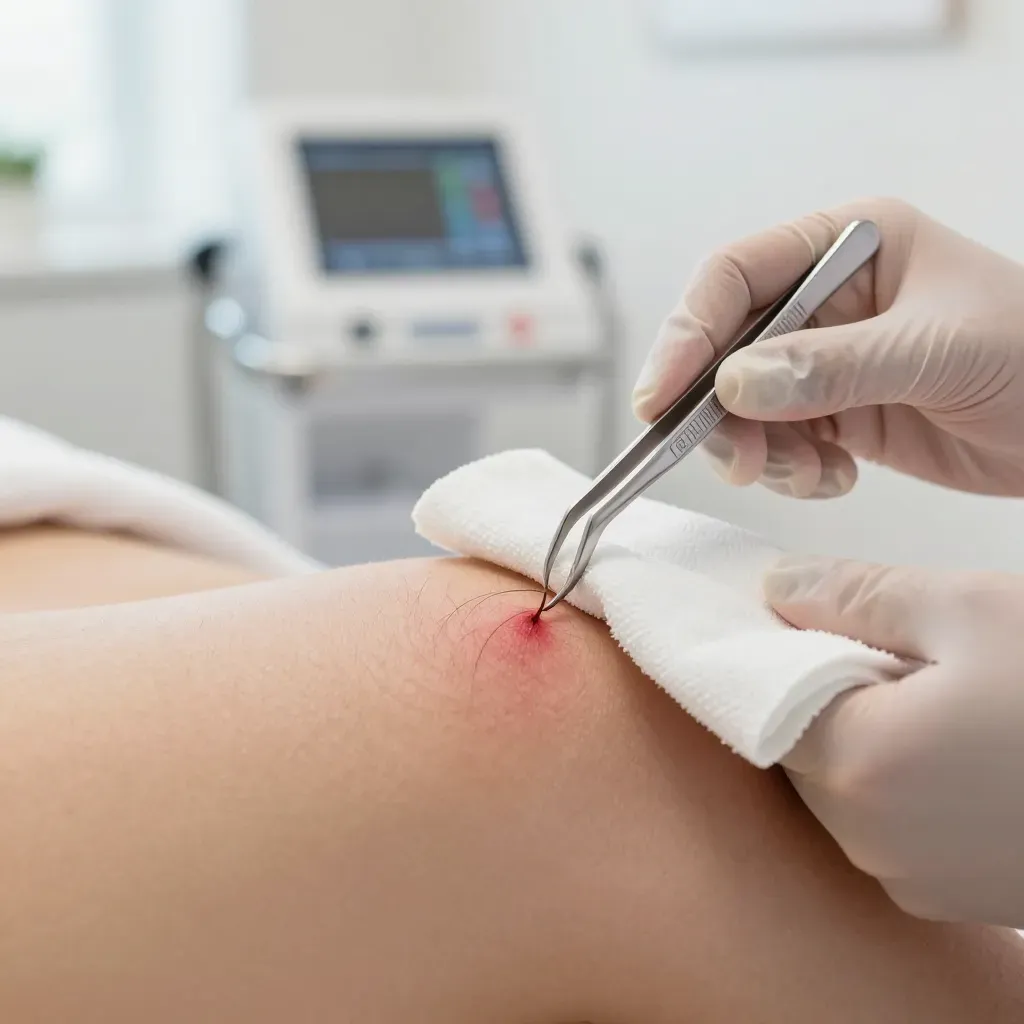
What is the safest way to remove an existing ingrown hair? | Apply a warm compress then use sterile tweezers to gently lift the hair loop without plucking. |
When should I consider laser hair removal instead of waxing? | Consider laser if you have recurrent infections hyperpigmentation or painful cysts from chronic ingrown hairs. |
How does laser hair removal prevent ingrown hairs? | Laser destroys hair follicles completely stopping hair growth and eliminating future ingrown hairs. |
Why Waxing Causes Ingrown Hairs
The Hair Growth Cycle Disruption
Waxing yanks hair from the root. This trauma damages the hair follicle. When new hair grows back it often grows sideways or curls into the skin instead of pushing straight through. This becomes an ingrown hair.
Hair breaks during waxing instead of removing completely. Broken hair has a blunt tip. Blunt tips get trapped under skin easier than naturally tapered tips.
Dead Skin Blocks The Path
Dead skin cells accumulate on the surface. This buildup blocks the hair follicle opening. New hair cannot break through. It grows beneath the skin surface causing inflammation and bumps.
- Thick dead skin layer traps hair
- Clogged pores force hair to grow sideways
- Bacteria enters causing infection
- Inflammation creates painful red bumps
Hair Type And Curl Pattern Matter
Curly or coarse hair grows back at an angle. This angle makes it more likely to pierce the follicle wall and grow into surrounding tissue. People with curly hair experience more ingrowns after waxing.
Common Waxing Mistakes That Cause Ingrowns
Pulling wax strip wrong direction | Hair breaks instead of removing from root |
|---|---|
Waxing too short hair | Incomplete removal leads to breakage |
No exfoliation before waxing | Dead skin traps new hair growth |
Tight clothing after waxing | Friction forces hair back into skin |
Professional waxing reduces ingrown risk compared to DIY. Proper technique removes full hair shaft without breaking it. Learn proper removal techniques for existing ingrowns.
How to Prevent Ingrown Hairs After Waxing
Exfoliate Before and After Waxing
Exfoliation removes dead skin cells that trap hair. Use a gentle scrub 2-3 days before waxing. After waxing wait 48 hours then exfoliate again. Use a soft washcloth or chemical exfoliant with salicylic acid.
Keep Skin Moisturized
Dry skin causes clogged pores. Apply lightweight moisturizer daily. Use products with tea tree oil or witch hazel. These ingredients reduce inflammation and fight bacteria.
- Apply moisturizer twice daily
- Use non-comedogenic products
- Avoid heavy creams that clog pores
- Look for soothing ingredients like aloe vera
Avoid Tight Clothing
Tight clothes create friction. Friction pushes hair back into skin. Wear loose cotton clothing for 2-3 days after waxing. This gives hair follicles time to heal and hair to grow properly.
Proper Waxing Technique
Hair length | 1/4 inch is optimal for waxing |
|---|---|
Wax temperature | Warm but not hot |
Pull direction | Pull in opposite direction of hair growth |
Aftercare | Apply soothing gel like aloe vera |
Use Professional Products
Quality waxes reduce breakage. Hard wax works better for short coarse hair. Strip wax works for larger areas. Professional products minimize hair breakage and follicle damage.
Consider switching to laser hair removal for permanent solution. Laser treatment eliminates hair at the root eliminating future ingrowns.
Best Methods for Safely Removing Ingrown Hairs
Sterile Extraction With Tweezers
Only use sterile pointed tweezers. Disinfect skin and tweezers with rubbing alcohol first. Gently lift the hair loop out of the skin. Do not pluck. Pulling causes more inflammation and can embed hair deeper.
- Use magnifying glass for precision
- Pull in direction of hair growth
- Stop if skin tears or bleeds heavily
- Apply antibiotic ointment after
Warm Compress First
Apply a warm wet washcloth for 5-10 minutes. Heat softens skin and opens pores. This brings the hair to the surface making extraction easier and less traumatic.
Needle Technique For Deep Ingrowns
For hairs completely under skin use a sterile needle. Gently pierce skin directly over hair tip. Lift hair end just enough to grab with tweezers. Do not dig deep.
Method | Best For | Risk |
|---|---|---|
Tweezers only | Hair loop visible | Low |
Needle + tweezers | Deep ingrown, no loop | Medium (scarring) |
Squeezing | Never recommended | High (infection, scarring) |
Topical Treatments
Use ingrown hair removal gels with salicylic acid or glycolic acid. These dissolve dead skin blocking the hair. Apply twice daily until hair emerges naturally.
When To See A Doctor
See a dermatologist for severe or recurrent ingrowns. They can make tiny incisions or prescribe topical retinoids. Professional removal is safest for sensitive areas.
For frequent ingrowns consider laser hair removal. It destroys hair follicles preventing future ingrowns entirely.
When to Consider Laser Hair Removal Instead
Stop Chronic Ingrowns Permanently
Waxing pulls hair from the root but leaves follicles inflamed.
Repeated inflammation creates scar tissue under the skin.
Scar tissue traps new hair growth.
Laser hair removal targets melanin in the hair shaft.
Heat destroys the follicle completely.
Destroyed follicles stop producing hair entirely.
No hair means no ingrown hairs.
Signs You Need a Permanent Solution
Switch to laser when daily maintenance fails.
- Recurrent infections from embedded hairs.
- Hyperpigmentation and dark scars on the skin.
- Painful cysts that never heal properly.
- Thick curly hair that constantly grows sideways.
- Constant pain during and after waxing sessions.
Waxing vs Laser Time and Cost
Laser requires a bigger upfront investment.
Waxing costs significantly more over a lifetime.
Factor | Waxing | Laser |
|---|---|---|
Frequency | Every 4 weeks | 6-8 sessions total |
Lifetime Cost | Very high | Lower long term |
Ingrown Risk | Very high | Zero |
Pain Level | Sharp repeated pain | Mild discomfort |
Choose Professional or At-Home Devices
Professional clinics use strong lasers for fast results on all skin tones.
At-home IPL devices offer privacy and convenience.
Learn how effective at-home laser hair removal is.
Investigate pricing to plan your budget.
Check average laser hair removal costs.