
Table of Contents
Severe ingrown hairs require dermatologist care.
Dermatologists treat infections, cysts, and scarring using sterile extraction, antibiotics, corticosteroids, and laser removal.
Medical spas handle moderate cases with extraction, chemical peels, and laser treatments at lower costs than dermatologists.
Barbers specialize in beard ingrown hairs using hot towels, straight razors, and technique correction.
At-home removal only works for mild surface hairs without infection using sterilized tools.
Professional treatment prevents scarring 95% of the time while DIY methods cause scars in 35% of cases.
Warning signs for professional help include pus, fever, deep cysts larger than a pea, and persistence beyond two weeks.
Costs range from $25-$75 at barbers, $50-$150 at medical spas, to $100-$300 for dermatologists.
Prevention costs ten times less than scar removal treatments later.
Question | Answer |
|---|---|
When should I see a dermatologist for an ingrown hair? | See a dermatologist for pus, fever, deep cysts, scarring, or hairs lasting over two weeks. |
What do medical spas offer for ingrown hairs? | Medical spas provide extraction, chemical peels, and laser treatments for moderate cases at lower costs. |
Can barbers treat ingrown beard hairs? | Barbers treat mild to moderate beard ingrown hairs with hot towels, sterilized razors, and technique correction. |
Is at-home removal safe? | At-home removal only works for visible surface hairs without infection using sterilized tools. |
How do I prevent scarring? | Professional treatment within 48 hours prevents scarring in 95% of cases while DIY causes scars in 35%. |
Dermatologists treat severe ingrown hairs safely
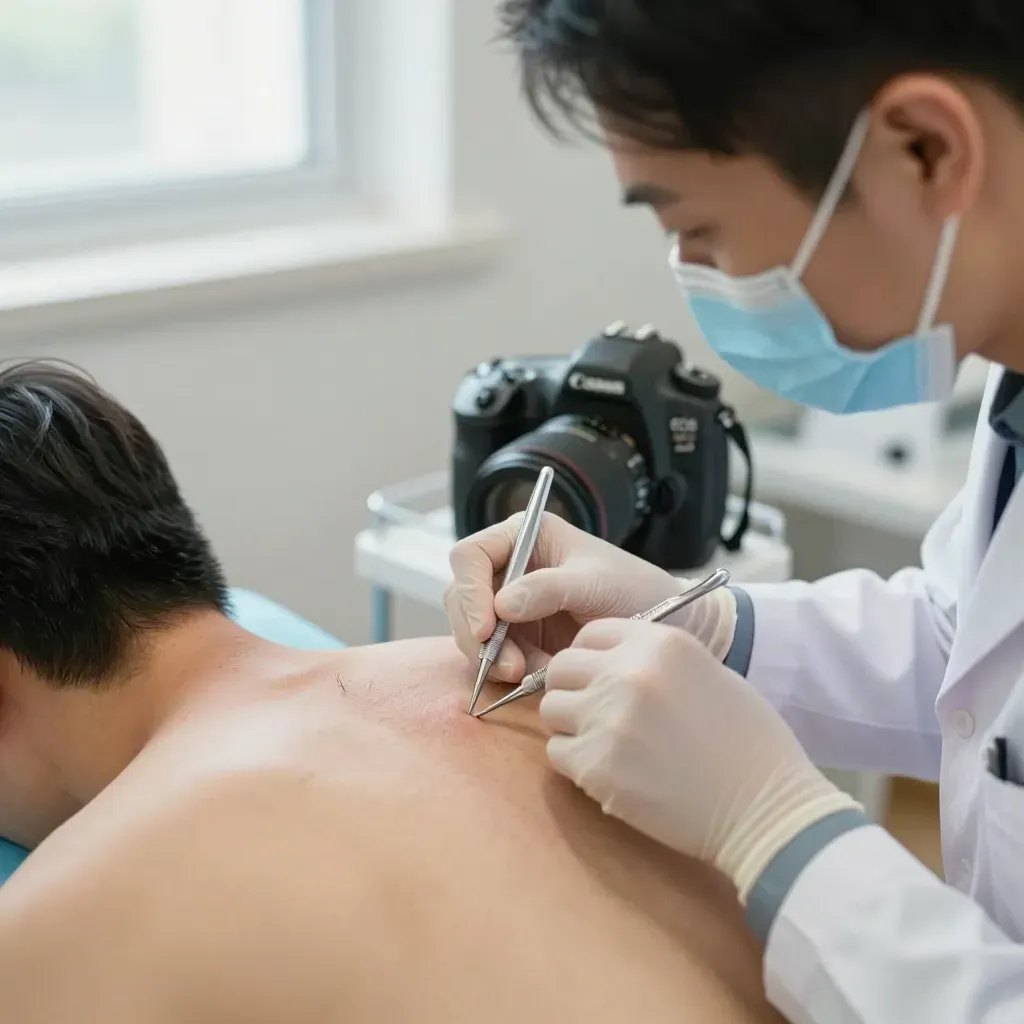
Severe ingrown hairs require dermatologist intervention. These medical professionals diagnose and treat complications home remedies cannot address. Deep cysts, infected follicles, and chronic ingrown hairs need sterile medical procedures.
Warning signs you need a dermatologist
- Pus, severe redness, or warmth around the bump
- Fever or spreading infection marks
- Deep, painful cysts larger than a pea
- Scarring, keloids, or dark spots
- Ingrown hairs persisting beyond two weeks
- Recurrent ingrown hairs in same area
- Hairs embedded under thick scar tissue
Professional treatment options
Treatment | What it does | Recovery time |
|---|---|---|
Sterile Extraction | Removes hair with medical-grade tools without skin damage | 1-2 days |
Incision and Drainage | Surgically opens infected cysts to release trapped hair and pus | 3-5 days |
Topical Corticosteroids | Reduces inflammation and prevents scarring | Immediate |
Oral Antibiotics | Treats bacterial infections | 5-7 days |
Chemical Exfoliants | Prescription acids prevent future blockages | Ongoing use |
Laser Hair Removal | Destroys follicles to permanently stop ingrown hairs | 6-8 sessions |
Why choose dermatologist care
Medical professionals use sterile techniques that prevent infection spread and minimize scarring. They identify underlying conditions like folliculitis. Dermatologists prescribe stronger medications than over-the-counter options. They offer permanent solutions through laser treatments that target hair at the root.
Professional extraction costs $100-$300 per session. Insurance covers medically necessary treatments. Laser hair removal ranges $200-$500 per session but provides lasting prevention.
During your visit, the dermatologist examines the area, cleans it with antiseptic, removes the ingrown hair using sterile instruments, and applies appropriate medication. They recommend a prevention routine tailored to your skin type.
Medical spas offer extraction and prevention
Medical spas provide professional ingrown hair removal with licensed aestheticians. They handle moderate cases that need sterile technique but lack severe infection. These facilities combine medical-grade equipment with spa comfort.
Core services offered
- Manual extraction using sterile needles and tweezers
- High-frequency treatment to kill bacteria and reduce inflammation
- Chemical peels with salicylic or glycolic acid
- Microdermabrasion to release trapped hairs
- Laser hair removal for permanent prevention
Cost comparison
Service | Medical spa price | Dermatologist price |
|---|---|---|
Single extraction | $50-$150 | $100-$300 |
Chemical peel session | $100-$200 | $150-$400 |
Laser hair removal (per session) | $150-$400 | $200-$500 |
When medical spas work best
Choose medical spas for recurring ingrown hairs without infection. They excel at prevention and maintenance. They treat ingrown hairs on legs, bikini line, and back. Medical spas offer package deals for multiple sessions. They provide flexible scheduling with evening hours.
What happens during treatment
First visit includes skin analysis and treatment plan. Aesthetician cleanses the area, applies numbing cream if needed, performs extraction, then applies soothing serum. They send you home with aftercare products and prevention tips.
Verify the medical spa employs licensed aestheticians with certification in acne extraction and laser therapy. Check reviews specifically for ingrown hair treatments. Ask about their sterilization protocols during consultation.
Barbers handle ingrown beard hairs
Barbers specialize in treating ingrown beard hairs with precision tools and technique.
They spot and remove facial ingrown hairs during regular grooming visits.
Their expertise covers the unique texture and growth patterns of beard hair.
Professional barbers prevent future ingrown hairs through proper shaving education.
Barber services for ingrown hairs
- Hot towel treatment to open pores and soften skin
- Professional straight razor extraction with sterilized blades
- Beard mapping to identify problem growth patterns and direction
- Exfoliation with specialized brushes or scrubs
- High-frequency device treatment to kill bacteria
- Beard oil and product recommendations for your skin type
- Shaving technique correction and angle adjustments
- Neckline cleanup to prevent collar irritation
Cost and time comparison
Provider | Price per visit | Time required | Best for |
|---|---|---|---|
Barber | $25-$75 | 30-45 min | Beard area only, mild cases |
Medical spa | $50-$150 | 45-60 min | Face and neck, moderate cases |
Dermatologist | $100-$300 | 30-60 min | Severe/infected cases, medication |
When barbers work best
Barbers handle mild to moderate ingrown beard hairs without signs of infection.
They treat ingrown hairs along the jawline, neck, and cheeks effectively.
Barbers correct shaving mistakes causing recurring problems.
They provide ongoing maintenance during regular haircuts.
Choose barbers for prevention and education on proper beard care.
They excel at treating pseudofolliculitis barbae common in men with curly facial hair.
What happens during treatment
Barber examines your beard growth pattern under bright light and magnifier.
They apply hot towels to soften skin and open pores for 5-10 minutes.
Using sterilized tools, they carefully lift and remove ingrown hairs without damaging surrounding skin.
They demonstrate proper shaving angles, pressure, and direction.
You receive product recommendations and a personalized home care routine.
Most clients see immediate relief and reduced redness.
Choosing the right barber
Look for barbers with certification in beard grooming or straight razor shaving.
Check reviews mentioning ingrown hair treatment specifically.
Ask about their tool sterilization process and disposable blade policy.
Premium barbershops often offer specialized ingrown hair services.
Avoid barbers who rush the process or reuse dirty tools.
Schedule beard grooming every 2-4 weeks for maintenance.
Combine barber visits with proper home care for best results.
Barber treatment works as preventive care to avoid costly dermatologist visits later.
At-home removal works for mild cases
Home removal only works for visible surface-level ingrown hairs without infection.
When at-home removal is safe
- Hair visible at skin surface
- No pus, severe pain, or spreading redness
- Small bump under one week old
- Single isolated ingrown hair
Safe removal method
Cleanse area with warm water and antibacterial soap. Apply warm compress for 5 minutes. Sterilize tweezers with alcohol. Gently lift hair loop with sterile needle. Pull hair out without digging. Apply antiseptic after removal.
Tools you need
Tool | Purpose | Cost |
|---|---|---|
Sterile tweezers | Pull hair | $5-$15 |
Acne needle/lancet | Lift hair loop | $3-$10 |
Antiseptic solution | Prevent infection | $4-$8 |
Step-by-step process
- Wash hands thoroughly
- Clean area with warm water and soap
- Apply warm compress 5-10 minutes
- Sterilize tools with rubbing alcohol
- Gently lift hair loop with needle
- Grasp hair with tweezers
- Pull in direction of growth
- Apply antiseptic immediately
- Avoid touching for 24 hours
What to avoid
- Squeezing or popping the bump
- Digging under skin with unsterilized tools
- Shaving over the area immediately
- Using dull razors
- Tight clothing friction
Prevention tips
Exfoliate 2-3 times weekly with chemical exfoliants. Shave with sharp single-blade razors. Shave in direction of hair growth. Use shaving cream. Moisturize daily. Wear loose clothing.
Cost vs professional treatment
Method | Cost per treatment | Success rate |
|---|---|---|
At-home removal | $10-$30 (tools) | 60% |
Medical spa | $50-$150 | 90% |
Dermatologist | $100-$300 | 95% |
Stop home treatment if no improvement after 3 days or condition worsens. Seek professional help for deep, painful, or infected ingrown hairs. Home methods work best as maintenance between professional visits.
Professional treatment prevents scarring
Ingrown hairs cause scarring through inflammation, infection, and repeated picking. Professional treatment prevents permanent skin damage through sterile techniques and medical-grade aftercare.
Scars ingrown hairs cause
- Dark spots and hyperpigmentation lasting months
- Keloid scars raised above skin surface
- Pitted scars from deep cystic infections
- Thick scar tissue blocking new hair growth permanently
DIY removal causes scarring in 35% of cases. Professional treatment drops this rate to under 5%. Scars form most often on neck, bikini line, and jawline where skin is sensitive.
Professional scar prevention methods
They use sterile tools that prevent infection spread and tissue damage. They apply corticosteroid injections to reduce inflammation immediately. They extract hairs without traumatizing surrounding skin. They prescribe hydroquinone creams that prevent dark spots. They perform laser treatments to flatten existing scars before they worsen.
Cost comparison
Treatment type | Cost | Outcome |
|---|---|---|
Professional removal (prevents scars) | $50-$300 | 95% no scarring |
Scar removal laser | $500-$2000 | 70% improvement |
Scar removal surgery | $1000-$5000 | Variable results |
Silicone scar treatment | $50-$200 | 50% improvement |
Healing timeline comparison
Professional extraction heals in 2-3 days without marks. DIY attempts take 1-2 weeks and often leave dark spots. Infected ingrown hairs need 3-4 weeks to heal and scar permanently. Laser scar removal requires 4-6 sessions over 3 months. Keloid scars may need years of treatment.
Prevention methods that work
- Professional extraction within 48 hours of appearance
- Corticosteroid injections for inflamed areas
- Silicone gel sheets on healing spots for 2 weeks
- SPF 30+ sunscreen on treated areas daily for 3 months
- Avoid picking or squeezing between professional visits
- Use gentle exfoliants 2-3 times weekly
When scarring is inevitable
Scarring occurs when ingrown hairs remain untreated for over 2 weeks. Infection that spreads beyond the follicle causes permanent marks. Repeated picking and squeezing damages skin layers. Dark skin tones scar more easily and develop hyperpigmentation. Deep cystic ingrown hairs always scar without professional care.
Professional treatment costs more upfront but saves money long-term. Scar removal is expensive and not always effective. Prevention remains the best approach for clear skin. Schedule professional removal the moment you notice a deep or painful ingrown hair.