
Table of Contents
Dermatologists treat infected ingrown hairs with sterile procedures and antibiotics
Estheticians handle superficial cases using sterile tools and exfoliation
At-home removal works only for mild non-infected hairs with proper sterilization
Laser specialists permanently prevent ingrown hairs by destroying follicles
High-risk individuals with diabetes or compromised immunity need professional care
Warning signs include spreading redness pus fever and severe pain
Professional treatment costs more but reduces scarring and infection risks significantly
Question | Answer |
|---|---|
When see dermatologist | See dermatologist for spreading redness severe pain pus fever or recurrent ingrown hairs |
Is at-home removal safe | At-home removal only works for mild non-infected cases with strict sterilization |
What are infection warning signs | Warning signs include spreading redness larger than a quarter severe pain pus fever or red streaks |
Does laser prevent ingrown hairs permanently | Laser hair removal reduces ingrown hairs by 70-90% permanently after full treatment series |
Dermatologists treat severe or infected ingrown hairs with medical procedures
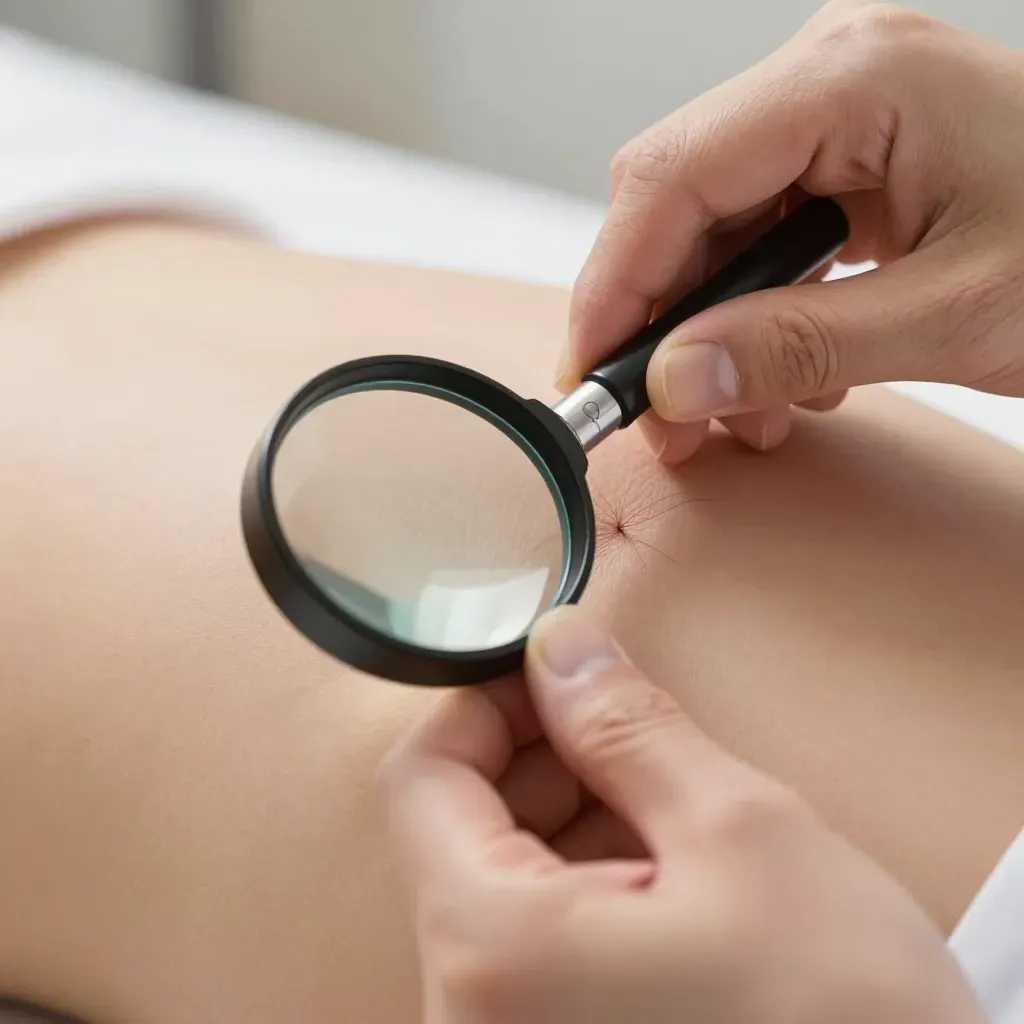
Dermatologists handle ingrown hairs that become infected, painful, or chronic. These doctors diagnose complications and perform sterile procedures that prevent scarring and infection.
When professional medical care is necessary
See a dermatologist for spreading redness, severe pain, pus, fever, or recurrent ingrown hairs. Dark spots, keloid scars, or ingrown hairs near genitals need expert evaluation. People with diabetes or compromised immunity should never self-remove.
Medical procedures dermatologists perform
Dermatologists use sterile instruments and prescription treatments unavailable at home. They may prescribe oral antibiotics for infections, topical retinoids for prevention, or corticosteroid injections for inflammation.
Procedure | Best for | Recovery time |
|---|---|---|
Incision and drainage | Pus-filled ingrown hairs | 3-5 days |
Surgical excision | Deep, embedded hairs | 1-2 weeks |
Chemical depilatories | Preventing recurrence | Immediate |
Laser hair removal | Chronic cases | Same day |
Professional treatment eliminates hair completely and treats underlying infection. Dermatologists can identify conditions that mimic ingrown hairs like folliculitis or hidradenitis suppurativa.
Insurance often covers visits for infected ingrown hairs. Document symptoms with photos before appointments. Follow post-procedure care exactly to prevent recurrence. Most patients improve within 48 hours.
Licensed estheticians provide professional extraction and skin care treatments
Licensed estheticians specialize in cosmetic ingrown hair removal and skin care. They perform extractions using sterile tools and provide treatments that prevent future occurrences.
Services estheticians offer
Estheticians perform gentle extractions, exfoliating facials, chemical peels, and ingrown hair-specific treatments. They use sterilized lancets, tweezers, and exfoliating acids. Many offer bikini line and body treatments for ingrown hairs.
Service | Method | Frequency |
|---|---|---|
Manual extraction | Sterile tools | As needed |
Chemical exfoliation | Glycolic/salicylic acid | Every 4-6 weeks |
High-frequency treatment | Antibacterial device | Weekly |
Brazilian ingrown treatment | Specialized for pubic area | Every 3-4 weeks |
Esthetician vs dermatologist scope
Estheticians handle superficial, non-infected ingrown hairs. They cannot prescribe medication or treat infections. See them for cosmetic concerns, prevention, and maintenance. Dermatologists manage medical complications.
- Esthetician: Mild ingrown hairs, prevention, skin smoothing
- Dermatologist: Infection, scarring, medical conditions
Cost and accessibility
Esthetician sessions cost $50-$150 per treatment. They require no insurance and offer flexible scheduling. Most clients see improvement after one session. Regular maintenance prevents recurrence.
Seek licensed professionals with experience in ingrown hair treatment. Check reviews and certifications. Avoid nail salons or unlicensed providers. Proper aftercare includes gentle exfoliation and avoiding tight clothing.
At-home removal methods work for mild cases with proper sterilization
Safe conditions for home removal
Only remove visible, non-infected ingrown hairs. Safe signs: redness under dime-size, no pus, mild pain. Never attempt on face, genitals, or scar-prone skin. Diabetics, immunocompromised individuals, and those with poor circulation require professional care. Wait 48 hours after shaving before attempting removal. Hair must be visible at skin surface.
Tool sterilization steps
Sterilize tweezers and needles by boiling 10 minutes or wiping with 70% isopropyl alcohol. Use single-use sterile lancets. Wash hands 20 seconds with antibacterial soap. Clean skin with antiseptic wipe or chlorhexidine. Let tools air dry on clean paper towel. Never use rubbing alcohol alone on tools.
Tool | Method | Duration |
|---|---|---|
Tweezers | Boil or alcohol wipe | 10 min / 5 min |
Needle/lancet | Boil or alcohol soak | 10 min / 5 min |
Hands | Antibacterial soap | 20 seconds |
Skin | Antiseptic wipe | 30 seconds |
Proper extraction technique
Apply warm compress 10 minutes to soften skin. Position sterile needle parallel to skin, gently lift hair loop without digging underneath. Pull hair straight out with tweezers following growth direction. Apply thin layer antibiotic ointment like bacitracin. Cover with bandage if clothing rubs area. Avoid makeup or lotion for 24 hours.
Stop immediately if you see
Increasing pain, spreading redness beyond quarter-size, pus formation, or bleeding that won't stop. These signal infection requiring medical treatment. Deeply embedded hairs or those causing significant swelling need professional removal. Fever means emergency care. Document symptoms with photos.
Cost comparison and risk analysis
DIY supplies cost $5-$15 total. Professional extraction costs $50-$150 per session. Success rate for superficial hairs: 70% at home vs 95% professional. Scarring risk: 15% DIY vs 2% professional. Infection rate: 20% improper home technique vs under 1% with experts. Time investment: 30 minutes home vs 60 minutes professional.
- Do: Sterilize all tools, use warm compress, apply aftercare ointment, wash hands, use good lighting
- Don't: Squeeze or dig, reuse dirty tools, ignore infection signs, shave over area, use dull razors
Laser hair removal specialists prevent future ingrown hairs permanently
How laser eliminates ingrown hairs permanently
Laser hair removal specialists use concentrated light to destroy hair follicles at the root. This stops hair growth that causes ingrown hairs. No hair means no ingrown hairs. Treatment works on active follicles only. Multiple sessions catch all growth cycles. Permanently reduces hair by 70-90% after full series.
Treatment specifications by body area
Different areas require different session counts and laser types. Face needs 6-8 sessions. Bikini area needs 6-10 sessions. Legs need 8-10 sessions. Sessions spaced 4-6 weeks apart. Maintenance touch-ups needed yearly for remaining hair.
Body Area | Sessions Needed | Cost Per Session | Ingrown Hair Reduction |
|---|---|---|---|
Bikini/Brazilian | 6-8 | $150-300 | 85-95% |
Face | 6-8 | $100-250 | 75-85% |
Underarms | 4-6 | $75-150 | 90-95% |
Legs | 8-10 | $200-400 | 80-90% |
Best candidates and timing
Ideal candidates have dark hair and light skin. Newer lasers treat darker skin safely. Blonde, gray, or red hair responds poorly. Avoid treatment on tanned skin. Stop waxing/plucking 4 weeks before. Shave 24 hours before sessions.
Long-term cost savings
Total investment $1,200-3,000 for complete series. Compare to lifetime waxing costs of $15,000+. Saves 50+ hours yearly on hair removal. Eliminates ingrown hair treatment products and doctor visits. Most clinics offer payment plans.
Choosing a qualified provider
Select board-certified dermatologist or licensed laser technician. Verify clinic uses FDA-approved lasers. Check reviews specifically for ingrown hair treatment success. Ask about experience with your skin type. Avoid discount spas with untrained staff. Consultation must include patch test.
- Do: Complete full session series, follow pre-care instructions, avoid sun exposure, use recommended skincare
- Don't: Wax between sessions, tan before treatment, pick at treated area, use harsh exfoliants
When to seek professional help for ingrown hair complications
Emergency warning signs
Seek immediate medical care for spreading redness larger than a quarter, severe pain, pus with foul odor, fever over 100.4°F, or red streaks radiating from site. Stop all home treatments if bleeding persists after 10 minutes pressure. Swelling that doubles area size requires urgent evaluation. These indicate serious infection or abscess.
High-risk medical conditions
People with diabetes, HIV, chemotherapy, blood disorders, or poor circulation must never attempt home removal. These conditions increase infection risk by 500%. Minor infections become life-threatening quickly. Dermatologist removal is mandatory. Schedule appointment at first sign of ingrown hair.
Symptom | See Dermatologist | See Esthetician | Go to ER |
|---|---|---|---|
Mild redness, visible hair | No | Yes | No |
Pus, increasing pain | Yes | No | No |
Fever, spreading infection | No | No | Yes |
Recurrent ingrown hairs | Yes | Yes | No |
Scar formation | Yes | No | No |
Location-specific complications
Ingrown hairs on face near eyes, nose, or lips need dermatologist due to infection risk to brain. Genital area ingrown hairs causing significant swelling require medical evaluation. Any ingrown hair in skin fold that prevents walking or sitting needs professional care.
Long-term damage indicators
Dark spots lasting over 3 months, raised keloid scars, or pitting indicate permanent damage. Dermatologists can prescribe hydroquinone for hyperpigmentation, steroid injections for keloids, or laser resurfacing. Early intervention prevents lifelong scarring.
Cost and timeline considerations
Emergency room visits cost $500-2,000 vs $100-300 dermatologist copay. Infected ingrown hairs require 7-10 days antibiotics plus possible incision. Total treatment time extends to 2-3 weeks. Professional extraction resolves issue in 1-2 days. Insurance covers medical complications but not cosmetic esthetician visits.
- High-risk: See dermatologist immediately, no home attempts
- Infected: Same-day medical appointment required
- Recurrent: Dermatologist for underlying condition diagnosis
- Cosmetic: Esthetician acceptable for superficial cases