
Table of Contents
Laser hair removal destroys follicles with light energy to stop ingrown hairs permanently.
Most need 6-8 sessions spaced 4-6 weeks apart for 90% reduction.
Different lasers treat all skin tones safely.
Nd:YAG works best for dark skin.
Each session disables 15-25% of follicles.
Shaving and waxing cause ingrowns by creating sharp tips.
Laser works on mild ingrowns but not active infections.
Maintenance every 6-12 months sustains results.
The method fails on light hair lacking melanin.
Question | Answer |
|---|---|
How does laser hair removal prevent ingrown hairs? | It destroys follicles to stop hair regrowth completely. |
How many sessions are needed? | Most need 6-8 sessions spaced 4-6 weeks apart. |
Is laser safe for dark skin? | Nd:YAG laser safely treats dark skin without hyperpigmentation. |
Can I get laser treatment with ingrown hairs? | Mild ingrowns are treatable but active infections require postponement. |
How does laser compare to shaving? | Laser prevents ingrowns permanently while shaving causes them daily. |
How laser hair removal eliminates ingrown hairs by destroying hair follicles
The science behind follicle destruction
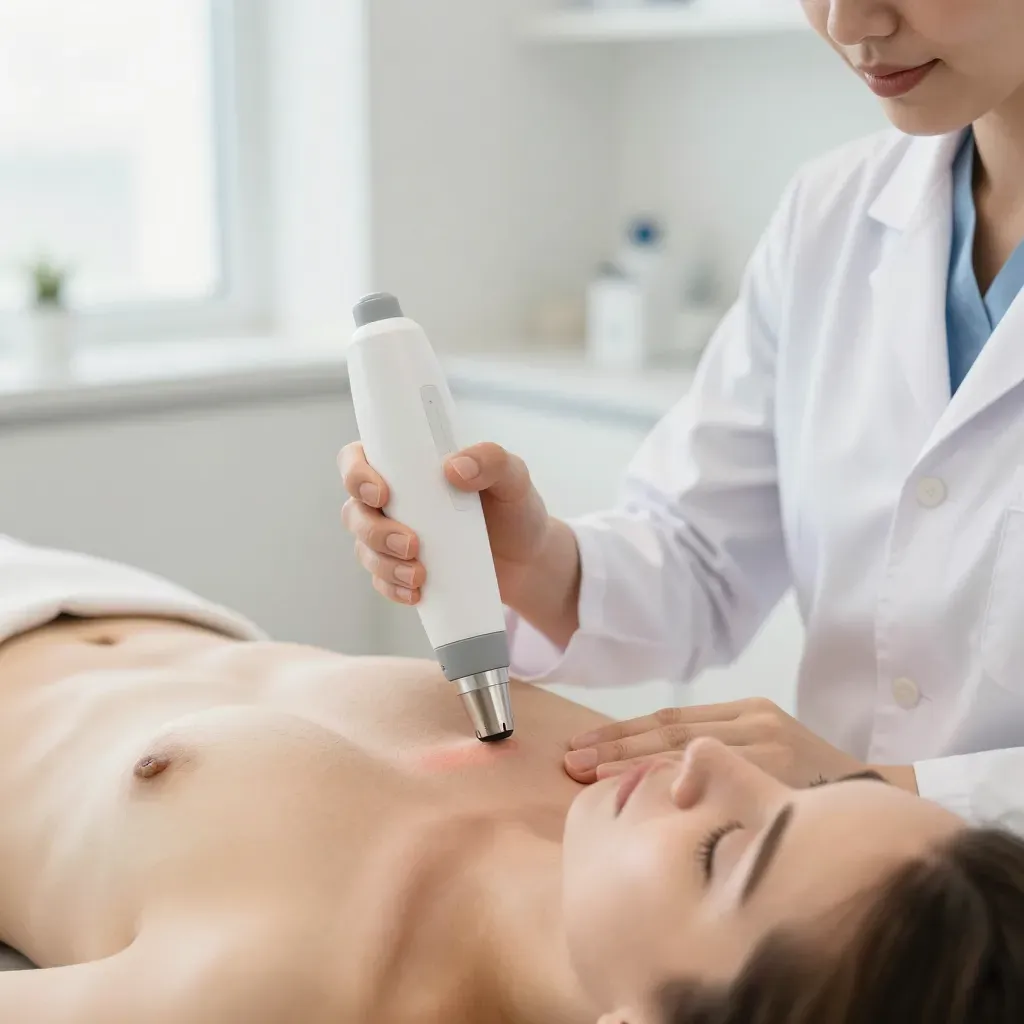
Laser hair removal uses concentrated light energy to target melanin in hair follicles. Heat from the laser permanently damages follicle structures that produce hair. Destroyed follicles cannot regenerate or create new hairs. This stops the regrowth cycle that causes ingrown hairs. Each session disables more follicles until hair stops growing completely.
Breaking the ingrown hair cycle
Ingrown hairs form when removed hair regrows and curls back into skin. Shaving cuts hair at sharp angles that easily pierce surrounding tissue. Waxing breaks hairs below the surface, creating trapped growth. Laser treatment eliminates this cycle by preventing regrowth entirely.
- Eliminates sharp hair tips that cause skin penetration
- Stops curly or coarse hair from growing back into skin
- Reduces follicle inflammation and irritation
- Creates permanent hair reduction over multiple sessions
Treating active ingrown hairs
Mild to moderate ingrown hairs do not prevent laser treatment. The laser identifies follicles through melanin detection regardless of hair position. Treatment often helps resolve existing ingrowns while preventing future ones. Active infection, open wounds, or severe inflammation require healing before proceeding.
Method | Ingrown risk | Result duration |
|---|---|---|
Shaving | High | 1-3 days |
Waxing | Medium | 3-6 weeks |
Laser removal | Very low | Permanent reduction |
Treatment timeline and effectiveness for long-term ingrown hair prevention
Session frequency and timeline
Most patients need 6-8 sessions spaced 4-6 weeks apart. Each treatment disables 15-25% of active follicles. Results become visible after 2-3 sessions. Full results appear 6-12 months after starting treatment.
Session number | Expected results | Ingrown reduction |
|---|---|---|
1-2 | Minimal hair reduction | 10-20% |
3-4 | Noticeable thinning | 40-60% |
6-8 | Significant reduction | 80-90% |
Long-term effectiveness
Laser hair removal provides permanent hair reduction, not complete removal. Maintenance sessions every 6-12 months sustain results. Consistency during initial treatment phase determines final outcome. Skipping sessions allows follicles to recover and regrow.
- 90% hair reduction after complete treatment series
- Ingrown hairs typically eliminated in treated areas
- Results last years with proper maintenance
- Curly or coarse hair may require additional sessions
Managing existing ingrown hairs during laser treatment sessions
Treating with active ingrown hairs
Mild to moderate ingrown hairs do not prevent laser treatment. The laser targets melanin in hair follicles regardless of hair position. Treatment actually helps resolve existing ingrowns while preventing new ones. Active infection, open wounds, or severe inflammation require postponement. Always inform your practitioner about any active ingrown hairs during consultation.
When to delay treatment
- Active infection or pus-filled bumps
- Open wounds or broken skin
- Severe inflammation or rash
- Recent picking or squeezing causing skin damage
How laser resolves existing ingrowns
The laser destroys the follicle containing the trapped hair. This eliminates the source of irritation and allows skin to heal. Coarse or curly hair types benefit most from this approach. Multiple sessions ensure all problematic follicles get treated.
Condition | Treatment status | Action needed |
|---|---|---|
Mild ingrown | Safe to proceed | Inform practitioner |
Moderate inflammation | Usually safe | Practitioner assessment |
Active infection | Postpone treatment | Seek medical treatment |
Open wound | Postpone treatment | Allow healing |
Comparing laser hair removal to shaving and waxing for ingrown hair reduction
Why shaving causes ingrown hairs
Shaving cuts hair at sharp angles just below the skin surface. These sharp tips easily pierce surrounding skin as they regrow. Curly or coarse hair naturally curls back into skin after shaving. Daily shaving creates constant irritation and repeated ingrown cycles. The method only removes visible hair without affecting follicle function or growth patterns.
- Creates sharp hair tips that penetrate surrounding tissue
- Does not remove hair from the root
- Requires daily repetition, increasing irritation
- Zero long-term prevention of ingrown hairs
- Most problematic for curly and coarse hair types
Why waxing causes ingrown hairs
Waxing breaks hair below the skin surface, often leaving jagged fragments. These fragments can grow sideways or curl back into skin instead of outward. Repeated waxing causes follicle trauma and inflammation that increases ingrown risk. The problem intensifies between waxing sessions as hair regrows. Waxing does not permanently damage follicle structure, so the cycle continues indefinitely.
- Hair breaks unevenly below the epidermis
- Regrowth cycle continues throughout life
- Requires maintenance every 3-6 weeks
- Minimal prevention of future ingrowns
- Can cause follicle damage that worsens problem
How laser prevents ingrowns permanently
Laser destroys the entire follicle structure with concentrated light energy. This prevents any future hair growth from treated follicles. No hair growth means zero possibility of hairs becoming trapped beneath skin. Treatment permanently reduces hair density in treated areas after multiple sessions. Each session disables 15-25% of active follicles until nearly all are destroyed.
- Eliminates hair production at the biological source
- Stops regrowth cycle completely in treated follicles
- Permanent reduction achieved after 6-8 sessions
- 90% reduction in ingrown hairs in treated areas
- Results last years with minimal maintenance required
Method | Ingrown cause | Result duration | Long-term effectiveness | Maintenance frequency |
|---|---|---|---|---|
Shaving | Sharp hair tips pierce skin | 1-3 days | Zero prevention | Daily |
Waxing | Broken hair fragments | 3-6 weeks | Minimal prevention | Monthly |
Laser removal | Destroys follicles completely | Permanent reduction | 90% hair reduction | Every 6-12 months |
Different lasers work for all skin tones and hair types
Right laser prevents burns and maximizes ingrown hair elimination. Different technologies target hair melanin while protecting skin.
Alexandrite laser
Best for Fitzpatrick types I-III. 755nm wavelength. Targets dark hair on fair skin. Fastest coverage. High melanin absorption stops regrowth that causes ingrowns.
Diode laser
Covers types I-IV. 800-810nm wavelength. Penetrates deeper than Alexandrite. Handles coarse body hair. Good for bikini and underarm ingrown prevention.
Nd:YAG laser
Safest for types V-VI. 1064nm wavelength. Bypasses skin melanin. Targets follicle directly. Required for dark and black skin. Prevents hyperpigmentation while stopping ingrowns.
IPL devices
Not true laser. Scatters broad spectrum light. Only for types I-III. Less precise. More sessions needed. Lower success rate for deep ingrown prevention.
Skin tone matching table
Skin Tone | Laser Type | Sessions | Ingrown Reduction |
|---|---|---|---|
Very fair | Alexandrite, Diode, IPL | 6-8 | 95% |
Light | Alexandrite, Diode | 6-8 | 92% |
Medium | Diode, Nd:YAG | 8-10 | 88% |
Olive | Diode, Nd:YAG | 8-10 | 85% |
Dark | Nd:YAG | 10-12 | 80% |
Deep | Nd:YAG | 10-12 | 75% |
Hair type considerations
Coarse curly hair responds fastest. Fine hair needs more treatments. Light blonde, red, gray hair lacks melanin. Laser cannot prevent ingrowns on non-pigmented hair.
- Curly hair: Nd:YAG penetrates deepest to kill follicle
- Straight coarse hair: Diode works efficiently
- Fine hair: Alexandrite provides precision
- Light hair colors: Laser ineffective for ingrown prevention