
Table of Contents
The worst ingrown hair removal methods all share one thing. They damage skin and make the problem worse. Picking and squeezing push bacteria deeper causing infection and permanent dark spots. Dirty dull razors cut hair at angles that curl back into the follicle. Aggressive exfoliation tears inflamed skin and pushes hairs sideways. Home needle surgery introduces staph bacteria deep into tissue risking cellulitis and abscesses. All four methods cause scarring delay healing and often spread infection to nearby follicles. Dark skin faces higher risk of long-lasting hyperpigmentation from any of these tactics. Safe alternatives exist. Warm compresses soften the area so hair surfaces naturally. Low percentage salicylic acid dissolves dead skin blocking the follicle without irritation. Sterile tools allow gentle extraction when the hair tip is already visible. For chronic or severe cases dermatologists remove ingrown hairs safely under magnification and laser hair removal eliminates the root cause entirely.
Question | Answer |
|---|---|
Why is picking ingrown hairs harmful | Picking pushes bacteria deeper into the follicle causing infection scarring and permanent dark spots. |
How often should you replace a razor to prevent ingrown hairs | Replace cartridge razors every 5 to 7 shaves and clean blades with rubbing alcohol after each use. |
Can aggressive exfoliation help remove ingrown hairs | No aggressive scrubbing damages the skin barrier and pushes hairs deeper into inflamed tissue. |
What is the safest way to treat an ingrown hair at home | Apply warm compresses several times daily to soften the skin and let the hair surface on its own. |
When should you see a dermatologist for an ingrown hair | See a dermatologist when ingrown hairs are severe infected or keep returning despite home treatment. |
Picking and squeezing ingrown hairs causes scarring and infection
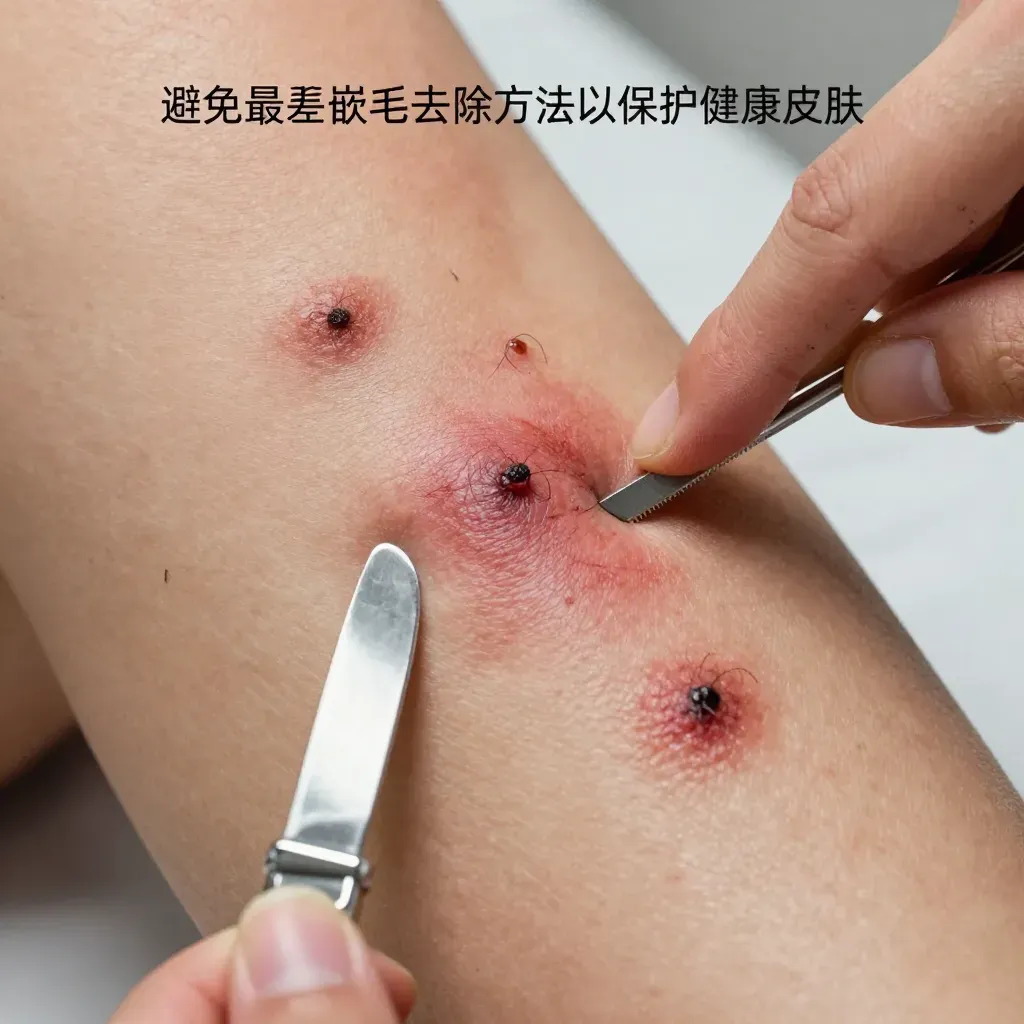
Worst ingrown hair removal starts with your fingers. Picking squeezing digging at embedded hairs tops the list of methods that destroy skin.
When you squeeze an ingrown hair you push bacteria deeper into the follicle. The hair rarely comes out. Instead the surrounding tissue swells darkens and hardens.
What happens when you pick
- Broken capillaries under the skin cause permanent dark spots
- Bacteria from fingernails enter the wound creating pus-filled bumps
- Repeated picking forms raised hypertrophic scars
- Delays natural healing by weeks
- Spreads infection to nearby follicles
Damage comparison
Method | Infection Risk | Scarring Risk | Healing Time |
|---|---|---|---|
Picking with fingers | Very high | High | 2-4 weeks |
Tweezing blindly | High | High | 1-3 weeks |
Leaving it alone | Low | Minimal | 3-7 days |
Some people use needles or pins to fish out the hair. This ranks among the worst ingrown hair removal tactics. Unsterilized metal introduces staph bacteria directly into skin. The resulting infection can become cellulitis requiring antibiotics.
Post-inflammatory hyperpigmentation from picking can persist for months. In some cases the discoloration never fully fades. The temporary satisfaction of extracting a hair never outweighs permanent marks.
Redness swelling and pain after picking signal infection starting. Warm compresses and salicylic acid work better than fingers. For stubborn cases a dermatologist can remove ingrown hair safely with sterile tools.
Using dirty or dull razors worsens ingrown hair problems
Dirty razors breed bacteria. Dull blades tug and bend hair instead of cutting clean. Together they create the worst ingrown hair removal cycle possible.
A dull razor blade forces hair to cut at an angle. That angled tip curls back into skin before it breaks the surface. Each pass multiplies the problem across your shaving area.
Signs your razor is causing damage
- Hair catches and pulls during strokes instead of gliding
- Red bumps appear within hours of shaving
- Rust or debris visible on the blade edges
- Skin feels raw burning or tight after shaving
- Ingrown hairs cluster in the same areas repeatedly
Razor condition vs skin damage
Razor State | Bacteria Load | Hair Cut Quality | Ingrown Risk |
|---|---|---|---|
New clean blade | None | Clean straight cut | Low |
Dull 3-5 uses | Moderate | Angled torn cut | High |
Dull dirty 10+ uses | Very high | Jagged irregular cut | Very high |
Dead skin cells hair product residue and moisture collect on blades between uses. This buildup transfers directly into open micro-cuts with every stroke. The result is folliculitis painful infected bumps that mimic and worsen ingrown hairs.
Replace cartridge razors every 5-7 shaves. Clean blades with rubbing alcohol after each use. Store razors in a dry area outside the shower. Moisture corrodes edges and feeds bacterial growth fast.
If razors consistently cause ingrown hairs switching to hair removal methods that prevent ingrown hairs makes more sense. Laser treatment targets the root so no cutting happens at all. Laser hair removal on ingrown hair areas clears existing bumps while stopping new ones from forming.
Aggressive exfoliation damages already irritated skin
Aggressive scrubbing on ingrown hair areas destroys your skin barrier. It pushes hairs sideways deeper into inflamed tissue creating more bumps.
Signs of over-exfoliation
- Skin feels tight and squeaky clean immediately after
- Redness intensifies instead of fading within hours
- Burning sensation lasts more than a few minutes
- New ingrown hairs appear in previously clear zones
- Skin flakes or peels excessively within 24 hours
Exfoliation impact on irritated follicles
Method | Effect on Ingrown Hair | Skin Barrier Damage |
|---|---|---|
Stiff bristle brush vigorous strokes | Pushes hair deeper | Severe micro-tears |
Walnut shell apricot seed scrubs | Creates new micro-cuts | High inflammation |
Glycolic acid daily high concentration | Over-thins epidermis | Compromised protection |
Salicylic acid 2% gentle 2x weekly | Frees trapped hair | Minimal when used correctly |
Physical scrubs with jagged particles slice open existing bumps. Bacteria enters through these new wounds spreading infection. The body responds with more collagen and pigment making marks darker and longer lasting.
Chemical exfoliants help when used gently. Salicylic acid dissolves dead skin inside the follicle allowing the hair to surface. But daily use or high percentages irritate. Start with 0.5-2% salicylic acid pads twice weekly. Stop if stinging occurs.
Use soft silicone brushes or konjac sponges instead of harsh tools. These glide without tearing. Always exfoliate after a warm shower when skin is soft. Use light pressure in circular motions for 30 seconds max per area.
For existing irritated bumps skip exfoliation entirely. Apply a warm compress first to bring the hair closer to the surface. Then use a sterile ingrown hair removal tool designed for safe extraction without digging.
Prevention matters more than treatment. Proper hair removal technique combined with gentle infrequent exfoliation stops most ingrowns before they start. Let skin heal between sessions. Never exfoliate raw or bleeding areas.
Home surgery with needles leads to serious complications
Sticking needles into ingrown hairs is among the worst ingrown hair removal ideas. It introduces bacteria deep into skin and often pushes the hair further sideways.
Common complications from DIY needle surgery
- Immediate bleeding and increased swelling
- Deep tissue infection from unsterile tools
- Hair breakage below the surface worsening the bump
- Permanent scarring from improper angle and depth
- Spread of infection to adjacent follicles
Risk comparison table
Complication | Home Needle Surgery | Professional Extraction |
|---|---|---|
Infection rate | Very high | Very low |
Scarring likelihood | High | Minimal |
Hair removal success | Low often incomplete | High complete removal |
Pain level | High unmanaged | Managed with anesthesia |
Specific infections to watch for
Staphylococcus aureus enters through the needle puncture. Symptoms include increasing pain redness and pus. Cellulitis spreads rapidly with fever chills and red streaks. Abscesses form requiring surgical drainage. These conditions need prescription antibiotics not home care.
Why professionals succeed where home attempts fail
Dermatologists use sterile single-use lancets and extract under magnification. They know the exact angle to follow the hair follicle. They disinfect the area first and apply antiseptic after. They can also prescribe topical antibiotics to prevent infection.
For persistent or severe ingrowns a dermatologist can remove ingrown hair safely. They may also suggest laser hair removal on ingrown hair areas to eliminate the root cause permanently.
Safer alternatives exist for effective ingrown hair treatment
Stop picking. Start treating. Safe methods resolve ingrown hairs without scarring.
Warm compresses to soften skin
- Soak a clean washcloth in hot water
- Wring out and hold on the bump for 5-10 minutes
- Repeat 2-3 times daily until hair surfaces
- Do not force extraction after compress
The heat softens the follicle and draws the hair upward. Sometimes the hair emerges on its own. This method carries zero infection risk.
Salicylic acid for gentle exfoliation
Use 0.5-2% salicylic acid pads or gels. Apply once daily to clean dry skin. Salicylic acid dissolves dead skin cells blocking the follicle. It frees the hair naturally.
Sterile tools for safe extraction
If the hair tip is visible use a sterile ingrown hair removal tool. Disinfect both skin and tool with rubbing alcohol first. Gently lift the hair loop with the tool tip. Do not dig. Pull the hair out with sterile tweezers only if it comes easily.
Professional and long-term solutions
Method | How It Works | Risk Level | Best For |
|---|---|---|---|
Dermatologist extraction | Sterile lancet under magnification | Very low | Severe infected ingrowns |
Salicylic acid peels | Higher concentration in-office | Low | Recurring bumps |
Destroys follicle preventing regrowth | Very low | Chronic ingrowns anywhere |
For persistent ingrowns a dermatologist can remove ingrown hair safely. They also prescribe topical antibiotics if infection is present.
Prevention beats treatment. Proper hair removal technique stops most ingrowns. Shave with the grain use sharp blades and moisturize. Consider laser hair removal to eliminate the root cause entirely.