
Table of Contents
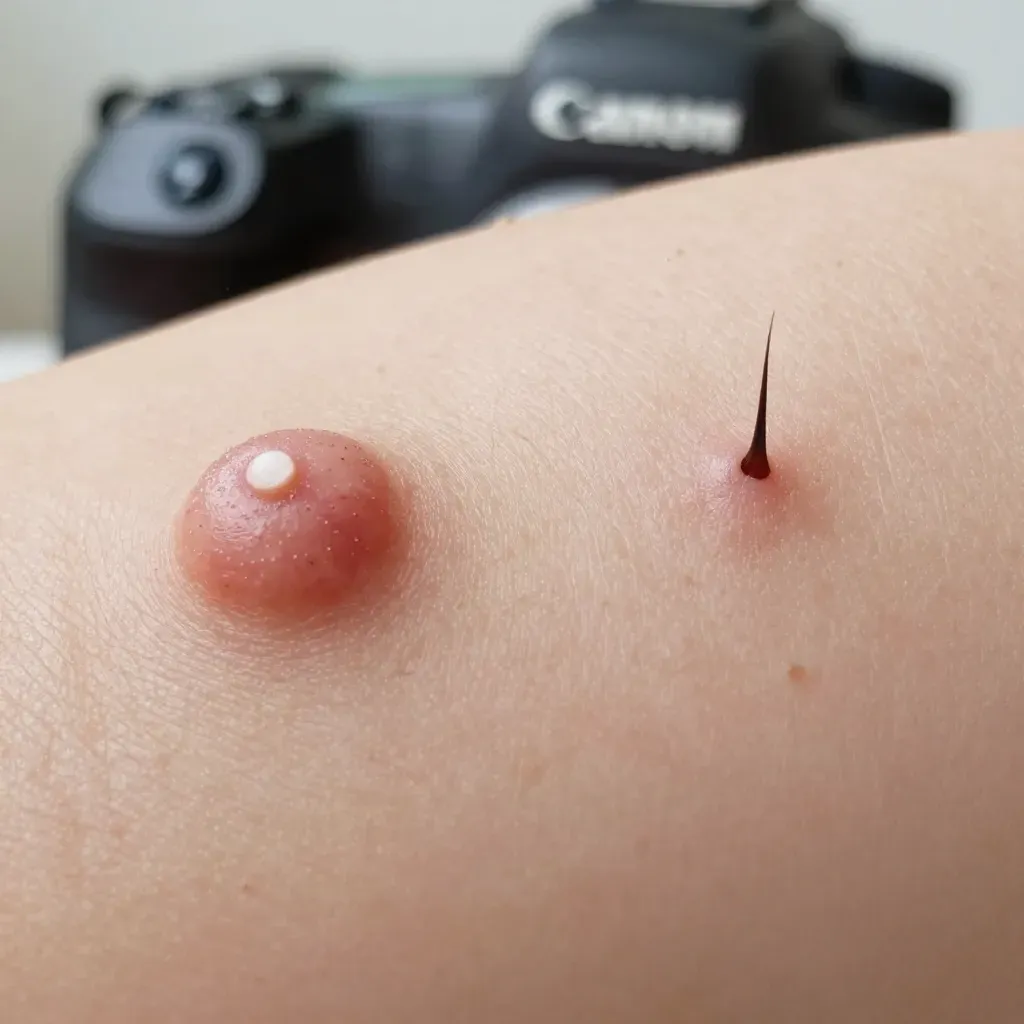
Distinguish a zit from an ingrown hair by looking at the bump center.
Zits feature whiteheads or blackheads while ingrown hairs show a trapped hair tip.
Zits arise from clogged pores while ingrown hairs happen when cut hair pierces the skin.
Ingrown hairs mimic pimples because the immune system creates an inflammatory response to the trapped hair shaft.
Remove an ingrown hair safely using a warm compress and sterile tweezers to gently pull the hair out.
Never squeeze an ingrown hair because this causes infection and pushes the hair deeper.
Prevent ingrown hairs by shaving with the grain and exfoliating dead skin.
Consider laser hair removal to stop ingrown hairs permanently.
Visit a dermatologist if bumps refuse to heal or cause severe scarring.
Popping an ingrown hair pushes the trapped hair deeper into the skin and increases your risk of infection and scarring.
How to tell the difference between a zit and an ingrown hair
Root Cause
- Zit (acne): Forms from a clogged hair follicle. Oil (sebum) and dead skin cells block the pore. Bacteria can infect the clogged pore causing inflammation.
- Ingrown hair: Occurs when a removed or broken hair grows back into the skin instead of up and out. The hair's tip pierces the skin wall causing a localized inflammatory reaction.
Appearance & Feel
Feature | Zit (Pimple) | Ingrown Hair |
|---|---|---|
Central Feature | Often has a visible whitehead (pus) or blackhead (oxidized plug). | Frequently shows a tiny, dark hair tip or a red dot in the center of the bump. |
Pain | Can be tender or painful, especially if inflamed or cystic. | Often tender, with a sharp, stinging sensation when pressure is applied. |
Texture | Can be a smooth bump or a deeper, cystic nodule under the skin. | Usually a small, firm, raised bump. Can feel like a hard, sore pimple. |
Pus | Common, especially in pustules. | Less common. May have a clear or yellowish fluid if severely inflamed. |
Common Locations
- Zits: Appear anywhere with oil glands—face, neck, chest, back.
- Ingrown hairs: Almost always in areas where hair is removed—bikini line, underarms, legs, neck (after shaving), cheeks (after razor use).
Treatment Response
- Zits: Respond to acne treatments: benzoyl peroxide, salicylic acid, retinoids. These target oil and skin cell buildup.
- Ingrown hairs: Require freeing the trapped hair. Exfoliation helps. Applying a warm compress can draw the hair out. Popping like a pimple often worsens it.
Why ingrown hairs turn into pimple-like bumps
The Inflammatory Immune Response
An ingrown hair is a mechanical injury. The hair tip penetrates the skin wall, acting like a tiny splinter. Your body's immune system immediately recognizes this foreign object. It sends inflammatory cells to the site. This causes classic signs of inflammation: redness, swelling, heat, and pain. The bump you see is primarily this swollen, inflamed tissue surrounding the trapped hair.
Secondary Infection Creates the "Pimple"
The puncture wound is an entry point for bacteria, usually normal skin flora like Staphylococcus. Bacteria multiply in the warm, moist, blocked follicle. The immune system escalates its attack. Pus—a mixture of dead white blood cells, bacteria, and cellular debris—accumulates. This pus-filled center mimics a pustule. The key difference: the primary irritant is a hair, not a clogged pore.
Contributing Factors That Worsen the Bump
Factor | How It Leads to a Bump |
|---|---|
Curly/Coily Hair | Hair naturally grows in a curved path. It's more likely to curl back and re-enter the skin after being cut. |
Dead Skin Buildup | Excess dead skin blocks the hair follicle's exit. The growing hair is forced sideways or downward into the skin. |
Improper Shaving/Waxing | Shaving against the grain creates sharp, angled hair tips. Waxing can break hair below the skin surface, leaving a sharp fragment. |
Tight Clothing | Friction from tight clothes (especially synthetic fabrics) rubs hairs back into the skin and irritates follicles. |
Genetics & Hormones | Some people have thicker, coarser hair growth patterns. Hormonal changes can increase hair thickness and density. |
Safe ways to remove an ingrown hair that looks like a zit
Step-by-Step Removal Process
- Apply a warm compress: Hold a warm, damp cloth on the bump for 5-10 minutes. This softens the skin and draws the hair closer to the surface.
- Exfoliate gently: Use a mild scrub or a soft-bristled brush in circular motions over the area. This removes dead skin cells blocking the hair's exit.
- Sterilize your tools: Dip tweezers and a needle in rubbing alcohol. Never skip this step.
- Expose the hair: Gently use the sterilized needle to scratch the surface of the bump. Do not dig deep. Lift just the hair loop above the skin.
- Grab with tweezers: Pull the exposed hair out gently in the direction of growth. Do not yank or twist.
- Clean the area: Apply rubbing alcohol or an antibacterial ointment after removal.
What Not to Do
Action | Why It's Dangerous |
|---|---|
Squeezing like a pimple | Pushes the hair deeper. Increases risk of infection, scarring, and permanent skin damage. |
Using dirty fingers or tools | Introduces bacteria directly into an open wound. Can cause a secondary staph infection. |
Picking at unready bumps | If the hair isn't near the surface, picking tears the skin. Creates a larger wound and more inflammation. |
Shaving over the bump | Cuts the raised skin and the trapped hair again. Worsens the ingrown cycle. |
When to Stop and Leave It Alone
If the bump is deep, hard, and no hair is visible near the surface, do not attempt removal. Apply a warm compress twice daily and use salicylic acid to reduce inflammation. If the bump grows, becomes hot to the touch, or shows spreading redness, you may need a dermatologist to remove the ingrown hair safely.
How to prevent ingrown hairs from forming
Change your shaving routine
- Always shave with the grain. Going against the grain cuts hair below the skin line.
- Use a sharp single-blade razor. Multi-blade razors pull hair up and cut it too close.
- Stop pulling skin tight. Stretching skin allows hair to retract below the surface after the blade passes.
- Always apply shaving cream or gel. Dry shaving forces the blade to snag hair. This creates sharp jagged edges that pierce skin.
- Replace razor blades after five uses. Dull blades cause skin trauma and force you to press harder.
Exfoliate to clear the path
Dead skin cells trap growing hair. Clear them regularly.
Method | How it works |
|---|---|
Physical scrubs | Brushes and gritty scrubs physically sweep away dead cells. Use gentle pressure to avoid tearing skin. |
Chemical exfoliants | Salicylic acid and glycolic acid dissolve dead skin cells. They clear follicles without harsh scrubbing. |
Switch to permanent hair removal
Razors and wax cause the problem. Laser treatments solve it. Laser hair removal destroys the hair follicle. Destroyed follicles stop producing hair. No new hair means no new ingrown hairs. Consider permanent ingrown hair removal to stop bumps for good. IPL devices also reduce hair growth long-term. Both options save time and prevent skin damage.
When to see a dermatologist about recurring ingrown hairs
Signs You Need Professional Help
Sign | Why It Matters |
|---|---|
Bumps that won't heal | Persistent inflammation for weeks indicates the hair is trapped deep or infection is chronic. |
Signs of infection | Increasing redness, swelling, warmth, or pus. Fever means infection is spreading. |
Severe pain or large cysts | Deep, painful nodules may be pseudofolliculitis barbae. This needs medical treatment. |
Frequent recurrence in same spot | Suggests a damaged follicle or scar tissue trapping hair. A doctor can assess the follicle. |
Scarring or hyperpigmentation | Repeated inflammation leaves permanent marks. Early intervention prevents this. |
What a Dermatologist Can Do
- Prescription treatments: Stronger retinoids or antibiotics to reduce inflammation and infection.
- Minor surgical removal: A sterile needle or small incision to free the hair under local anesthesia. This is safe and precise.
- Laser hair removal: Destroys the follicle to stop regrowth. This is the most effective long-term solution for chronic cases. Consider permanent ingrown hair removal.
- Chemical peels or microdermabrasion: For patients with significant dead skin buildup causing ingrowns.
Don't Wait for Scarring
Each ingrown hair causes tissue damage. Repeated damage leads to permanent scarring (pitted or raised) and skin discoloration. These are harder to treat than the ingrown hairs themselves. See a dermatologist if you have more than a few ingrowns per month or if any last longer than two weeks.