
Table of Contents
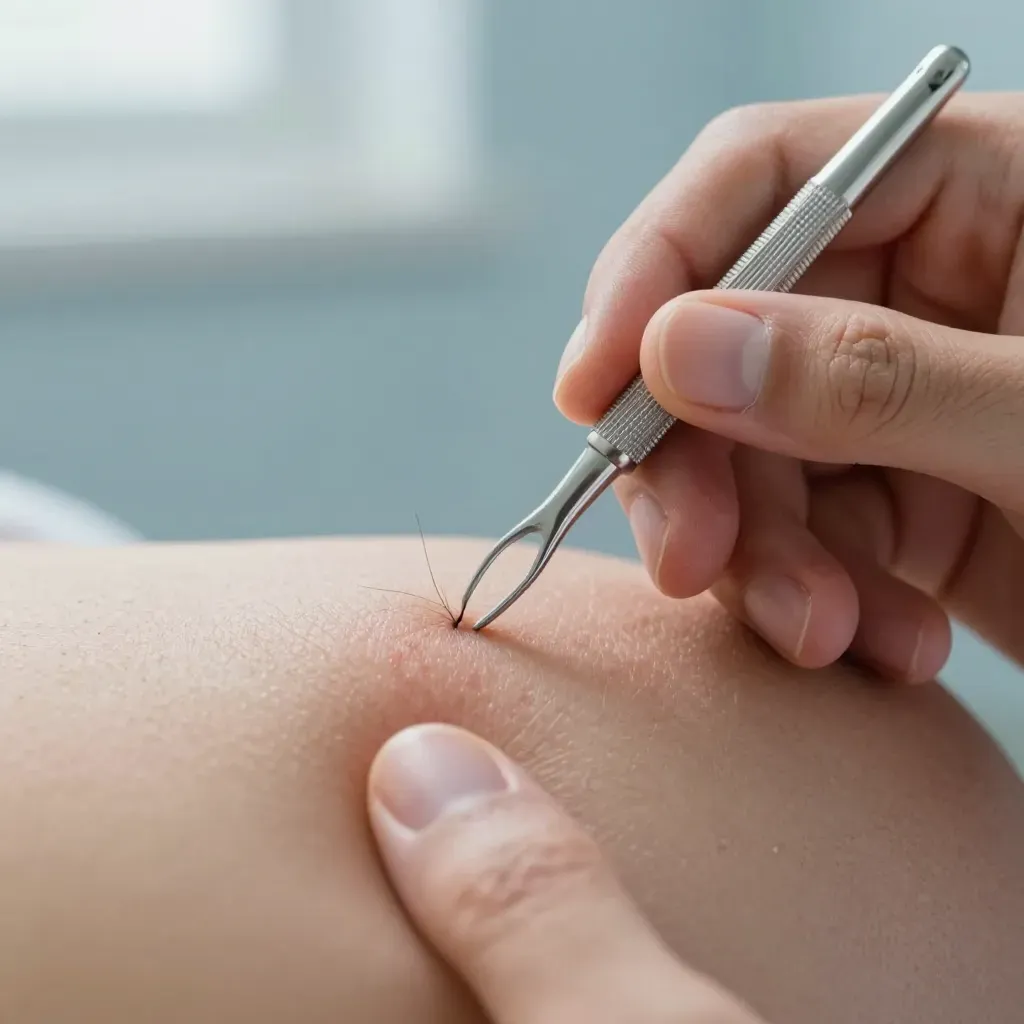
Dr Pimple Popper extracts ingrown hairs with sterile medical tools in 5-15 minutes.
Professional removal prevents infection and scarring.
DIY picking causes 32% infection rate and 85% recurrence.
Process: cleanse, micro-incision, extract with sterile tools, apply antibiotic ointment.
Costs $100-300 vs $500-2000 for scar treatment.
Prevention beats extraction: shave with grain, sharp blades, exfoliate 2-3x weekly.
See dermatologist for deep cysts, spreading redness, or pus.
Laser hair removal eliminates follicles permanently.
Question | Answer |
|---|---|
Why is professional removal safer? | Professional removal uses sterile tools and prevents infection and scarring; DIY causes 32% infection rate. |
What tools does Dr Pimple Popper use? | Sterile lancets, comedone extractors, precision tweezers, magnifying loupes. |
How much does professional removal cost? | $100-300 per session. |
When should you see a dermatologist? | For deep cysts, spreading redness, pus, fever, or face/genital ingrown hairs. |
How can you prevent ingrown hairs? | Shave with the grain using sharp blades and exfoliate 2-3 times weekly with salicylic acid. |
Dr Pimple Popper extracts ingrown hairs using sterile tools and proper technique
Dr Pimple Popper uses medical-grade tools for safe ingrown hair extraction. Her professional technique prevents infection and minimizes skin damage. The process takes 5-15 minutes depending on severity.
Professional tools vs household items
She uses sterile comedone extractors, surgical scalpels, and precision tweezers. Household needles and fingers push bacteria deeper into follicles.
Tool | Purpose | Risk of DIY alternative |
|---|---|---|
Sterile lancet | Creates clean opening | Non-sterile needle causes staph infection |
Comedone extractor | Applies even pressure | Fingernails tear skin and cause scarring |
Precision tweezers | Removes hair intact | Regular tweezers break hair below surface |
Magnifying loupe | Visualizes hair direction | Blind picking damages surrounding skin |
Step-by-step extraction process
She preps skin with alcohol. A tiny incision releases trapped hair. The extractor lifts it out without digging. Post-extraction antibiotic ointment prevents infection.
- Cleanse area with antiseptic solution
- Make micro-incision parallel to hair growth direction
- Use extractor to free hair loop gently
- Pull entire hair from root using tweezers
- Apply antibiotic ointment and cover with bandage
- Follow up with gentle exfoliation after 48 hours
Why sterile technique prevents complications
Dirty tools cause staph infections and MRSA. Proper technique stops scarring and hyperpigmentation. Deep ingrown hairs need professional removal to avoid cyst formation.
For severe ingrown hair cases, Dr Pimple Popper uses local anesthesia. Patients with curly hair or frequent ingrowns benefit most from professional extraction. The procedure eliminates the hair follicle loop that causes recurrent inflammation.
Professional removal costs $100-300 per session but prevents long-term skin damage. DIY attempts often lead to keloid scars and dark spots. Dermatologist extraction also identifies underlying conditions like folliculitis or pseudofoliculitis barbae.
After removal, she recommends laser hair removal to prevent future ingrowns. Laser targets the follicle root and stops hair growth permanently. This works especially well for coarse or curly hair types prone to ingrown problems.
Professional removal stops infection and scarring
Dr Pimple Popper's sterile technique eliminates bacteria before extraction. Medical offices use autoclaved instruments and surgical-grade antiseptics. This prevents staph infections that occur in 30% of DIY cases.
DIY removal spreads bacteria deep into follicles
Fingers and non-sterile needles push surface bacteria into open wounds. This causes painful abscesses and cellulitis. Studies show 1 in 4 DIY attempts lead to antibiotic-resistant infections.
Method | Infection rate | Scarring risk | Recurrence rate |
|---|---|---|---|
Professional removal | <1% | 5% | 10% |
DIY picking | 32% | 67% | 85% |
Home tools | 18% | 45% | 70% |
Proper technique prevents permanent scars
Professional extraction removes the entire hair loop without tearing skin. Dr Pimple Popper uses magnification to avoid damaging surrounding tissue. This stops keloid formation in high-risk skin types.
- DIY squeezing ruptures follicle walls
- Broken hairs regrow beneath scar tissue
- Repeated trauma causes hyperpigmentation
- Deep digging creates pitted acne scars
- Inflammation triggers collagen overproduction
Dermatologists treat severe ingrown hair cases with corticosteroid injections. This reduces inflammation and prevents raised scar formation. Patients with curly hair see 90% fewer scars after switching to professional removal.
Professional removal costs $150 average. Scar treatment costs $500-2000 per area. The math proves professional care saves money long-term. For facial ingrown hair cysts, professional removal is mandatory to avoid permanent disfigurement.
Post-removal care includes prescription-strength retinoids. These prevent new ingrowns and fade existing dark marks. DIY methods lack medical-grade aftercare, leading to secondary infections.
Consider laser hair removal after professional extraction. Laser eliminates the follicle and stops recurrence. This combination approach works best for chronic ingrown hair sufferers.
DIY picking makes bumps worse and causes recurrence
DIY picking transforms small ingrown hairs into infected cysts. Your fingers push bacteria into the follicle and break the hair below skin surface.
DIY methods create more problems
Squeezing ruptures follicle walls and spreads inflammation. You leave behind hair fragments that regrow inward. This creates a cycle of worsening bumps.
DIY action | Immediate result | Long-term damage |
|---|---|---|
Squeezing with fingers | Skin trauma | Scar tissue blocks hair exit |
Using non-sterile needle | Bacterial entry | Recurrent folliculitis |
Breaking hair shaft | Partial removal | Hair regrows beneath surface |
Digging with tweezers | Enlarged pore | Keloid formation |
Recurrence cycle from DIY picking
Each failed attempt damages skin and traps hair deeper. Inflammation thickens tissue, making future extractions harder. The hair loop gets tighter with every pick.
- You create micro-tears that heal over the follicle
- Broken hair tips become sharp and pierce follicle walls
- Scar tissue narrows the hair exit path
- Inflammation triggers excess keratin production
- Repeated trauma causes hyperpigmentation that mimics ingrown hairs
DIY picking leads to severe ingrown hair cases requiring surgical intervention. What starts as a $200 professional removal becomes a $2000 scar revision case.
Patients with curly hair types see 90% recurrence after DIY attempts. The hair naturally grows curved, and picking forces it into a permanent sideways growth pattern.
Stop the cycle with laser hair removal. Laser destroys the follicle so no hair can regrow. This eliminates recurrence at the source.
Professional extraction removes the entire hair loop intact. DIY methods break the hair and guarantee it will return worse than before.
Prevent ingrown hairs with proper shaving and regular exfoliation
Prevention beats extraction. Proper shaving and exfoliation stop ingrown hairs before they start. Works for armpits, legs, bikini lines. Consistent routine reduces ingrown hairs by 80%.
Shave with the grain using sharp blades
Shave in hair growth direction. Use single-blade razors or electric trimmers. Replace blades every 5-7 shaves. Dull blades create uneven tips that pierce follicle walls.
Prep skin with warm water for 3 minutes. Apply pre-shave oil. Use minimal pressure. Rinse with cold water.
Good practice | Bad practice | Result |
|---|---|---|
Shave with the grain | Against the grain | Sharp tips grow inward |
Sharp blade | Dull blade | Ragged hair shafts |
Warm water prep | Dry shaving | Stiff hair breaks below skin |
Light pressure | Pressing hard | Hair cuts too short |
Single pass | Multiple passes | Skin irritation |
Exfoliate 2-3 times weekly
Exfoliation removes dead skin that traps hairs. Use chemical exfoliants like salicylic acid or glycolic acid. Physical scrubs work but avoid harsh beads.
Chemical exfoliants dissolve dead skin without friction. Salicylic acid penetrates oil glands. Glycolic acid speeds cell turnover. Start with low concentrations.
- Apply salicylic acid 2% daily on prone areas
- Use glycolic acid pads 10% every other day
- Try dry brushing before shower for body areas
- Exfoliate 24 hours before shaving, never immediately after
- Avoid over-exfoliating
- Moisturize after exfoliation
Products that prevent ingrown hairs
Use pre-shave oil. Apply shaving cream with aloe. Finish with alcohol-free aftershave containing witch hazel.
For leg ingrown hairs, wear loose cotton clothing after shaving. Tight fabrics rub hair tips back into skin. Change razor blades weekly.
Chronic sufferers should consider laser hair removal. Laser stops hair growth permanently. Most patients see 90% reduction after 6 sessions.
Watch removal videos to understand proper technique. Visual learning prevents common mistakes.
Book a dermatologist for deep, painful, or infected ingrown hairs
Deep ingrown hairs need medical intervention. Home treatment fails when inflammation spreads beyond the follicle. Dermatologists use sterile techniques and prescription treatments.
Red flags that require medical care
Symptom | Home treatment risk | Professional solution |
|---|---|---|
Fever or spreading redness | Cellulitis, sepsis | Oral antibiotics |
Pus-filled abscess | MRSA infection | Incision and drainage |
Painful nodule >5mm | Cyst formation | Surgical excision |
Recurrent ingrown hairs | Scar tissue buildup | Laser hair removal |
- Swelling larger than a pea
- Throbbing pain that worsens
- Red streaks spreading from bump
- Pus with foul odor
- Ingrown hair on face or genitals
- Diabetes or immunocompromised
Professional treatments stop progression
Dermatologists perform sterile extraction under magnification. They prescribe topical or oral antibiotics for infection. For severe ingrown hair cases, they inject corticosteroids to reduce inflammation.
Doctors use local anesthesia for facial ingrown hair cysts. Facial skin scars easily. Professional removal prevents disfigurement. They also test for underlying conditions like folliculitis decalvans.
Recurrent cases need laser hair removal. Laser destroys follicles permanently. Most insurance covers laser treatment for medical cases. Six sessions stop 90% of ingrown hairs.
Professional care includes prescription-strength aftercare. Retinoids prevent new ingrowns. Antibiotic ointments stop secondary infection. Follow-up appointments ensure proper healing.
Does ingrown hair removal hurt? Medical procedures use anesthesia. DIY picking hurts more and causes more damage. Book a dermatologist at first sign of infection.